A sourcing and fulfillment company finds and buys your products from Chinese factories, inspects them, stores them and ships each customer order, all under one contract. The alternative is a sourcing agent who buys and checks goods, plus a separate 3PL that stores and ships them. One partner removes the handoffs between those companies, which is where most stock problems start, and gives you one party responsible for the goods from factory gate to customer door. It is not always the better choice: brands with stock already in the US, or very specialised products, can be better served by specialists.
Below is how the one-partner model works, where the risks move, how costs compare and what to ask. To see how we run it, visit our China sourcing and fulfillment homepage.
Fulfillmen is a sourcing and fulfillment company, so we sell the model this guide describes. We have tried to show where separate providers are the better fit too. Agent commission ranges are commonly quoted industry figures, not our prices.
How factory-to-door fulfillment works with one partner
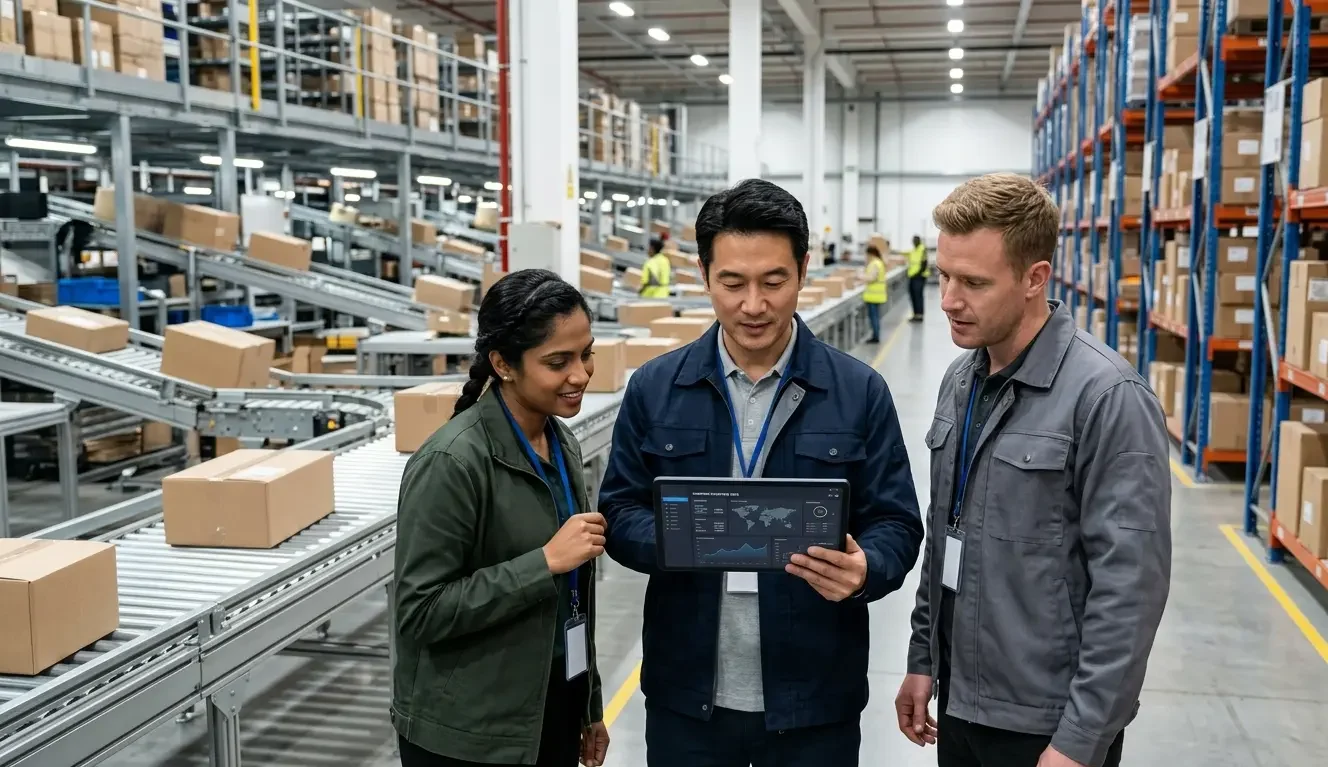
- Sourcing: the partner shortlists suppliers, requests samples and negotiates price and terms.
- Purchasing: it places and pays orders with suppliers, often on platforms such as 1688 that are hard to use from abroad.
- Inspection: goods are checked at the factory or on arrival at the warehouse against your approved sample.
- Consolidation and storage: stock from several suppliers is received into one warehouse in China.
- Value-added work: kitting, branded packaging, inserts and labels are done before anything ships.
- Fulfillment: orders flow in from your store and are picked, packed and shipped to customers worldwide, or sent in bulk to Amazon, prepped at origin as in our guide to FBA prep in China, or to a warehouse near your customers.
Our guide on how to source from China covers the sourcing stages in more depth.
Where the handoffs are, and what can go wrong
Handoffs in the two models
| Handoff | Sourcing agent plus separate 3PL | One sourcing and fulfillment partner |
|---|---|---|
| Supplier to inspection | Agent arranges, results emailed to you | Done in-house, results go straight to the warehouse team |
| Inspection to warehouse | Goods travel to a different company, often in another country | Goods move into the same company’s warehouse |
| Purchase order to inbound receipt | You forward documents between two companies | One system holds both |
| Short shipment discovered | Often only when the 3PL counts it, weeks later | At receiving in China, while the supplier can still fix it |
| Packaging and inserts | Packaging supplier, agent and 3PL coordinate separately | Delivered to and applied in one place |
Every handoff is a point where information can be lost and where two companies can each believe the other is responsible. Removing handoffs does not make problems disappear, but it shortens the time between a problem happening and someone who can fix it seeing it.
Running sourcing and fulfillment through different companies? Tell us how your goods move today and we will show you where a single partner would remove steps, and where it would not.
Who is responsible when goods arrive damaged or wrong?
Typical responsibility when something goes wrong
| Problem | Agent plus 3PL | One partner |
|---|---|---|
| Defects missed at inspection | Agent, depending on the inspection terms | The partner, under one contract |
| Damage in transit to the warehouse | Freight forwarder or insurer, with the agent and 3PL each pointing to the other | The partner manages the claim |
| Wrong count received | Disputed between supplier, agent and 3PL | Raised with the supplier before export |
| Wrong item shipped to a customer | 3PL | The partner |
Responsibility always depends on the contract. Whichever model you use, check how lost and damaged stock is valued and who pays. Our 3PL contract checklist lists the clauses to look for.

Is one partner cheaper than an agent plus a 3PL?
Sometimes, but compare the whole chain, not one fee. Sourcing agents commonly charge around 5% to 10% of the order value, and 3PLs charge for receiving, storage, pick and pack and shipping. A single partner charges for the same work, so the saving, if there is one, comes from what disappears between the companies.
Total cost per order = product + sourcing or purchasing fee + inspection + freight to the warehouse + receiving + storage + pick and pack + shipping + the cost of errors and your own time
Compare this total for both models. The lines most often removed by one partner are a second inspection, a second receiving fee, an extra freight leg and the hours you spend reconciling documents.
- Lines that often shrink with one partner: duplicate receiving, extra freight from a port to a separate 3PL, re-inspection and time spent chasing between companies.
- Lines that may not change: product price, international shipping to customers and storage, which depend on volume more than on the model.
- Lines that can rise: if a partner is weaker at sourcing than a specialist agent, a worse supplier price can cancel the savings.
For a line-by-line view of what fulfillment itself costs from China, see our guide to China fulfillment cost.
When separate providers make more sense
- Your stock already lands in bulk in the US or Europe and sells mostly there, so a local 3PL near customers is the main need.
- Your products need a specialist manufacturer network, for example in regulated medical or technical categories.
- You already have a strong agent and a 3PL you trust, and the handoff between them works.
- You want to keep sourcing knowledge spread across companies so no single provider controls your supply chain.

Questions to ask a sourcing and fulfillment company
- Do you run your own warehouses, and where are they?
- Who pays the supplier, and on what terms?
- What inspection standard do you use, and do I get photos and reports?
- Can I see stock, orders and tracking in one system, and does it connect to my store?
- What happens if goods are short, damaged or wrong, and how is stock valued?
- Are there monthly minimums, and how much storage is included?
- Can you ship to customers worldwide and in bulk to Amazon or my own warehouse?
If you are still deciding whether to outsource at all, our guide on when to outsource fulfillment sets out the signs.
Do this next
Map your current chain from factory to customer and mark every point where goods or documents pass between companies. Then send us the map and we will tell you which steps one partner would remove and quote the full chain.
Get a Full-Chain Quote →Frequently asked questions
Which 3PL offers sourcing, quality control and fulfillment?
Some China-based fulfillment companies, including Fulfillmen, combine sourcing, purchasing, inspection, storage and order fulfillment under one contract. Ask any provider whether it runs its own warehouses and inspection team rather than outsourcing them.
Should I use a sourcing agent and a 3PL separately?
Separate providers can work well if your stock already lands in bulk near your customers or you need a specialist manufacturer network. If you buy from several Chinese factories and ship from China, one partner usually removes handoffs and errors.
How does factory-direct fulfillment work?
Suppliers deliver to a warehouse in China, where goods are inspected and stored. Orders from your store are then picked, packed and shipped directly to customers, or sent in bulk to Amazon or a warehouse in your market.
Who is responsible when goods arrive damaged?
With one partner, a single company is responsible under one contract and manages the claim. With an agent and a separate 3PL, responsibility depends on where the damage happened and can be disputed between them.
Is one partner cheaper than an agent plus a 3PL?
It can be, mainly by removing duplicate receiving, extra freight legs and re-inspection. Compare the total cost per order across both models rather than any single fee.