Sourcing from China remains the single most effective way for ecommerce brands to access quality products at margins that make a business viable. That’s the honest answer and it’s why over 70% of ecommerce sellers worldwide still source from China even in 2026, despite tariff shifts, shipping complexity, and persistent noise about reshoring. The question isn’t whether to source from China. It’s how to source from China without losing money to bad suppliers, failed shipments, or quality disasters that destroy your reviews overnight.
If you want sourcing, quality control and delivery handled in one place, see our D2C procurement service.
This guide covers exactly that. You’ll learn how to find and verify legitimate Chinese suppliers, how to run quality control before products leave China, how to navigate 2026 tariff changes without guesswork, and how to build a sourcing operation that scales. Whether you’re sourcing from China for the first time or rebuilding a supply chain that’s let you down, you’ll leave with a working system grounded in 20+ years of China logistics experience, not theory. Let’s get into it.
Why Ecommerce Brands Source From China in 2026
The Manufacturing Depth No Other Country Matches
China’s manufacturing ecosystem doesn’t have an equal and that’s not a controversial statement in 2026, it’s logistics arithmetic. The country produces roughly 28% of global manufactured goods, with Guangdong province alone accounting for more consumer goods than most entire nations manufacture combined. When you source from China, you’re accessing a supply chain infrastructure built over 40 years: raw material suppliers, component manufacturers, assembly facilities, and packaging producers all within a 50-kilometre radius in regions like Shenzhen, Guangzhou, and Yiwu. That density drives both price and speed in ways no alternative manufacturing region can replicate right now.
Cost is still the primary driver, but it’s not the only one. Chinese manufacturers have dramatically improved quality standards over the past decade, particularly in consumer electronics, homeware, apparel, and beauty. Many factories supplying global brands like Apple, Nike, and IKEA are also accessible to growing ecommerce businesses through Alibaba and direct factory outreach. The practical result: you can access the same manufacturing infrastructure as a Fortune 500 company with a fraction of the minimum order commitment.
What Changed About China Sourcing in 2026
China sourcing in 2026 isn’t the same as it was in 2019, and pretending otherwise is expensive. Three things changed materially. First, Section 301 tariffs on most Chinese goods remain in place, pushing landed costs up 7.5 to 25% depending on product category. Second, the de minimis exemption that previously allowed packages under $800 to enter the USA duty free has been significantly restricted, eliminating a route that informal dropshipping operations relied on. Third, Chinese manufacturers have become significantly better at working with international buyers. More factories now offer private label services, custom packaging, and smaller minimum order quantities than five years ago. The brands winning at China sourcing in 2026 have adapted: they’ve built tariff costs into their pricing models, moved to professional fulfillment with proper customs documentation, and capitalised on lower MOQs to test products before scaling.

How to Find Suppliers in China: The Right Platforms
Alibaba — The International Buyer's Starting Point
Alibaba is the right first stop for most ecommerce brands learning how to source from China. It’s the world’s largest B2B marketplace connecting international buyers to Chinese manufacturers, with an English language interface and built in buyer protections that make it accessible without speaking Mandarin. When you source from China through Alibaba, you’re accessing over 200,000 verified suppliers across virtually every product category. Start by filtering for Trade Assurance suppliers Alibaba’s payment protection program that reimburses you if goods aren’t delivered as described and Gold Supplier status, which indicates a verified paid membership. Don’t treat these as guarantees of quality, but as filters that eliminate the least legitimate operators from your search.
Your Alibaba search process should start broad and narrow quickly. Search your product category, apply Trade Assurance and Verified Supplier filters, then sort by response time and transaction history. Contact the top 10 results with a standardised inquiry: product specs, target quantity, required certifications, packaging requirements. You’re evaluating more than price. You’re assessing communication speed, English proficiency, and how seriously suppliers engage with your specifications. Suppliers who respond with templated copy paste replies that ignore your specs are signalling how they’ll handle problems later.
1688 — Where the Real Factory Prices Live
1688.com is Alibaba’s domestic Chinese counterpart, and it’s where factories list their wholesale prices before the Alibaba markup. Products on 1688 typically run 30 to 50% cheaper than equivalent items on Alibaba international, because the platform is designed for Chinese buyers making domestic purchases. If you want to source from China at the prices Chinese distributors actually pay, 1688 is the platform. Two practical barriers exist: the site is in Mandarin, and it’s built for Chinese payment systems. You can navigate it using Google Translate for basic browsing, or use a China-based 3PL like Fulfillmen that has native 1688 access built into their sourcing service. Many Fulfillmen clients identify products on 1688, share the link, and let the sourcing team handle factory negotiation, sampling, and quality verification removing the language and payment friction while capturing the price advantage.
Direct Factory Outreach — For Established Brands Ready to Scale
Once you’re sourcing from China consistently and order volumes justify it, direct factory relationships are the most cost efficient option. Bypassing Alibaba means bypassing the platform fees manufacturers build into their Alibaba pricing. Industrial clusters in China make direct outreach practical: Yiwu for small commodities, Shenzhen for electronics, Foshan for furniture and homeware, Guangzhou for apparel and textiles. The Yiwu International Trade Market is the world’s largest wholesale market, with over 75,000 booths across virtually every product category. Brands attending in person or working with buying agents can negotiate factory direct prices unavailable through any online platform. This route makes economic sense once you’re consistently placing $20,000 or more per category and have existing supplier relationships to build from.
How to Verify Chinese Suppliers Before You Pay
The Four-Step Supplier Vetting Protocol
Bad suppliers don’t advertise themselves as bad suppliers, vetting requires deliberate process. Here’s the four-step protocol Fulfillmen’s sourcing team runs before recommending any factory to clients sourcing from China. Step one: verify business registration. Request the supplier’s Yingye Zhizhao their Chinese business license and cross check the registered company name against their Alibaba profile and bank account name. Mismatches between these three indicate either a trading company misrepresenting itself as a factory, or a third party collecting payment without manufacturing capability.
Step two: request a factory video call showing the production floor. Legitimate manufacturers are happy to do this; their facility is their selling point. Anyone resistant to this in 2026, when a 10-minute video call costs nothing, has something to hide. Step three: place a sample order before any production run. Evaluate it against your spec sheet precisely: dimensions, materials, finish quality, labeling accuracy, and packaging condition after transit. Step four: never pay via Western Union, MoneyGram, or personal bank transfers. Use Alibaba Trade Assurance, PayPal Goods and Services, or a letter of credit for orders above $10,000. These aren’t just payment preferences, they’re your legal recourse if something goes wrong.
Red Flags That Signal a Problematic Supplier
Experience sourcing from China teaches you to recognise patterns that signal trouble before money changes hands. Prices significantly below market average more than 25% lower than comparable suppliers usually indicate counterfeit materials, quality shortcuts, or bait-and-switch tactics where sample quality doesn’t match production. Suppliers who can’t provide a specific factory address, or provide addresses that satellite imagery doesn’t show as industrial areas, are almost certainly trading companies without manufacturing capability. Unusually slow response times on straightforward questions signal you’re not a priority customer and if you’re not a priority now, you won’t be when your production run has a problem. Trust your pattern recognition: if a supplier relationship feels unstable before any money changes hands, it will feel significantly worse after.
Quality Control: The Step Most Brands Skip
Why Quality Control Is Non-Negotiable When You Source From China
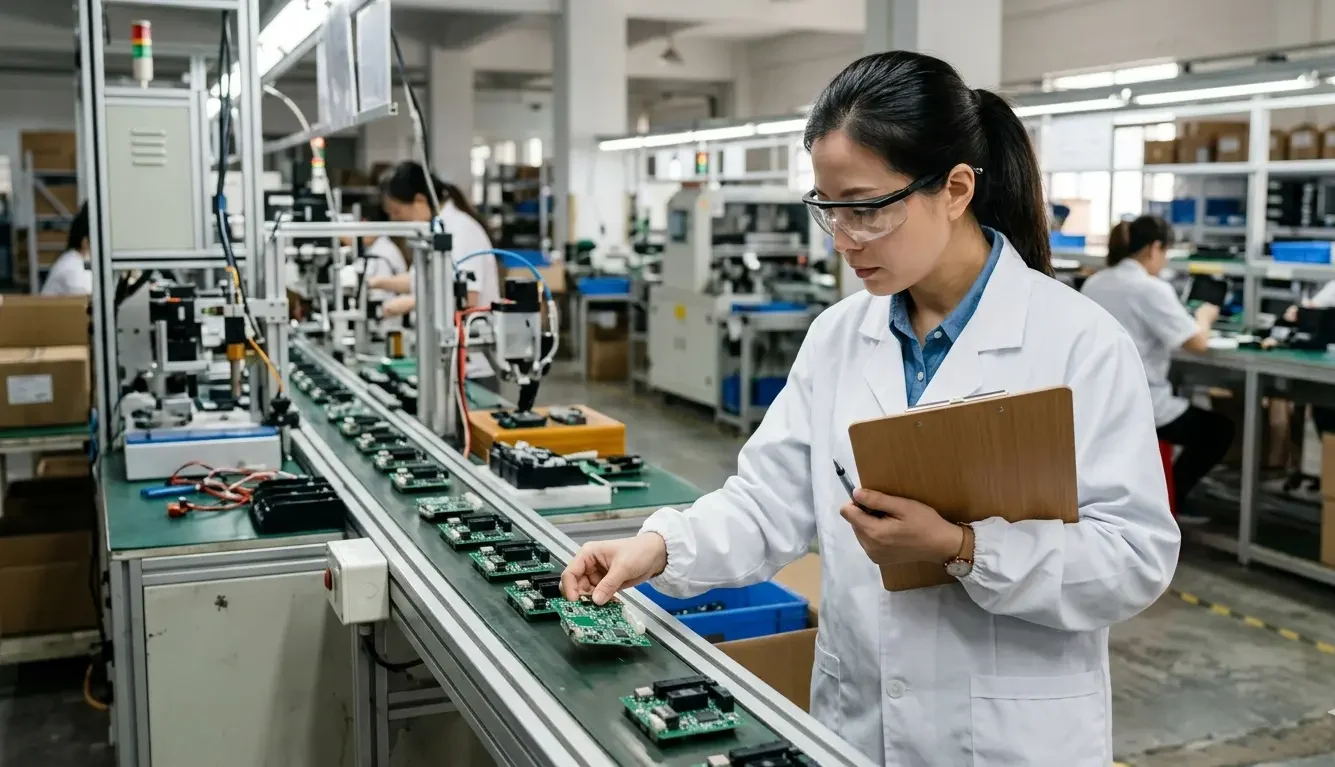
Quality control isn’t optional when you source from China it’s the difference between a business that scales and one that collapses under returns and negative reviews. Shopify’s ecommerce fulfillment guide puts the failure rate at 15 to 20% of incoming shipments from Chinese suppliers without independent quality checks. That means without QC, roughly one in five shipments arriving at your warehouse contains products that don’t meet your specifications. At scale, that’s thousands of units generating customer complaints, return costs, and review damage that takes months to recover. The brands that build reliable China sourcing operations treat quality control as a fixed operational cost, not an optional expense.
Fulfillmen operates a three-stage quality protocol on all inbound inventory. Stage one is incoming inspection: every product batch is counted, checked against purchase order specifications, and photographed within 24 hours of warehouse arrival. Stage two is pre-pack QC: a percentage based sample of units is inspected for functional defects, cosmetic damage, and labeling accuracy before picking begins. Stage three is pre ship audit: a final check on packed orders before carrier handoff, confirming correct product, quantity, packaging integrity, and shipping label accuracy. This three stage approach, developed across 20+ years of processing China origin shipments, catches problems at the earliest and cheapest intervention point before defective products ever reach your customers.
Pre-Production, Inline, and Pre-Shipment Inspections Explained
Three inspection types serve different purposes. Pre production inspection evaluates raw materials and components against your specifications before manufacturing starts at the right intervention point for orders where material quality is critical, like electronics or childrenswear. Inline inspection happens during the production run, typically when 20 to 30% of the order is complete, allowing you to catch systematic defects early enough to correct them before the entire batch is finished. Pre-shipment inspection evaluates a statistically valid sample of finished goods using AQL sampling standards at the factory before shipment. For ecommerce brands without in-house China staff, pre-shipment inspection through a China 3PL with on the ground presence is the most practical option; it eliminates the need to hire a separate inspection agency and creates documented evidence of product condition before goods leave the country.
Navigating 2026 Tariffs When You Source From China
What the 2026 Tariff Landscape Means for Your Landed Cost
If you’re learning how to source from China in 2026, tariffs aren’t optional; they directly affect your landed cost and therefore your margins. Section 301 tariffs remain in place on most Chinese goods at rates between 7.5 and 25%, depending on product category and HTS code classification. The de minimis exemption that allowed packages under $800 to enter the USA without formal customs entry has been significantly restricted, effectively ending the duty free individual order model that many informal operations depended on. For legitimate ecommerce brands sourcing at volume, neither change is fatal but both require adjustment in your cost modelling before you place orders.
The practical implication is simple: build tariff costs into your cost of goods model before you source from China, not after receiving your first customs bill. Use the USITC HTS search tool to identify the correct HTS code for your product and the applicable Section 301 rate. DDP (Delivered Duty Paid) shipping where your China 3PL handles customs documentation, duty calculation, and payment as part of the fulfillment arrangement is the most practical solution for ecommerce brands scaling their China sourcing. It eliminates the expertise requirement of managing customs compliance in-house and ensures your customers don’t receive surprise duty bills at delivery. Fulfillmen includes DDP shipping as standard on all US-bound shipments.
How to Calculate Your Real Landed Cost When Sourcing From China
Landed cost is the total cost of a product reaching your warehouse: factory price plus shipping plus insurance plus import duties plus inspection fees plus fulfillment receiving fees. Most new brands sourcing from China calculate factory price and shipping, then get surprised by customs duties they hadn’t modelled. Here’s a working formula: take your ex-factory price, add air freight (typically $4 to $8 per kg for express), add the applicable Section 301 tariff percentage, then add a 2 to 3% insurance buffer. For a product with a $5 ex-factory price, shipping air at $1.50 per kg with 25% Section 301 tariff, the realistic landed cost is closer to $8.75 not $5. Build your retail pricing from that number, not from the factory quote alone.
How a China 3PL Transforms Your Sourcing Operation
What a China-Based Fulfillment Partner Actually Does
Most brands learning how to source from China assume they need three separate relationships: a sourcing agent to find products, a quality control company to inspect them, and a freight forwarder to ship them. That fragmented model creates three invoices, three communication channels, and three points of failure on every shipment. A China based 3PL like Fulfillmen consolidates all three into a single operational partner. Your products go from factory to Fulfillmen’s Shenzhen warehouse, where they’re received, inspected, stored, and shipped directly to your customers worldwide with no other intermediaries required.
The economics are equally clear. Fulfillmen operates with no minimum order requirements and no monthly storage minimums you pay only for units you ship and space you use. For brands in growth mode, that means no locked-in fees consuming margin while you’re still testing products. Compare that to US-based 3PLs requiring $250 or more monthly minimums before you’ve shipped a single order, and the case for China based fulfillment becomes obvious. Brands sourcing from China through Fulfillmen typically see 20% lower total landed costs compared to shipping inventory to a US warehouse first, because they eliminate an entire international shipping leg from the supply chain.
Why Single-Partner Accountability Changes Everything
Here’s what separates professional China-based fulfillment from direct supplier shipping: accountability. When a supplier ships an order directly to your customer and something goes wrong, wrong product, damaged packaging, missing quantity you’re chasing a Chinese factory for resolution while your customer is waiting and your review rating is dropping. When a China 3PL handles fulfillment, there’s one accountable party with documented receiving records, QC logs, and shipment tracking at every stage. Fulfillmen’s warehouse management system captures photographic evidence at both receiving and pre-ship stages. When a dispute arises with a supplier, a carrier, or a customer you have verifiable documentation rather than a miscommunication between you and a factory 8,000 miles away.
Building Your China Sourcing System: The Five-Step Process
Step 1 — Define Your Product Specifications Before You Search
Don’t open Alibaba until you’ve written a product specification document. It sounds tedious, but it eliminates the single biggest cause of sourcing failures: miscommunication between what you intended and what a factory produced. Your spec document should include dimensions and tolerances, materials and material standards, functional requirements, packaging specifications (dimensions, labeling, barcodes), and required certifications such as CE, FCC, or CPSC. Suppliers who receive a proper spec sheet engage more seriously; it signals a professional buyer who will inspect against the specs, which is exactly the signal you want to send when you source from China for the first time with a new factory.
Step 2 — Sample Before You Scale
Sampling is non-negotiable, even from suppliers with strong track records. Production quality can differ materially from sample quality, particularly when factories move your production to lower cost sub suppliers without disclosure. Order samples from your top three to five supplier shortlist, evaluate each against your spec document precisely, and select the supplier offering the best combination of quality, price, communication speed, and production timeline. Don’t skip sampling because a supplier has strong Alibaba reviews and reviews reflect other buyers’ experience with their products, not yours.
Step 3 — Negotiate Payment Terms and Minimum Order Quantities
Standard payment terms in China manufacturing are 30% deposit before production and 70% on pre-shipment inspection or bill of lading. For first orders with a new supplier, that’s reasonable and protective for both parties. As you build a track record, negotiate toward net-30 or net-60 terms that give your business cash flow room. On minimum order quantities: most Alibaba suppliers list MOQs that are negotiable, particularly for first orders. A well-structured inquiry explaining your growth trajectory and future order potential will often get you 50% of the listed MOQ as a trial production run. Don’t accept the first number as fixed it rarely is.
Step 4 — Run Quality Control at the Factory, Not at Your Warehouse
Pre-shipment inspection at the factory is dramatically cheaper than discovering quality problems after 25 days of sea freight. Hiring a third-party inspection company for a pre-shipment audit typically costs $200 to $300 per inspection day, a fraction of the cost of returning or scrapping a defective batch. If you’re working with a China 3PL that includes QC as part of their service, this cost is absorbed into your fulfillment fees and documentation is generated automatically. Either way, the arithmetic is clear: catching problems before shipment is always cheaper than after.
Step 5 — Choose DDP Shipping and Stop Guessing About Customs
Delivered Duty Paid shipping means your China logistics partner handles customs documentation, HTS classification, duty calculation, and payment on every shipment. You pay one all-in price per unit and your customers don’t receive surprise customs bills at delivery which is a conversion killer and a brand experience disaster. DDP through a China 3PL is not more expensive than self managing customs when you factor in broker fees, continuous bonding costs, and the time spent classifying goods correctly. For brands sourcing from China at scale, DDP is the professional standard. Fulfillmen includes it as part of every US-bound fulfillment arrangement.
Why Fulfillmen Is the Right Partner for Brands Sourcing From China
20+ Years of China Logistics Experience Behind Every Shipment
Fulfillmen is a China-based ecommerce fulfillment center with warehouses in Shenzhen, Hong Kong, and India, serving DTC brands and Shopify sellers worldwide. We don’t just handle shipping we source products directly from Chinese manufacturers, run three-stage quality control on all inbound inventory, manage customs documentation for DDP shipping to the USA, UK, and EU, and fulfill orders to 220+ countries via DHL, FedEx, UPS, and premium private line carriers with tracking on every shipment. What makes Fulfillmen different from US-based 3PLs for brands sourcing from China is simple: we’re already there. Your products go from your Chinese factory to our Shenzhen warehouse, through quality control, and straight to your customers no extra ocean freight leg required.
No Minimums, No Monthly Fees, No Lock-In
Fulfillmen operates on a simple model: you pay for what you ship. There are no minimum order requirements, no compulsory storage commitments, and no long term contracts. For brands testing new products or scaling from small volumes, that means fulfillment costs match your revenue; they don’t eat margin before you’ve validated a product. Our Shenzhen warehouse integrates directly with Shopify, WooCommerce, and all major ecommerce platforms, with orders auto-synced in real time, picked and quality checked within our standard dispatch window, and tracking pushed back to your store automatically. Whether you’re fulfilling 50 orders a month or 50,000, the infrastructure handles the scale.
Build Your China Sourcing Operation With a Partner That's Done It Before
If you’re ready to source from China in a way that’s professional, scalable, and not dependent on luck with suppliers, Fulfillmen’s team is set up to make that happen. We handle supplier sourcing, quality control, customs, and fulfillment as a single integrated service so you can focus on finding products people want to buy rather than managing a fragmented logistics operation across three continents. Get in touch via our contact page and tell us what you’re building. We’ll handle the supply chain.
Frequently Asked Questions: How to Source From China
How do I start sourcing from China as a small ecommerce brand?
Start by identifying your product category and target retail price, then reverse engineer your maximum landed cost before you search any supplier. Use Alibaba for initial supplier discovery, filtering by Trade Assurance and Verified Supplier status. Request samples from at least three to five suppliers before committing to any production order. For brands shipping fewer than 500 units per month, a China-based 3PL like Fulfillmen can handle sourcing, quality control, and fulfillment in one step removing the need to manage suppliers, inspectors, and freight forwarders separately.
What is the difference between Alibaba, 1688, and a sourcing agent?
Alibaba is an English language B2B marketplace connecting international buyers to Chinese manufacturers, with Trade Assurance payment protection. 1688 is Alibaba’s domestic Chinese platform offering 30 to 50% lower prices but requiring Chinese-language navigation. A sourcing agent is a person or company in China who negotiates with manufacturers, handles quality inspection, and coordinates shipping, typically charging 5 to 10% of order value. For ecommerce brands sourcing consistently, a China-based 3PL that includes sourcing services combines all three functions under one accountable partner.
How do I verify a Chinese supplier is legitimate before sending payment?
Verify through four steps: confirm Trade Assurance and Verified Supplier status on Alibaba, request their business license (Yingye Zhizhao) and cross-check the company name against their Alibaba profile, order samples before any production run, and never pay via Western Union or personal bank transfers. Use Alibaba Trade Assurance, PayPal Goods and Services, or a letter of credit for large orders. Legitimate manufacturers without exception accept standard B2B payment methods.
What is quality control and why does it matter when sourcing from China?
Quality control is the process of inspecting products before they leave the factory or fulfillment center to catch defects before they reach customers. Shopify’s fulfillment guide puts failure rates at 15 to 20% of incoming shipments without professional QC. Three checkpoints matter most: pre-production on raw materials, inline during manufacturing, and pre-shipment final inspection. A China-based 3PL with in-house QC eliminates the cost of a separate inspection agency and creates documented evidence at every stage.
How long does it take to ship products from China to the USA?
Express air freight via DHL, FedEx, or UPS takes 5 to 10 business days at $4 to $8 per kg. Economy air takes 12 to 20 days at $1 to $3 per kg. Sea freight takes 25 to 35 days at $0.10 to $0.50 per kg and is only viable for bulk inventory. For ecommerce sellers using a China 3PL, individual orders typically ship in 8 to 15 days via private line carriers at negotiated volume rates faster than economy air and significantly cheaper than express courier on a per-unit basis.
Do I need a sourcing agent or can I use a 3PL for sourcing from China?
A standalone sourcing agent makes sense for large, irregular bulk orders where dedicated factory negotiation justifies the 5 to 10% commission. A China-based 3PL that includes sourcing services like Fulfillmen is more practical for growing ecommerce brands because it combines supplier sourcing, quality control, storage, fulfillment, and shipping under one operational partner. This eliminates the handoff between separate service providers and means one accountable party manages your product from factory to customer doorstep.