Private label dropshipping is a business model in which you sell products under your own brand name without manufacturing them yourself or holding inventory. The supplier manufactures the product to your specifications or a customized version of their existing product, applies your branding, and ships orders directly to your customers when a sale is placed.
It combines two distinct strategies: private label (exclusive, branded products manufactured by a third party) and dropshipping (no inventory held; the supplier ships directly to the customer). The result is a model that lets founders build a recognisable brand with higher margins than generic dropshipping, without the capital requirements of holding stock.
Private label brands already account for roughly 21% of the US consumer-goods market by volume. That share is growing and a meaningful portion of those brands, especially at the early stage, are operating on a private label dropshipping model before they have the order volume to justify holding inventory. Understanding how the model actually works, what it realistically costs, and when it is time to move beyond it is the practical knowledge most guides in this space skip.
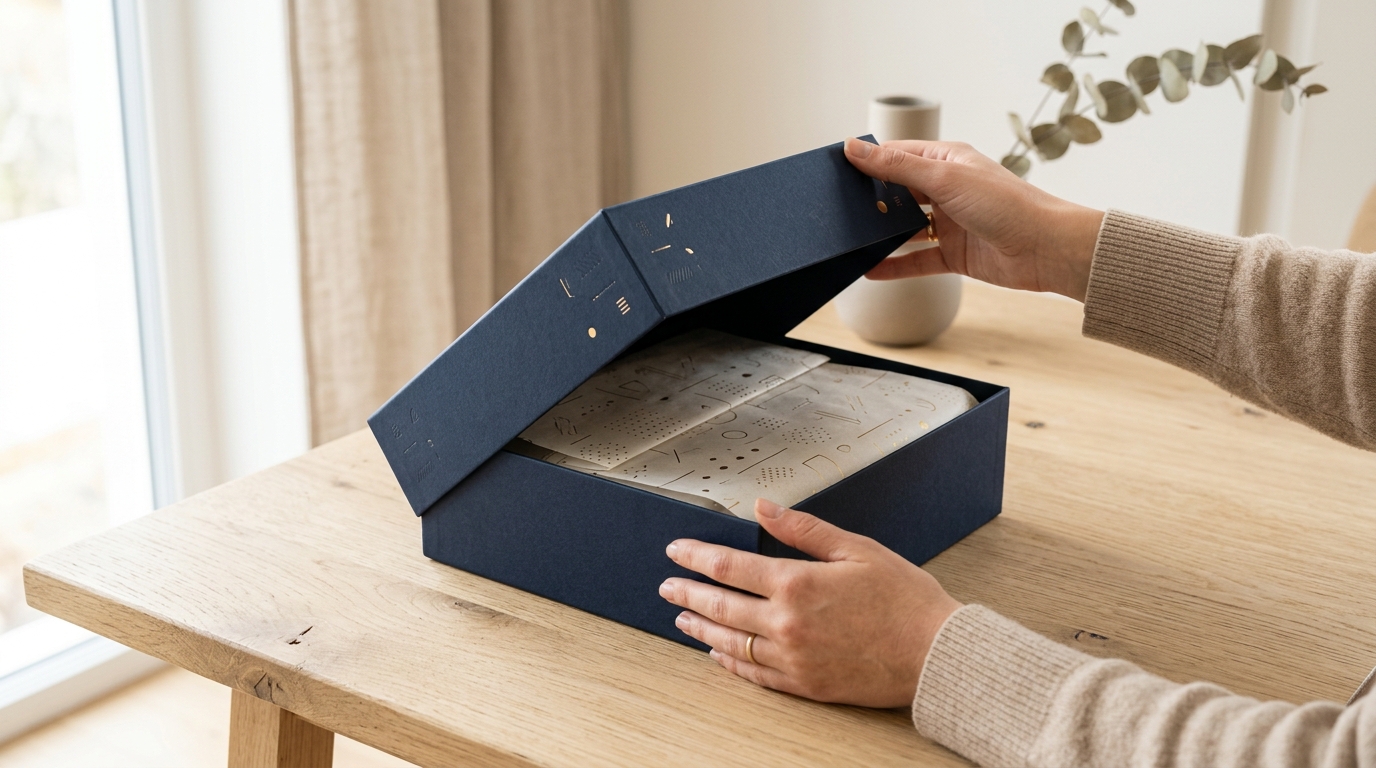
What Is Private Label Dropshipping?
Private label dropshipping is the combination of two ecommerce models that are usually described separately:
Private label — a manufacturer produces a product to your specifications. The product carries your brand and is sold exclusively under your brand name. No other retailer can sell the same product.
Dropshipping — you do not hold inventory. When a customer places an order, the supplier (in this case, your private label manufacturer or a fulfilment partner working with them) ships directly to your customer. You pay for the product after the customer pays you.
In the private label dropshipping model, the supplier manufactures products branded for your business, holds stock at their facility, and fulfills orders on your behalf. You own the brand identity and the customer relationship. The supplier owns the physical inventory and the shipping execution.
Private Label Dropshipping vs White Label vs Regular Dropshipping
These three models are frequently confused. The table below clarifies the distinction:
| Regular Dropshipping | White Label Dropshipping | Private Label Dropshipping |
Product exclusivity | Generic product sold by many sellers | Generic product multiple brands buy from same supplier | Exclusive product made to your specifications |
Branding | Minimal or none | Your logo on a generic product | Full brand ownership product, packaging, identity |
Customisation | None | Packaging and label only | Product formulation, materials, design, packaging |
Inventory held | No | No | No (in true dropshipping model) |
Supplier ships to customer | Yes | Yes | Yes |
Margin potential | Lowest high competition on identical products | Low-to-mid competitors sell same product | Highest exclusivity supports premium pricing |
Brand differentiation | Very low | Low product is identical across brands | High product is exclusive to your brand |
Time to launch | Days | Days to weeks | Weeks to months (sampling and spec process required) |
The practical distinction: regular dropshipping and white label dropshipping are faster to launch but harder to build brand equity around, because competitors can source the same product. Private label dropshipping takes longer to set up but produces a product that no competitor can replicate the foundation for a defensible brand.
How Does Private Label Dropshipping Work?
The operational process follows five stages:
1. Product selection and niche validation
Private label dropshipping works best in categories where branding influences purchasing decisions: beauty, supplements, pet products, home accessories, personal care, and fitness equipment are common examples. The product must have sufficient demand to justify the supplier minimum order for initial branded stock, but sufficient margin to make the economics work without bulk purchasing discounts.
Validate demand before committing to a supplier. Use existing marketplace data, social search, and test campaigns with a generic product first. Private labels require supplier investment to go in with evidence of demand, not just a product idea.
2. Finding and qualifying a private label supplier
Most private label dropshipping products are manufactured in China. Platforms like Alibaba connect buyers with Chinese manufacturers offering private label services branded packaging, custom formulations (for relevant categories), and direct-to-consumer shipping. For brands that want more than a product listing and need end to end help with supplier identification, quality control, and fulfilment, D2C procurement from a China-based fulfilment partner covers the sourcing and logistics layer simultaneously. For a detailed breakdown of the sourcing process, see our guide to sourcing from China.
When evaluating suppliers, confirm: minimum order quantities for branded stock, sampling process, lead times for initial production, per-unit cost at your expected volume, and whether they offer direct-to-consumer shipping to your target markets.
3. Product development and branding
Private label requires more upfront work than white label or regular dropshipping. You will provide the supplier with your brand specifications: logo files, packaging design, colour palette, and any product customisation within their manufacturing capability. Request physical samples before approving production. Quality control at the sample stage is far cheaper than after a production run.
4. Store setup and channel selection
Your own DTC store (Shopify, WooCommerce) gives you maximum brand control and the customer data that feeds your brand long-term. Marketplace channels (Amazon, Etsy) add volume but reduce margin and limit branding. Most private label dropshipping brands start DTC and add marketplace channels once the product is validated. Amazon’s private label programme selling branded products via FBA is a distinct model; the dropshipping variant described here uses supplier-direct or 3PL-direct fulfilment, not FBA.
5. Order fulfilment
When a customer places an order in your store, the order is transmitted to your supplier or fulfilment partner (either through platform integration or manual forwarding). The supplier picks the branded product, packs it in your branded packaging, and ships directly to the customer. Your customer receives an order that looks entirely like your brand. Explore Fulfillmen’s dropshipping fulfilment services for the full capability detail on how this works with China-origin supplier stock.
Is Private Label Dropshipping Profitable? The Real Economics
The margin profile of private label dropshipping is more attractive than generic dropshipping, but it requires more upfront investment and carries specific costs that generic dropshipping avoids.
Revenue and margin
Regular dropshipping margins typically run 10–25%. Private label dropshipping margins are higher because exclusivity supports premium pricing 35–55% gross margins are achievable in the right category. The brand premium you charge for an exclusive, branded product offsets the higher per-unit cost of private label manufacturing versus generic sourcing.
Upfront costs to account for
- Product sampling typically $50–$300 per sample depending on category and customisation level. Budget for multiple rounds before approving production.
- Branding setup packaging design, logo, brand identity. Can be done cost-effectively via freelancers; budget $200–$800 for a functional brand visual package.
- Initial branded stock with supplier most private label suppliers require a minimum branded inventory run (typically 50–200 units) even for dropshipping arrangements. This is your working inventory commitment; it is not a capital outlay in the traditional sense, but it requires supplier-level trust and may involve a holding deposit.
- Store and platform costs Shopify from $29/month; domain, payment gateway, and any dropshipping integration apps.
- Marketing and customer acquisition this is where most of the operating cost sits. Private label brands without a differentiated marketing angle face the same CAC challenge as any ecommerce business.
The 2026 customs reality for China-origin private label dropshipping
Any private label dropshipping brand sourcing from China and shipping to the US must account for the May 2025 removal of the $800 de minimis exemption. Every single order shipped from China to the US now requires formal customs entry and full duty payment, regardless of the order value. A $25 skincare product. A $15 phone accessory. Everything. This materially increases the landed cost per unit compared to the pre-2025 operating environment and must be factored into your margin calculations and retail pricing from day one.
The practical implication: private label dropshipping brands shipping direct from a Chinese supplier to US customers need DDP (Delivered Duty Paid) shipping arrangements; the duty is paid at origin, not billed to the customer on arrival. A fulfilment partner with established customs channels in China can handle this at scale; a supplier without that infrastructure typically cannot.
What Products Work Best for Private Label Dropshipping?
Not every product category suits the model. The best candidates share several characteristics: the brand story can command a price premium over generic alternatives, the product has repeat purchase potential (which builds customer lifetime value), the category is not dominated by commodity pricing, and the product is manufacturable at reasonable MOQ for private label customisation.
Category | Why It Works | Watch Out For |
Beauty & skincare | Formulation customisation widely available; brand premium strong; repeat purchase | Regulatory requirements vary by market; expired inventory risk |
Supplements & wellness | High brand loyalty; recurring purchase; China manufacturers well-established | Regulatory and labelling compliance is complex; expiry dates add dead stock risk |
Pet products | Emotional purchasing; premium pricing accepted; wide product range | Competition is intensifying; brand differentiation must be genuine |
Home accessories | Visual branding creates strong perceived value; high AOV potential | Lower repeat purchase frequency; trend sensitivity |
Personal care | Broad category; barrier to entry low enough for new brands | Commoditisation risk if product differentiation is only label-deep |
Fitness & wellness equipment | Higher AOV; brand equity builds from performance claims | Warranty and returns complexity; quality control more critical |
Limitations of Private Label Dropshipping
The model is not without constraints, and most guides understate them:
- Quality control is indirect: you are not inspecting products before they reach customers. If a production batch fails your quality standard, you find out from customer complaints, not from a pre-dispatch inspection.
- Supplier dependency: your business depends on one supplier’s production capacity, reliability, and pricing. If they raise costs, change formulations, or go out of business, your product and your brand are at risk simultaneously.
- Slow-moving branded inventory becomes a supplier-side problem if branded stock sits at the supplier longer than expected, you have limited visibility and leverage over what happens to it. Unlike holding stock in your own 3PL, you cannot inspect, repackage, or redirect it easily.
- Shipping speed limitations supplier-direct shipping from China takes longer than fulfilment from a domestic or China-origin warehouse. In a market where customers expect 3–7 day delivery as standard, 10–18 day supplier-direct times create churn and return pressure. Premium private-line carriers (YunExpress, 4PX, CNE) reduce this to 7–12 days for major markets but do not eliminate it entirely.
- Margin compression as you scale at low order volumes, the dropshipping model’s per-unit cost is the only option. At higher volumes, bulk purchasing and 3PL fulfilment consistently produce lower per-unit landed costs than supplier-direct shipping. The model that serves you at 50 orders per month may actively cost you margin at 500 orders per month.
When to Move Beyond Private Label Dropshipping
Private label dropshipping is an excellent model for proving a product and building initial brand traction. It is not the most efficient model for scaling a brand that has demonstrated consistent demand. The signals that tell you it is time to transition are:
- Consistent monthly order volume on your best-performing SKUs — typically 300–500+ orders per month on a single product. At this level, bulk purchasing and 3PL fulfilment produce measurably better unit economics than supplier-direct dropshipping.
- Customer complaints about delivery speed if WISMO (where is my order) tickets are a consistent proportion of customer service volume, your fulfilment model is actively harming your brand.
- Margin compression you can see the per-unit cost difference between what you pay supplier-direct versus what you would pay buying in bulk. The spread is your case for the transition.
- Brand experience inconsistency supplier-direct packaging varies in quality and consistency. Once brand experience is central to your customer proposition, you need direct control over how every order leaves the warehouse.
- New market expansion adding a market (EU, Australia, Middle East) requires fulfilment infrastructure positioned to serve it efficiently. Supplier-direct shipping from China to multiple markets simultaneously adds cost and complexity that a multi-region 3PL resolves.
The transition from private label dropshipping to holding inventory with a 3PL is covered in depth in our guide to dropshipping vs 3PL including how to stage the transition without disrupting existing revenue.
How Fulfillmen Supports Private Label Dropshipping Brands
Fulfillmen operates at the intersection of where most private label dropshipping brands source their products and where their customers receive them. With fulfilment infrastructure in Shenzhen, Hong Kong, and India, Fulfillmen works with brands at every stage of the private label dropshipping journey from the first branded shipment to the transition into full ecommerce fulfilment services with owned inventory.
For private label dropshipping brands specifically, Fulfillmen provides:
- Dropshipping fulfilment services source products, apply your branded packaging, and ship direct to your customers globally without you holding inventory. Your customers receive an order that looks entirely like your brand, dispatched from Fulfillmen’s China-origin warehouse infrastructure.
- D2C procurement for brands that need support identifying and qualifying private label suppliers in China, Fulfillmen’s procurement team handles supplier selection, quality control, and branded product setup. The sourcing and fulfilment layer are managed by the same partner, eliminating the coordination gap between manufacturer and 3PL.
- DDP customs handling every China-to-customer shipment through Fulfillmen can be structured as DDP (Delivered Duty Paid), so your customers never receive unexpected customs bills on arrival. This is the operational requirement for any private label dropshipping brand shipping to the US or EU post-2025 de minimis removal.
- A clear transition path when your order volume justifies holding inventory, Fulfillmen’s warehouse and inventory management infrastructure is already in place. You do not change fulfilment partners to make the move; you change the model. Your branded packaging, your supplier relationships, and your fulfilment infrastructure stay the same. Your per-unit cost improves.
- No minimum order requirements and 90 days free storage private label brands testing new SKUs or managing seasonal peaks can hold the inventory they need without penalty. The model scales with your business rather than ahead of it.
Ready to build your private label brand with fulfilment infrastructure designed for it from day one? Get a free quote from Fulfillmen and see what your private label dropshipping operation looks like with China-origin fulfilment behind it.
Frequently Asked Questions About Private Label Dropshipping
What is private label dropshipping?
FOB stands for Free on Board. Under FOB terms, the seller covers all costs to get goods to a named port and loaded onto a vessel. From the moment goods are on board, the buyer is responsible for ocean freight, insurance, destination port charges, customs clearance, import duties, and delivery.
How is private label dropshipping different from regular dropshipping?
FOB Shipping Point means risk and ownership transfer to the buyer at the moment goods leave the seller’s facility or named origin point. FOB Destination means the seller retains responsibility until goods arrive at the buyer’s named destination. FOB Destination is more favourable for buyers; FOB Shipping Point is the standard for China-origin international trade.
What does FOB price mean on a supplier quote?
An FOB price includes the product cost plus all costs to deliver goods to the named port and load them onto the vessel. It does not include ocean freight, cargo insurance, destination port fees, import duties, or inland delivery. For US imports, customs duties are calculated on the FOB value, not on the final landed cost including freight.
What is the difference between FOB and CIF?
Under FOB, the buyer chooses and pays for ocean freight and cargo insurance directly. Under CIF, the seller arranges and pays for ocean freight and basic insurance to the destination port, but risk still transfers to the buyer when goods are loaded at origin. CIF gives the supplier control over freight carrier selection, which can result in hidden freight markups. Most experienced importers prefer FOB for cost control and transparency.
What is the difference between FOB and DDP?
FOB transfers risk and cost to the buyer when goods are loaded at the origin port the buyer then manages ocean freight, customs, duties, and delivery. DDP means the seller or logistics partner handles everything, including customs and import duties, until goods arrive at the buyer’s named destination. DDP is essential for DTC ecommerce brands shipping directly to consumers who cannot manage import customs processes themselves.
What does FOB China mean?
FOB China typically ‘FOB Shenzhen’ or ‘FOB Shanghai’ means the supplier covers costs to the named Chinese port and loads goods onto the vessel. From that point, the buyer is responsible for ocean freight, insurance, import customs clearance, duties, and delivery. Always verify that the named port is the nearest major port to your supplier’s location ‘FOB Shenzhen’ from a factory in northern China means the supplier pays significant inland transport costs that will be reflected in their unit price.