
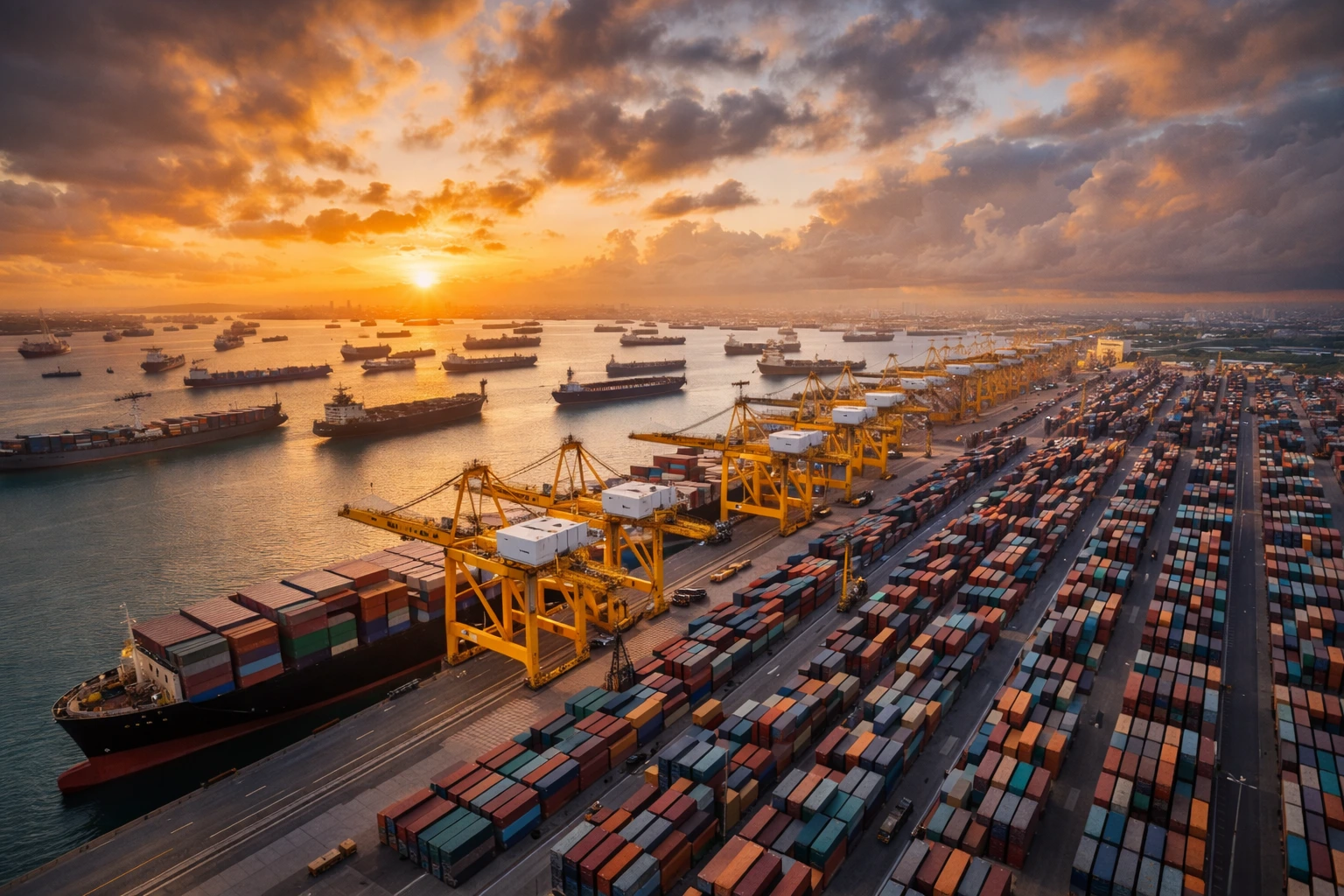
Shipping time from China to US ranges from 2 days to over 40 days and the number your freight forwarder quotes you is almost never the real one. Here’s the quick answer before the full breakdown: express courier (DHL, FedEx, UPS) delivers door to door in 2–7 days; air freight takes 5–10 days; sea freight LCL to the West Coast runs 22–31 days door to door; sea freight FCL to the West Coast takes 20–28 days. East Coast destinations add 10–15 days to every sea freight timeline. Now here’s the confusion that catches eCommerce sellers every single time. Your freight forwarder quotes “13 days sea freight from Shanghai to LA.” Your goods leave China. Two weeks later, you’re still waiting. Sound familiar? That 13-day figure is port to port ship to ship, ocean only. It doesn’t include booking time in China, customs clearance on the US side, or trucking to your warehouse. The real shipping time from China to US is almost always longer than sellers expect, and knowing the actual numbers prevents stockouts, missed launches, and angry customers. This guide covers real door-to-door transit times for every shipping method, the hidden delays nobody quotes you, and how to build a planning timeline that actually works.

Port to Port vs. Door to Door: The Confusion That Causes Stockouts
What Port to Port Actually Means
Port to port time is just the ocean or air crossing from the departure port in China to the arrival port in the US. No pickup from your supplier. No export clearance in China. No US customs clearance. No trucking to your warehouse. It’s the most optimistic number in shipping, and it’s the one most often quoted.
When a forwarder says “13 days from Shanghai to Long Beach,” they mean the ship is on the water for 13 days. What happens before and after that? That’s on you to calculate and most sellers don’t.
What Door to Door Actually Includes
Real shipping time from China to US is door to door from the moment your goods leave your supplier’s factory to the moment they arrive at your US warehouse or fulfillment center. That includes:
- Inland pickup from factory to the Chinese port or airport: 1–3 days
- Export documentation and booking cutoff: 3–7 days
- Ocean or air transit: varies by method
- US port unloading and terminal processing: 2–5 days
- US customs clearance: 1–5 days (longer if flagged for examination)
- Final trucking to your warehouse: 1–4 days
Add those stages together and every method takes significantly longer than the headline number suggests.
Shipping Time from China to US by Method: Real Door-to-Door Numbers
Express Courier Fastest but Most Expensive
Express courier through DHL, FedEx, or UPS is the fastest shipping method from China to the US. Current 2026 door to door times run 2–7 days depending on service level and destination. DHL Express from Shenzhen to New York typically lands in 3–5 days. West Coast destinations like Los Angeles often arrive in 2–3 days.
Why is express so fast? These carriers pre clear customs electronically while the package is still in the air so by the time it lands in the US, it’s already cleared and moves straight to last mile delivery. No waiting at the port. No chassis delays. No appointment slots.
Express courier is best for: urgent restocks, product samples, high value goods under 150 kg, and situations where the cost of a stockout exceeds the premium shipping cost.
Air Freight Fast for Larger Shipments
Standard air freight from China to the US delivers in 5–10 days door to door for most destinations. That breaks down roughly as: 1–2 days pickup and airport handling in China, 1–2 days actual flight time on major transpacific routes, 1–2 days US customs and airport release, 1–3 days final domestic trucking.
Air freight days China to US vary by destination. West Coast airports (LAX, SFO, Seattle) receive goods faster than East Coast airports (JFK, Miami, O’Hare) typically 5–7 days vs 7–10 days door to door.
One thing air freight sellers miss: the dimensional weight trap. Carriers charge on chargeable weight whichever is higher between actual weight and volumetric weight (L×W×H ÷ 6,000). Light but bulky goods can push your effective shipping cost far above the quoted per kg rate. Always calculate dimensional weight before booking.
Sea Freight LCL Budget Option with Real Timeline
LCL (Less than Container Load) sea freight is slower than air but significantly cheaper for shipments under 15 CBM. The sea freight transit time from China to the US breaks down as follows:
China to US West Coast (LA/Long Beach):
- Port to port: 13–16 days
- Consolidation and export processing: 5–7 days
- US deconsolidation and customs: 3–5 days
- Final trucking: 1–3 days
- Real door to door: 22–31 days
China to US East Coast (New York/Savannah):
- Port to port via Panama Canal: 25–28 days
- Processing and customs on each end: 5–10 days
- Final trucking: 1–4 days
- Real door to door: 31–42 days
LCL takes slightly longer than FCL because your goods need consolidation at origin (grouped with other shippers’ cargo) and deconsolidation at destination. Both stages add 2–4 days compared to FCL.
Sea Freight FCL Most Cost Efficient at Volume
FCL (Full Container Load) is faster than LCL because your container goes from origin to destination without the consolidation/deconsolidation steps. Current 2026 FCL door to door times:
Route | Port-to-Port | Door-to-Door |
Shanghai → LA/Long Beach | 13–16 days | 20–28 days |
Shenzhen → LA/Long Beach | 14–18 days | 22–30 days |
Shanghai → New York | 25–28 days | 33–40 days |
Ningbo → Savannah | 26–29 days | 34–42 days |
Pro tip: Matson’s fast boat service from Shanghai to Long Beach runs 11 days port to port the fastest ocean option available on this lane. It costs a premium but is worth considering when you need ocean speed without paying full air freight rates.
According to Inbound Logistics, linking transportation planning to real demand signals not just quoted transit times is one of the highest impact supply chain decisions growing eCommerce brands can make. That means planning from door to door, not port to port.

The Hidden Time Nobody Quotes You
Factory Lead Time Is Not Shipping Time
This one trips up new importers constantly. Shipping time from China to US starts when your goods are ready to ship not when you place your order. Factory production lead time typically runs 15–30 days for most consumer goods. Add that to your door to door shipping time and your real planning timeline is often 5–10 weeks from order to warehouse.
Always ask your supplier for production lead time separately from shipping time. They’re two completely different numbers.
Customs Examination Delays
US Customs and Border Protection (CBP) examines a percentage of shipments either document exam or physical exam. Document exams take 2–3 days. Physical exams where CBP opens and inspects the container take 7–14 days and can cost you $1,000–$3,000 in port storage and handling.
In 2026, CBP enforcement is stricter than ever, particularly around forced labor regulations and correct HS code classification. Incorrect documentation is the number one cause of examination holds. Working with a professional freight forwarder who reviews your documentation before departure is the best defence.
Amazon FBA Appointment Slots
If you’re shipping to Amazon FBA, add 3–5 days to your delivery estimate. Amazon fulfillment centers require delivery appointments and during peak seasons, those slots can book out days in advance. Your goods might sit at the port area fully cleared and ready to go while you wait for an appointment. Plan for this in Q4 especially.
Schedule Reliability Is Only 62%
Here’s a stat most sellers never see: carrier schedule reliability across transpacific routes currently averages 61.9%. That means almost 4 in 10 ocean shipments arrive later than scheduled. According to the CSCMP supply chain management glossary, schedule reliability is a core logistics performance metric and 62% is low. Build buffer into your inventory planning accordingly.
What Adds Extra Time: Peak Seasons and Disruptions
Chinese New Year The Biggest Annual Delay
CNY 2026 fell on February 17. Factories begin shutting down 2–3 weeks before the holiday. Ports and logistics networks operate at reduced capacity for 15+ days. After the holiday, factories take another 1–2 weeks to return to full production.
The practical impact: any order placed in early to mid January targeting a February delivery is going to be late. Booking cutoffs on ocean freight fill up in January. Express shipping China to USA time doubles during CNY because demand massively outstrips air cargo capacity.
The fix is always the same: pre build 6–8 weeks of inventory before CNY. Don’t rely on shipping anything from China during the January March window unless you’ve already booked and paid.
Q4 Peak Season
US holiday demand surges push shipping volume to annual highs in Q3 and Q4. Port congestion at LA/Long Beach during September November can add 5–10 days to sea freight transit times. Air freight capacity tightens and rates spike 20–40%. Booking lead times extend from 2–3 weeks to 4–6 weeks.
If you’re planning for Black Friday or Christmas inventory, your sea freight needs to leave China by late September at the latest for West Coast deliveries.
Port Congestion Can Double Your Timeline
Port congestion adds 5–10 days in normal periods. During major surges like the pre CNY rush or US holiday peak congestion has historically pushed container wait times to 14–21 days at transshipment hubs. Vessels queue at anchorage. Terminal yards hit 90%+ capacity. Containers sit waiting for chassis to move them.
Monitoring port congestion in advance and routing through less congested ports when possible for example, Oakland or Seattle instead of LA/Long Beach during congestion peaks can meaningfully cut your real shipping time from China to US.
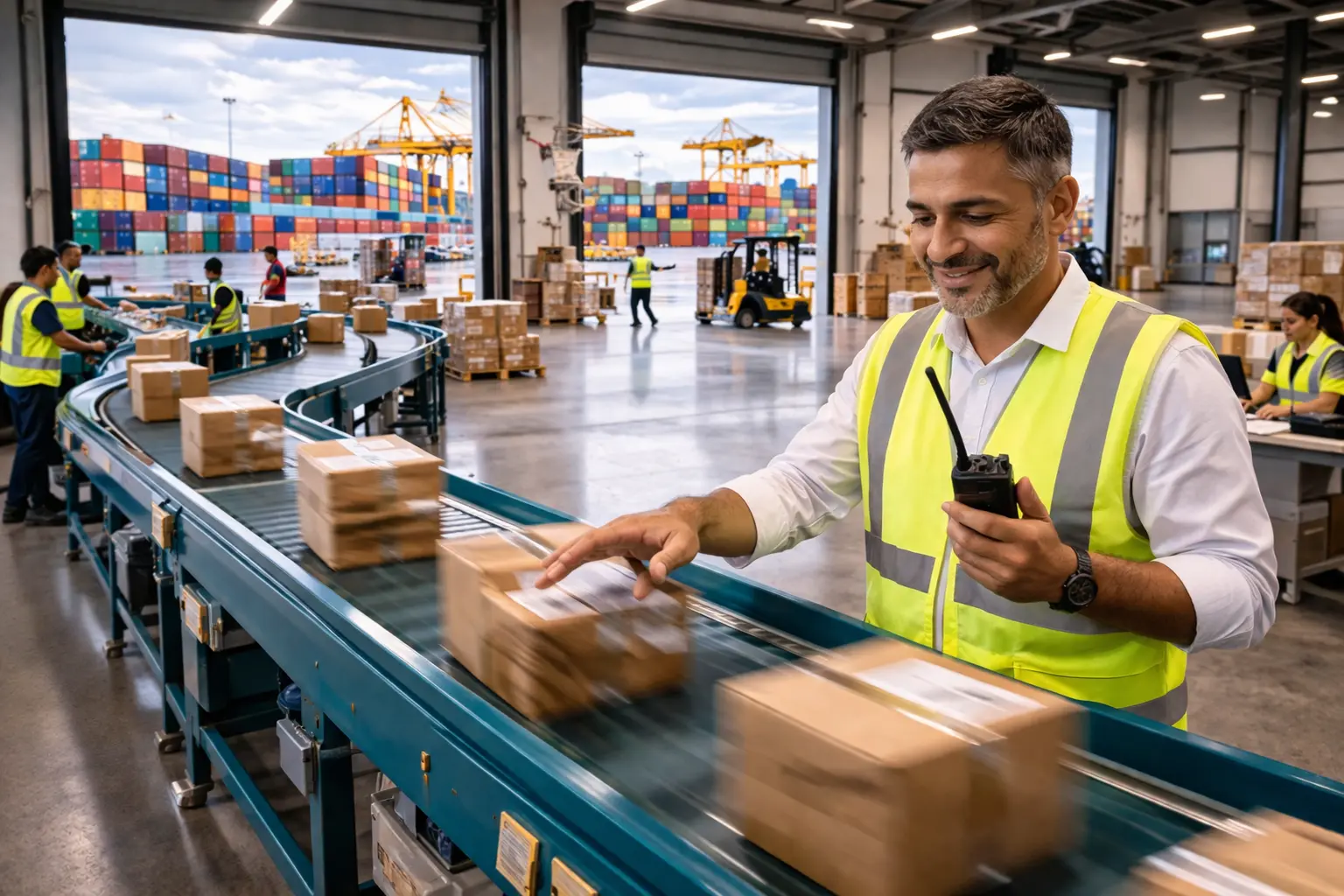
How to Cut Your Shipping Time from China to the US
Plan Total Lead Time, Not Just Transit Time
Stop planning around transit time. Start planning around total lead time:
Total Lead Time = Factory Production (15–30 days) + Booking Cutoff (5–7 days) + Transit Time (varies) + US Processing (3–10 days) + Final Mile (1–4 days)
For sea freight to the West Coast, your total lead time from order to US warehouse is typically 6–9 weeks. For air freight, it’s 3–5 weeks. For express courier, it’s 3–4 weeks including production. Build these into your reorder points so you’re never caught short.
Use a US Warehouse for Fast Fulfilment
The single biggest thing you can do to reduce the shipping time your customers experience is to store inventory in a US warehouse. Once goods are in country, orders ship domestically at 3–5 days via USPS or UPS Ground. Your customers get Amazon level delivery speed. Your per order shipping cost drops compared to paying for international express on every parcel.
Send inventory from China by sea freight cheap and cost efficient and fulfil from the US warehouse at domestic speeds. It’s the model serious eCommerce brands in 2026 use to compete on delivery expectations.
How Fulfillmen Solves the Shipping Time Problem for eCommerce Sellers
The reason most sellers have shipping time problems isn’t that they picked the wrong carrier. It’s that they’re managing the whole logistics chain China supplier, freight forwarder, customs broker, US trucking, warehouse as separate relationships with no coordination between them. Every gap in that chain adds days.
End to End Logistics from China to the US One Partner
Fulfillmen’s logistics services cover the full China to US supply chain pickup from your Chinese supplier, export documentation, international freight by air or sea, US customs clearance, and delivery to your US address or fulfillment center. You don’t coordinate five separate vendors. One partner manages the whole chain and keeps every stage moving without gaps that add days.
90 Days Free Storage Stop the Panic Shipping Cycle
The most expensive shipping decisions happen when sellers run out of stock and need goods urgently. Paying express shipping China to USA time sensitive rates because you miscalculated reorder points is one of the most avoidable costs in eCommerce. Fulfillmen’s 90 days free storage means you can hold a deeper inventory buffer at zero storage cost planning around sea freight timelines instead of scrambling for air freight every time stock drops.
Only 4 Days CNY Disruption While Others Go Dark for Weeks
During Chinese New Year, most 3PL providers shut down warehouse operations for 2–3 weeks. Fulfillmen operates with just a 4-day disruption window because warehouse operations continue even when manufacturers close. Your Shopify orders keep fulfilling. Your customers keep receiving. Your business doesn’t stop because a holiday in China said so. Fulfillmen operates across warehouses in China, Hong Kong, India, and the USA giving your supply chain real flexibility regardless of what’s disrupting any single location. Get a free quote today and start planning your shipping timelines around real numbers.
FAQs: Shipping Time from China to US
How long does shipping from China to the US actually take?
Depends on the method but always think door to door, not port to port. Express courier (DHL, FedEx, UPS): 2–7 days door to door. Air freight: 5–10 days. Sea freight LCL to West Coast: 22–31 days. Sea freight FCL to West Coast: 20–28 days. East Coast destinations add 10–15 days to sea freight times. And remember none of these include factory production lead time, which adds another 15–30 days from order placement.
What is the fastest way to ship from China to the US?
Express courier is the fastest. DHL, FedEx, and UPS deliver door to door in 2–7 days from China to the US. Pre clearance happens electronically while the package is still airborne, so there’s no customs wait time on arrival. It’s expensive $6–$12+ per kg but for urgent restocks or high value goods where the per unit shipping cost is a small percentage of product value, nothing comes close for speed.
Why does sea freight transit time from China seem longer than quoted?
Because most quotes are port to port, not door to door. The 13–16 day figure for West Coast sea freight is just the ocean crossing. Add 5–7 days for export processing in China, 2–5 days for US port unloading and terminal processing, 1–5 days for US customs clearance, and 1–4 days for final trucking and you’re looking at 22–35 days door to door, not 13. This gap is the most common cause of inventory planning failures for eCommerce sellers.
How long does air freight from China to the US take?
Standard air freight from China to the US takes 5–10 days door to door. West Coast airports typically receive goods in 5–7 days. East Coast airports (JFK, Chicago, Miami) take 7–10 days. Express air freight via major couriers is faster at 2–5 days but costs more per kg. Air freight is faster than sea but significantly more expensive the smart use case is urgent restocks, fast moving SKUs with thin safety stock, and high value products where speed protects revenue.
How can I reduce my shipping time from China to the US?
Plan for an extra 4–8 weeks of disruption around Chinese New Year not just the official holiday dates. Factories start slowing production 2–3 weeks before CNY. Ocean freight booking space fills up in January. After the holiday, factories take 1–2 weeks to return to full capacity. If you’re shipping from China in January or February without pre booked space and pre built inventory, your goods aren’t moving on schedule. Pre-order 6–8 weeks before CNY and build enough stock to cover demand through the disruption window.
Is Shopify dropshipping from China still profitable in 2026?
Three things make the biggest difference. First, switch from sea freight to air freight or express courier for fast moving products it costs more but protects your stock levels. Second, set up US warehouse fulfilment ship inventory by sea in bulk, then fulfil customer orders domestically at 3–5 day speeds. Third, use a professional 3PL partner with established customs relationships, correct documentation, and experienced freight routing because the biggest delays in real shipping time from China to US come from documentation errors, not transit time.