
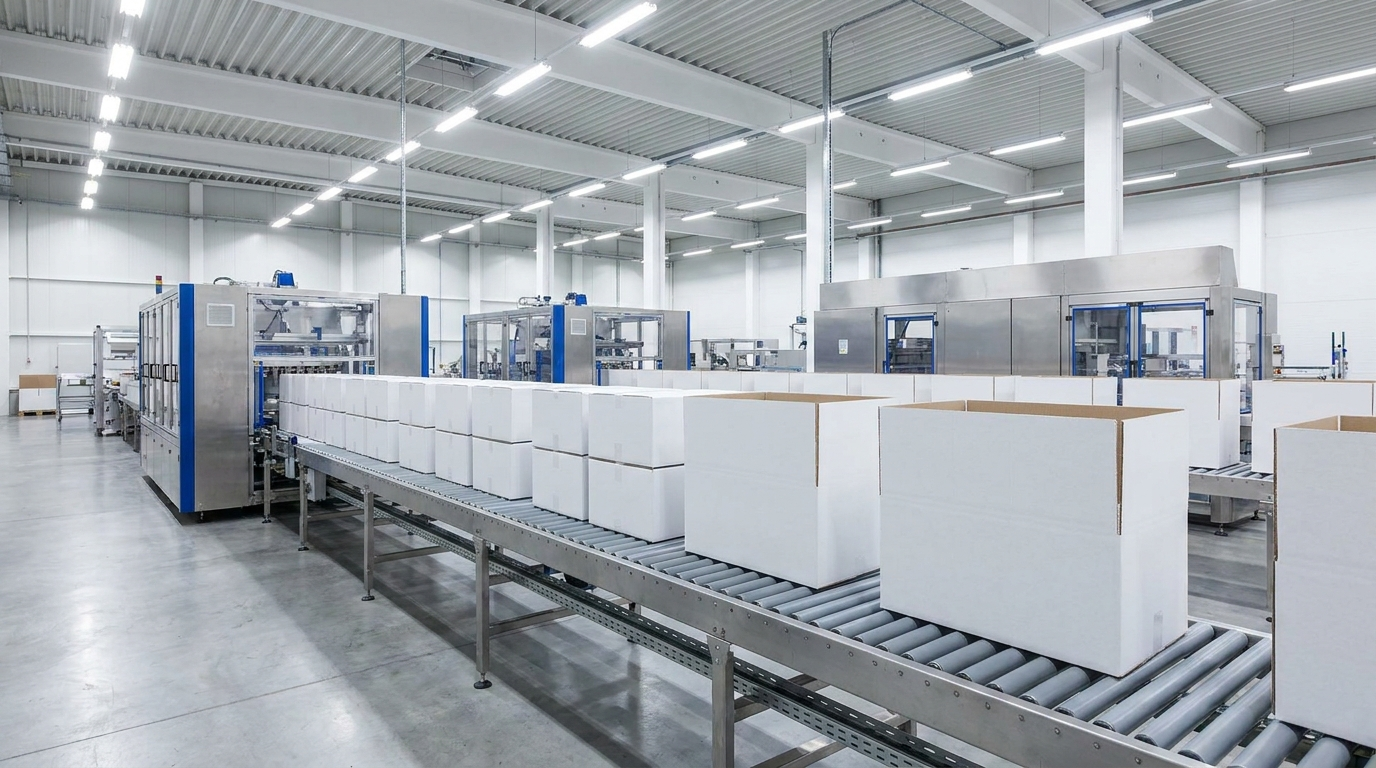
White label is a business model in which a manufacturer produces a generic product and sells it to multiple brands, each of which applies its own name, logo, and packaging and sells it as their own.
The product itself is identical across every brand that carries it. What differs is the branding around it. The skincare brand selling a cleanser, the supplement company with a protein powder, the tech accessories store with wireless earbuds in many cases, these are the same base product made by the same manufacturer, sold under dozens of different brand names at different price points.
White label is one of the most accessible entry points into ecommerce for new brands and one of the fastest ways for established brands to extend their product range without investing in product development. According to industry data cited by PLMA, US private label sales reached a record $282.8 billion in 2025, growing nearly three times faster than national brands. The model works but its success depends almost entirely on two things: the brand you build around the product, and the supply chain you build behind it.
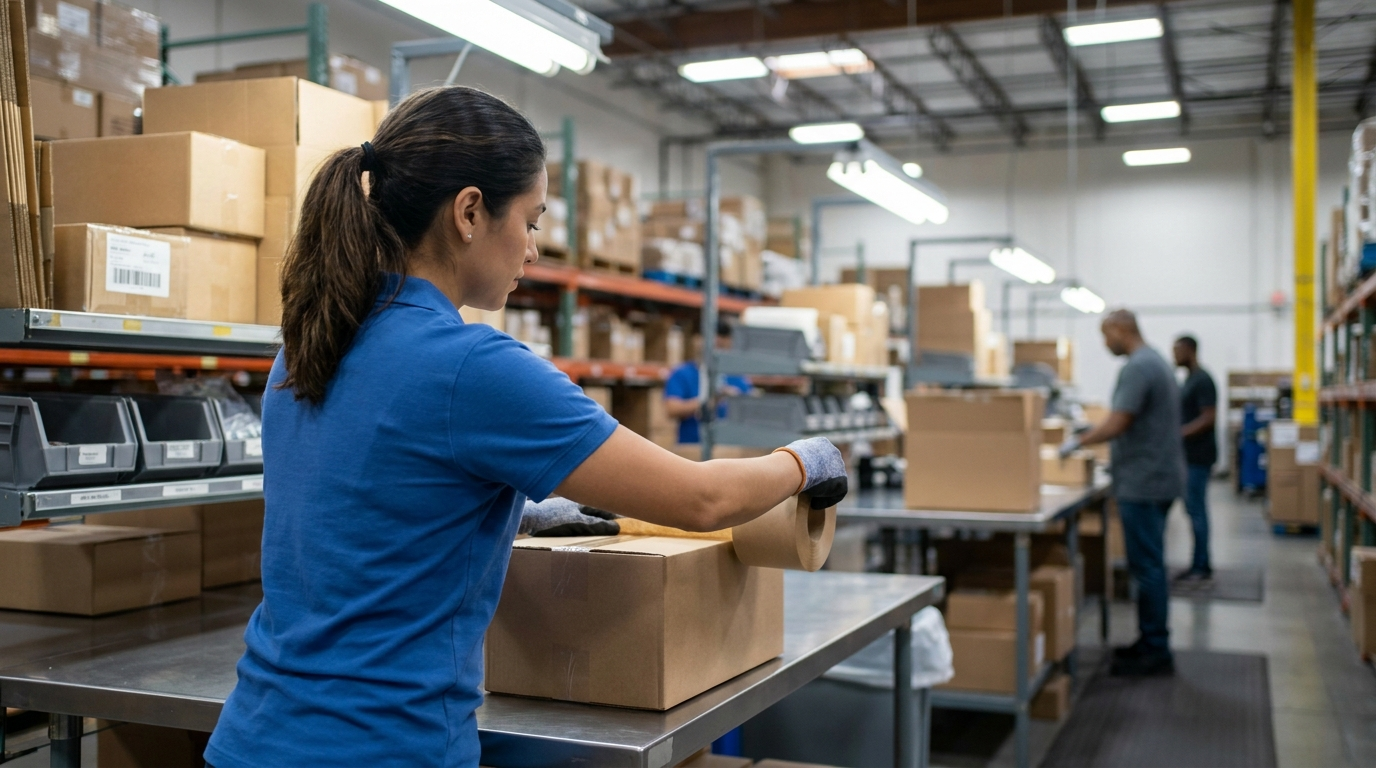
What Does White Label Mean?
White label refers to a product manufactured by one company the producer and sold by a different company the reseller under the reseller’s own brand name. The manufacturer does not sell the product to just one brand. The same product may be available to dozens or hundreds of resellers simultaneously, each applying their own label, packaging, and pricing.
The term originates from the practice of pressing records with a plain white label before commercial release, no branding, just the product, ready to be identified by whoever distributed it. In ecommerce, the concept is identical: a blank or generic product, ready to carry any brand’s identity.
Real-world white label examples
White label products are more prevalent than most buyers realise:
- Supermarket own-brand products the same bottled water, pasta, or cleaning spray manufactured by a major producer and sold under the supermarket’s name alongside the branded original.
- Beauty and skincare Many DTC brands selling serums, moisturisers, and cosmetics use the same base formulations manufactured by specialist cosmetics factories, differentiated only by packaging and brand positioning.
- Supplements and vitamins a significant proportion of protein powders, multivitamins, and wellness products sold under different brand names originate from the same contract manufacturers.
- Consumer electronics accessories phone cases, screen protectors, charging cables, and wireless earbuds are common white label categories where the same hardware carries dozens of brand names.
- Coffee many specialty coffee brands source the same beans from the same roasters and differentiate through packaging, story, and customer experience.
How Does White Label Work?
The white label process follows a consistent structure regardless of product category:
Step 1: The manufacturer produces a generic product
A factory or manufacturer produces a product in volume often in China, where the majority of white label consumer goods originate. The product is not designed for any specific brand. It is produced to a standard specification that can be sold to any buyer who wants to carry it.
Step 2: The brand selects and sources the product
The reseller the brand identifies a product that fits their market and audience, evaluates suppliers, and places an order. For most DTC brands, this sourcing process involves working with manufacturers or sourcing products from China directly, using a sourcing agent, or working through a fulfilment partner with D2C procurement capabilities.
Step 3: Branding is applied
The brand applies its logo, packaging design, and product presentation to the generic product. This may happen at the manufacturer level the factory prints or attaches the brand’s labels before shipping or at the fulfilment level, where a 3PL applies branded packaging when preparing orders for dispatch. The product that arrives at the customer’s door looks entirely like the brand’s own creation.
Step 4: The product is fulfilled and shipped
The branded product is stored, picked, packed, and shipped to the end customer. For white label brands operating at scale, this is typically handled by a third-party logistics provider rather than in house the brand owns the customer relationship and the brand identity; the 3PL owns the physical execution.

White Label vs Private Label: What Is the Difference?
This is the most common point of confusion in this category, and the distinction matters practically; it affects your cost structure, your product exclusivity, and your competitive positioning.
| White Label | Private Label |
Product exclusivity | Same product sold to many brands | Product made exclusively for your brand |
Customisation | Minimal — branding and packaging only | Significant — formulation, materials, design, specs |
Speed to market | Fast — product already exists | Slower — development and sampling required |
Upfront investment | Lower — no development costs | Higher — tooling, sampling, minimum order requirements |
Competitive risk | Competitors may sell the same product | Product is exclusive; competitors cannot copy it directly |
Margin potential | Typically lower — margins compressed by competition | Typically higher — exclusivity supports premium pricing |
Best for | Market testing, fast launch, line extension | Brand differentiation, long-term competitive positioning |
The practical decision: white label is the right model when speed and capital efficiency matter more than exclusivity. It is the model that lets a new brand get to market in weeks rather than months, test demand with real customer data, and build brand equity before committing to the higher investment of a private label product. Many successful ecommerce brands use white label products to establish their brand and generate cash flow before transitioning their bestsellers to private label as they scale.
White Label vs Dropshipping: A Common Confusion
White label and dropshipping are often mentioned in the same context but they operate very differently:
| White Label | Dropshipping |
Inventory ownership | You own the inventory | Supplier ships directly — no inventory held |
Branding | Your brand on the product | Usually supplier’s product, sometimes generic |
Fulfilment control | You (or your 3PL) control packaging and shipping | Supplier ships; you have limited control |
Margin | Better — you buy in bulk at wholesale | Thinner — supplier price includes their margin |
Brand experience | Fully controlled — packaging, inserts, returns | Limited — customer may receive supplier packaging |
Capital required | Yes — inventory purchase required | Minimal — pay per order |
The key distinction: white label is a product model; dropshipping is a fulfilment model. You can run a white label business with a dropshipping-style supply chain (supplier ships direct) but most scaling white label brands move toward holding inventory with a 3PL to gain control over packaging, delivery speed, and customer experience. For a deeper look at how these models compare as your business scales, see our guide to dropshipping vs 3PL.
White Label: Benefits and Limitations
Benefits
- Fast to market no product development cycle; the product already exists. A brand can go from idea to first sale in weeks.
- Lower capital requirement you do not pay for tooling, sampling, or manufacturing setup. The manufacturer absorbs those costs across all their buyers.
- Scalable once the brand is established, volume can be increased quickly because the manufacturer is already set up to produce at scale.
- Focus on brand-building without the manufacturing complexity, the founder’s time goes into marketing, customer acquisition, and building the customer relationship that drives repeat purchase.
- Line extension without risk established brands can add SKUs quickly by white labelling adjacent products rather than developing them from scratch.
Limitations
- Product differentiation is difficult if competitors can source the same product from the same manufacturer, the only differentiator is brand and price. Competing on price alone in a white label category is a race to the bottom.
- Slow-moving white label inventory becomes dead stock because white label products are often ordered in minimum quantities, a product that fails to sell leaves the brand holding undifferentiated inventory that is difficult to liquidate.
- Supply chain single points of failure white label brands source from manufacturers who supply many brands. A production issue, a factory closure, or a capacity crunch at the manufacturer affects every brand they supply simultaneously.
- Limited control over product quality and specification you can only buy what the manufacturer produces. Changes to the base product require either switching suppliers or accepting the change.
The Supply Chain Behind a White Label Ecommerce Business
This is the section most guides on white label skip entirely and it is the one that determines whether a white label brand actually delivers on its promise to customers.
Choosing a generic product and branding it is the easy part. The operational challenge is everything that comes after: getting the product from the manufacturer to your customer, with your branding applied, quickly and accurately, at a cost structure that preserves margin.
Sourcing: where most white label products come from
The majority of white label consumer goods are manufactured in China. Electronics accessories, beauty and personal care, supplements, home goods, apparel, and pet products are all categories where Chinese manufacturers dominate white label production. The advantages are economies of scale, manufacturing capability, and supplier density, more product categories, more options, and more competitive pricing than most alternative manufacturing locations. The process of identifying, qualifying, and ordering from these suppliers is covered in detail in our guide to sourcing products from China.
Branding at fulfilment: where the product becomes the brand
For most white label ecommerce brands, branding is applied at the packaging stage rather than at the manufacturer. The manufacturer ships plain or minimally branded products to a fulfilment centre; the 3PL applies branded outer packaging, branded inner packaging, inserts, and any other brand-defining elements before the order is dispatched to the customer.
This is where white label brands live or die on customer experience. The product inside may be identical to a competitor’s product, but the unboxing the box design, the tissue paper, the thank-you card, the insert with the brand story is entirely within the brand’s control. A 3PL that can execute this at scale, consistently and accurately, is not a logistics vendor. It is a brand execution partner.
Fulfilment at scale: why the 3PL decision matters more than most brands realise
As a white label brand grows, the operational demands of fulfilment compound quickly: more SKUs, more orders, more customers with higher delivery expectations, more returns to process. A 3PL with the warehouse infrastructure, technology integrations, and operational capacity to scale with the brand without introducing errors, delays, or packaging inconsistencies is the infrastructure layer that separates white label brands that scale from those that stall.
How Fulfillmen Supports White Label Ecommerce Brands

Fulfillmen is built for exactly the brand profile that the white label model produces: a DTC founder with a product sourced from China, a brand identity that needs to show up consistently in every customer’s hands, and a global customer base that expects fast delivery. As a third-party logistics provider with fulfilment infrastructure in Shenzhen, Hong Kong, and India, Fulfillmen sits at the origin of the supply chain that most white label brands depend on.
What Fulfillmen provides for white label brands specifically:
- Branded fulfilment pick, pack, and ship with your branded packaging applied at the fulfilment stage. Your customer receives an order that looks entirely like your brand, regardless of where the product was manufactured. Explore Fulfillmen’s ecommerce fulfilment services for full capability detail.
- D2C procurement support Fulfillmen’s D2C procurement service covers sourcing from vetted Chinese manufacturers, quality control before goods leave the factory, and direct-to-consumer shipping with full supply chain visibility. For white label brands sourcing from China, this collapses the gap between manufacturer and customer.
- Real-time inventory management Fulfillmen’s warehouse and inventory management system gives white label brands live visibility over stock levels across all warehouse locations, with automatic sync to connected Shopify, WooCommerce, and marketplace stores. You always know what you have, where it is, and when to reorder.
- No minimum storage requirements white label brands testing new products or managing seasonal demand can hold the inventory volume their business needs without penalty. Ninety days of free storage gives new white label lines room to build without accumulating storage fees before they gain traction.
- Multi-carrier global shipping white label brands typically sell to customers worldwide. Fulfillmen’s multi-carrier network DHL, FedEx, UPS, USPS, and regional carrier partners selects the most cost-efficient and time-appropriate route for every order’s destination, with no carrier lock-in. See why brands choose Fulfillmen for full capability detail.
Ready to build the supply chain your white label brand needs? Get a free quote from Fulfillmen and see what fulfilment looks like with China-origin infrastructure behind your brand.
Frequently Asked Questions About White Label
What does white label mean?
White label means a product manufactured by one company and sold by another company under the second company’s own brand name. The manufacturer may sell the same product to many different brands. Each brand applies its own logo, packaging, and positioning, so the product appears to belong entirely to the brand selling it.
What is the difference between white label and private label?
White label products are generic and sold to multiple brands simultaneously any brand can source the same product. Private label products are manufactured exclusively for one brand to that brand’s specifications. White label is faster and cheaper to launch; private label offers greater product exclusivity and stronger competitive differentiation, at higher cost and longer lead time.
What are some examples of white label products?
Common white label examples include supermarket own-brand products (food, cleaning supplies, personal care), DTC beauty and skincare products using shared cosmetic formulations, supplements and protein powders from contract manufacturers, consumer electronics accessories (phone cases, cables, earbuds), and coffee sold under different brand names from the same roasters.
Is white label the same as dropshipping?
No. White label is a product model where you buy a generic product and brand it as your own. Dropshipping is a fulfilment model where the supplier ships directly to your customer without you holding inventory. You can combine white label products with a dropshipping supply chain, but most scaling white label brands move to holding inventory with a 3PL to control packaging quality, delivery speed, and customer experience.
Where do white label products come from?
The majority of white label consumer products are manufactured in China. Chinese manufacturers specialise in producing generic products at scale across categories including electronics accessories, beauty and personal care, supplements, home goods, and apparel. Brands source directly from these manufacturers, through sourcing agents, or through a fulfilment partner with D2C procurement capability.
What are the main disadvantages of white label?
The primary disadvantages are limited product differentiation (competitors can sell the same product), supply chain dependency on a single manufacturer who supplies many brands simultaneously, lower margins due to competitive pricing pressure, and the risk that slow-moving generic inventory becomes dead stock that is difficult to liquidate.