

No you don’t need to hold inventory to start dropshipping. That’s the point of the model. When a customer orders from your store, your supplier picks, packs, and ships the product directly to them from their own warehouse. You never touch the product. You never store the product. The inventory belongs to your supplier until the moment your customer’s order triggers its fulfillment. This is what makes dropshipping genuinely accessible: you can launch a product business without the capital, warehouse space, or logistics infrastructure that traditional retail requires.
But here’s what the beginner guides don’t tell you: dropshipping inventory management is real, complex, and one of the most common sources of operational failure as stores scale. You don’t own the inventory but you’re responsible for every customer experience it creates. That distinction matters enormously. This guide covers what dropshipping inventory management actually means, what the primary failure modes are, how to address each one, and when the smartest move is to stop managing virtual inventory and start owning real inventory through a 3PL partner.
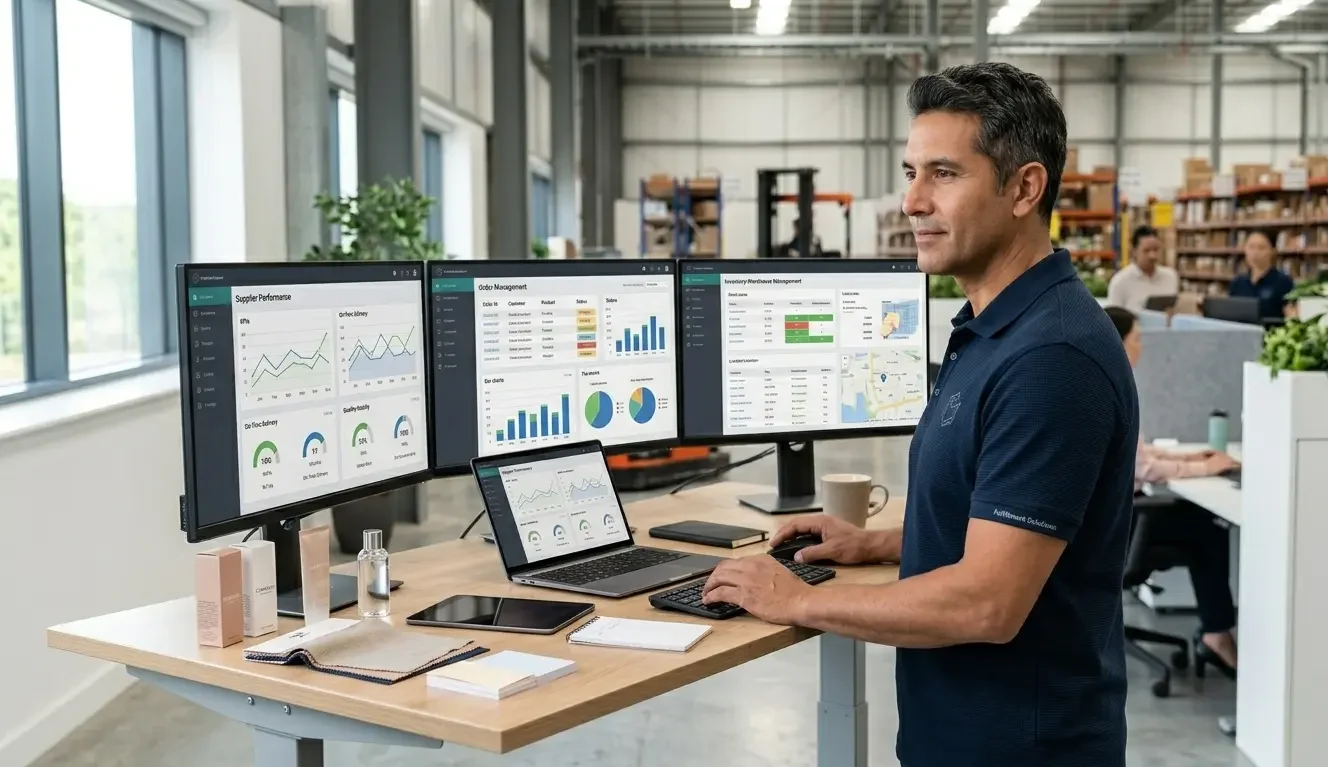
What Is Dropshipping Inventory Management — and Why It's Different
Dropshipping inventory management is the practice of tracking, syncing, and responding to the stock levels of products you sell but don’t physically hold. Because you don’t own the inventory, every quantity decision what to show as in stock, how many units to display, when to delist a product depends entirely on the accuracy and timeliness of the data your supplier shares with you.
The Core Operational Challenge
In traditional retail inventory management, you control your stock. You know exactly what’s in your warehouse because you put it there. In dropshipping, you’re managing a real-time view of someone else’s warehouse and that view is only as accurate as your supplier’s data feed allows. If your supplier’s inventory system updates hourly and you sell 40 units in 45 minutes during a viral TikTok moment, you’ve potentially oversold products your supplier no longer has. You didn’t run out of stock. Your supplier did. But your customers ordered from you.
Why This Gets More Complicated at Scale
At five to ten daily orders, dropshipping inventory management is largely manual and manageable. You check your supplier’s stock periodically, pause listings when products look low, and handle the occasional stockout individually. At 50 to 100 daily orders across multiple products and multiple suppliers, manual management becomes impossible. You need real-time sync, automated failover to backup suppliers, and systematic buffer logic to prevent overselling. The operational complexity scales significantly faster than the order volume.
The Two Types of Dropshipping Inventory Models
Most guides treat dropshipping inventory management as a single approach. It isn’t. There are two fundamentally different structures, and they have completely different failure modes and management requirements.
Virtual Inventory — The Standard Dropshipping Model
In virtual inventory dropshipping, you list and sell products that exist in your supplier’s warehouse. You manage a representation of their stock, not the stock itself. Every inventory management challenge in this model traces back to the same structural reality: you’re managing information lag between your supplier’s actual stock and what your store shows as available. The sync can be excellent or poor, but it’s always one step removed from ground truth.
Owned Inventory via 3PL — The Advanced Model
In owned inventory dropshipping, you purchase stock in advance and store it at a third-party logistics warehouse. When orders come in, the 3PL fulfills from your inventory. You own what’s in the warehouse. The WMS (warehouse management system) tracks your specific goods, not a supplier’s stock feed and updates your store in real time based on actual fulfilled units. Overselling becomes impossible because you set the quantity and the 3PL decrements it with each dispatch. Stockouts are predictable because you control when and how much to replenish.
The strategic progression from virtual to owned inventory is the evolution that most scaling dropshipping businesses eventually make and which this guide covers in detail toward the end.
The Primary Dropshipping Inventory Management Problems
Every operational challenge in dropshipping inventory management has a known cause and a known solution. Understanding both is the foundation of managing stock reliably without owning it.
Problem 1 — Overselling: Selling What Your Supplier Doesn't Have
Overselling is the most common and most damaging inventory failure in dropshipping. It happens when your store accepts an order for a product that your supplier has already sold through another channel. The customer pays. The order is confirmed. Then you discover the item is out of stock.
Research cited by Branvas shows retailers lose a staggering $1.73 trillion annually due to inventory distortion the combined impact of stockouts and oversells. In dropshipping, where you have no direct control over the inventory, overselling is structurally more likely than in traditional retail. The consequences extend beyond the single failed order: cancelled orders generate negative reviews, increase chargebacks, damage marketplace rankings, and erode customer trust that took significant ad spend to build.
The prevention: real-time inventory sync. Your store’s listed quantity must update the moment your supplier’s stock changes. This requires either an API integration that exchanges data continuously, or an inventory sync tool that pulls updates frequently enough to catch rapid stock depletion. DSers and AutoDS both offer real-time sync for their connected supplier networks. Flxpoint and Webgility handle multi-supplier sync at the enterprise level. StockSync is the mid-market Shopify solution for sellers managing multiple channels.
A practical buffer that every dropshipper should implement: set your listed quantity 10 to 15 percent below your supplier’s reported stock. If your supplier shows 100 units, list 85. That buffer absorbs the lag between your supplier selling down their stock and your sync catching up.
Problem 2 — Stockouts: Running Out Before Your Customer Can Cancel
A stockout is different from an oversell. A stockout means a product genuinely reaches zero inventory and becomes unavailable. In dropshipping, stockouts hit your store in two ways: either your product page shows out of stock and you lose sales, or your sync isn’t fast enough and you oversell first.
The operational response to stockouts is twofold. First, maintain backup suppliers for every product doing consistent daily sales. Before you scale any product’s advertising, identify at least one alternative supplier who carries the same or equivalent item. When your primary supplier stocks out, you can route orders to the backup without pausing campaigns. Second, monitor your supplier’s stock levels as a leading indicator not a lagging one. If your primary supplier is at 30 units and your daily run rate is 8 orders, you have approximately four days before a stockout. That’s enough time to reorder or activate a backup. It’s not enough time if you only check stock weekly.

Problem 3 — Quality Inconsistency Between Batches
Dropshipping quality problems don’t always appear at the product level they appear at the batch level. The same AliExpress supplier listing can ship identical-looking products from different factories depending on their current sourcing. Your first 50 orders might receive the product that matched the listing. Orders 51 to 100 might receive a slightly different material finish or dimension because the supplier restocked from a different factory.
This batch inconsistency is invisible in your inventory management system. Your sync tool shows the product as in stock. Your orders are being fulfilled. But your return rate starts climbing and your review score starts dropping and you don’t immediately see why. The solution is quality control at the point of inventory entry, which is only possible when inventory passes through a facility you control either your own warehouse or a 3PL that inspects on intake.
Problem 4 — Multi-Supplier Visibility: Managing a Fragmented Inventory Picture
As dropshipping stores grow, they typically source from multiple suppliers, different suppliers for different products, or multiple suppliers for the same product as backup. Managing inventory across multiple suppliers compounds every challenge listed above. Each supplier has a different data feed format, update frequency, and reliability level. One supplier might offer a real-time API. Another sends a CSV file to a shared Dropbox folder at midnight. A third expects you to check their website manually.
Flxpoint and Nventory are purpose-built for multi supplier dropshipping inventory management at scale, centralizing feeds from all suppliers, normalising SKU data, and applying routing logic to determine which supplier fulfills each order based on stock availability, location, and cost. For stores managing fewer than ten suppliers and under 500 monthly orders, StockSync or Inventory Source provide an accessible starting point. For stores above those thresholds, the complexity of multi supplier management justifies purpose-built tooling.
Dropshipping Inventory Management Best Practices — 2026
Regardless of which tools you use, these operational practices reduce inventory management failures across all stages of dropshipping growth.
Implement Real-Time Sync Before You Scale Any Product
The single most important inventory management investment for any dropshipping store is real time or near real time stock sync between your suppliers and your store. Every hour of lag between a supplier’s stock change and your store’s quantity update is an hour during which you can oversell. Configure sync through your dropshipping platform before you increase your advertising budget, not after you experience your first significant oversell event.
Use Safety Stock Buffers — Even for Virtual Inventory
Safety stock is a buffer quantity built into your listed inventory that absorbs demand spikes and sync lag. In a warehouse you control, you set a reorder point and maintain a buffer above it. In virtual inventory dropshipping, you set your listed quantity to 85 to 90 percent of your supplier’s reported stock, creating a functional buffer that protects you from the most common oversell scenario: rapid stock depletion during a product’s viral moment.
Build Multi-Supplier Redundancy Before You Need It
Don’t wait for your primary supplier to stock out before you identify a backup. For every product generating more than ten orders per day, identify a secondary supplier who carries the same item. Test the secondary supplier with a sample order. Confirm their pricing and shipping terms. Having them ready to activate the cost of doing this preparation when things are calm is a fraction of the cost of a supplier outage during a peak campaign.
Monitor the 2026 Tariff Environment for China-Direct Products
The April 2025 elimination of the US $800 de minimis threshold fundamentally changed China direct dropshipping inventory economics. Packages shipped directly from Chinese suppliers to US customers now face customs screening and potential duties on every order. This adds cost and delay to the China direct fulfillment model and has pushed many professional dropshippers toward pre-positioning inventory in US warehouses where customs clearance happens once at the bulk import level rather than on every individual customer parcel.
The Strategic Progression — From Virtual to Owned Inventory
The most important insight in dropshipping inventory management that no competitor covers: every inventory management problem in the virtual inventory model is solved structurally, not just mitigated when you transition to owned inventory in a 3PL warehouse. This isn’t a guide about optimising virtual inventory management forever. It’s a guide about knowing when to evolve beyond it.
When Virtual Inventory Management Starts Failing
Virtual inventory management reaches its ceiling when the operational cost of managing it the tools, the oversight, the customer service from failed orders, the negative reviews from stockouts and oversells begins approaching the cost of simply owning the inventory. That threshold is different for every store, but common signals that it’s approaching include: oversell rate above 2 percent of monthly orders, return rate above 8 percent, customer service volume growing faster than order volume, and quality complaints that trace to batch inconsistency rather than product defects.
What Owned Inventory Changes
When you transition proven products to owned inventory in a 3PL warehouse, every structural inventory management problem changes category. Overselling becomes impossible; your WMS decrements your actual stock with every fulfilled order. Stockouts become predictable and you control replenishment timing. Quality becomes consistent every unit entering the warehouse is inspected at intake. Tracking becomes reliable domestic carrier tracking is scan by scan from despatch to door. The management overhead shifts from reactive firefighting (responding to sync failures, stockouts, and customer complaints) to proactive planning (ordering the right quantities at the right time to maintain the right buffer).
How Fulfillmen Makes the Transition to Owned Inventory Cost-Effective
Fulfillmen is built for the dropshipping store that has validated products and is ready to evolve from virtual inventory management to owned inventory fulfillment without the capital risk that typically accompanies that transition.
90 Days Free Storage — The Transition Without the Capital Barrier
The standard objection to moving from virtual to owned inventory is cost: you have to buy stock before you’ve sold it, and you have to pay to store it while you sell through it. Fulfillmen’s 90-day free storage model removes the storage cost from that equation entirely. You ship inventory from China by sea freight at the lowest per-unit transport cost. It arrives at Fulfillmen’s US warehouse and is inspected on intake. You pay nothing for storage for 90 days. Customer orders ship domestically at 2 to 5 day speeds from that same inventory.
The economics: sea freight bulk import at $0 storage cost for 90 days. No per-order international shipping cost. No customs duty per parcel (cleared once at bulk import level). No quality surprises (QC at warehouse intake). No overselling (WMS tracks your actual units). No tracking gaps (domestic carrier from dispatch to door). The transition from virtual to owned inventory, facilitated by Fulfillmen’s model, doesn’t just solve the inventory management problems it eliminates the category of problems that a sync tool can only partially address.
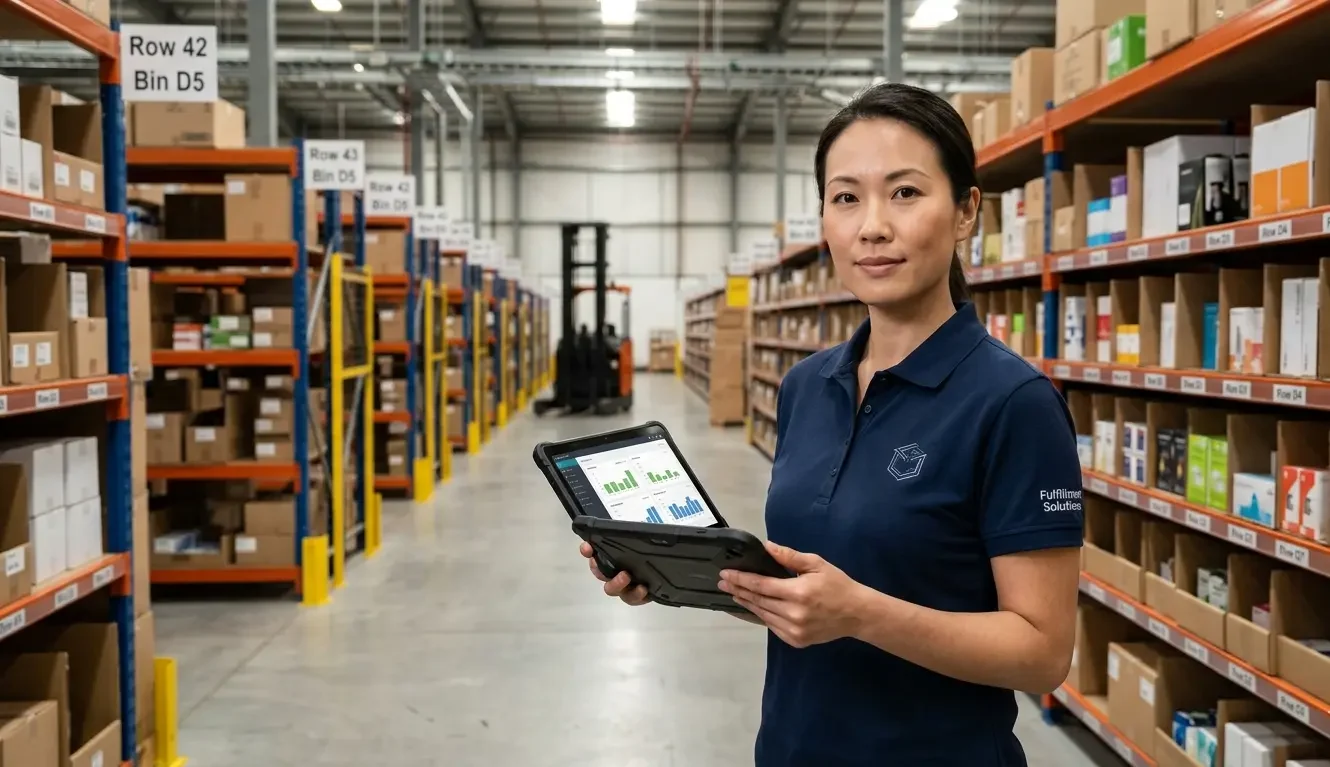
D2C Procurement — Sourcing Without the Sourcing Complexity
Fulfillmen’s D2C Procurement service handles the sourcing step that precedes inventory ownership: finding Chinese manufacturers at 1688-level pricing, negotiating terms, managing quality inspection at the factory, and shipping goods to Fulfillmen’s US warehouse network. You specify the product. Fulfillmen handles the supply chain from Chinese factories to US warehouses. By the time you make a replenishment decision, the inventory is already in the country, already inspected, and already available to fulfil. [Contact Fulfillmen today] and get a quote that maps against your current product range and order volume.
Dropshipping Inventory Management Tools — 2026 Comparison
For sellers managing virtual inventory, choosing the right sync tool determines how well you can manage a dropshipping inventory management problem you’ll never fully eliminate. Here’s how the main tools compare by use case.
For Beginners: DSers and AutoDS
DSers is the official AliExpress partner app and the most accessible inventory sync tool for beginners. It handles real time stock sync and price monitoring for AliExpress suppliers and integrates directly with Shopify. AutoDS extends beyond AliExpress to multiple supplier sources, adds automated price adjustment, and provides more sophisticated multi-supplier routing logic. Both are appropriate for stores under 50 daily orders managing fewer than five supplier relationships.
For Growing Stores: StockSync and Inventory Source
StockSync handles Shopify inventory synchronisation across multiple channels your own store, Amazon, eBay and multiple suppliers. It syncs more frequently than manual management but may have a 10 to 15 minute lag during high-velocity sales periods. Inventory Source connects stores to its network of verified suppliers with automated product data imports, inventory updates, and order routing. Both tools serve stores in the 50 to 500 monthly order range managing moderate multi-supplier complexity.
For Scale: Flxpoint and Nventory
Flxpoint is purpose built for multi-supplier dropshipping at enterprise scale. It centralises inventory feeds from all suppliers, normalises SKU data across different supplier naming conventions, routes orders to the optimal supplier based on stock, location, and cost, and handles EDI integration for suppliers with legacy data systems. Nventory addresses the hybrid inventory model specifically combining owned inventory with dropship inventory in a single dashboard. Both tools are appropriate for stores above 500 monthly orders managing more than five supplier relationships.
FAQs — Dropshipping Inventory Management
Do you need inventory to start dropshipping?
No you don’t need to hold physical inventory to start dropshipping. The model is specifically designed to eliminate upfront inventory investment. When a customer orders from your store, you forward that order to your supplier, who picks, packs, and ships directly to the customer from their own warehouse. You never hold the product. The inventory belongs to your supplier. What you do need to manage is a real time, accurate representation of your supplier’s stock levels in your store to prevent overselling products your supplier doesn’t have. That management requirement grows in complexity as your store scales.
How do I prevent overselling in dropshipping?
Preventing overselling in dropshipping requires real-time or near-real-time inventory sync between your supplier and your store. Use a connected dropshipping app DSers for AliExpress, AutoDS for multi-supplier setups, or StockSync for multi-channel stores that automatically updates your listed quantities when your supplier’s stock changes. Additionally, set a safety stock buffer: list your product at 85 to 90 percent of your supplier’s reported quantity so sync lag doesn’t cause oversells during rapid stock depletion. For products with consistent high daily volume, maintain a backup supplier who carries the same item so you can route orders when your primary supplier stocks out.
What happens when a dropshipping product goes out of stock?
When a product goes out of stock in dropshipping, there are two scenarios. If your inventory sync is working correctly, your store automatically sets the product to out of stock before customers can order, and no sales are lost, just opportunity. If your sync has a lag and the product sells out on your supplier’s side before your store updates, customers may place orders you can’t fulfill. That’s an oversell and the consequences are a cancelled order, a refund, a potential chargeback, and a negative review. The operational response is to have a backup supplier activated and ready before your primary supplier reaches zero, not after. Monitor stock levels as a leading indicator: if your supplier is at 30 units and your run rate is 8 per day, you have roughly four days to act.
What is the best dropshipping inventory management software in 2026?
The best dropshipping inventory management software depends on your order volume and supplier count. For beginners sourcing from AliExpress at under 50 daily orders, DSers handles real-time sync directly and is free to start. For stores managing multiple suppliers across 50 to 500 monthly orders, StockSync or Inventory Source provide solid multi-channel sync. For stores above 500 monthly orders managing multiple supplier relationships, Flexpoint or Nventory offer purpose-built multi-supplier routing, EDI integration, and the hybrid inventory management that 2026’s most sophisticated dropshippers are running. The fundamental limitation of every sync tool is that it’s managing information about inventory you don’t own the only way to eliminate that limitation structurally is to own the inventory in a domestic 3PL.
Is the hybrid dropshipping model better for inventory management?
Yes, the hybrid model consistently outperforms pure virtual inventory dropshipping for inventory management reliability. In the hybrid model, a dropshipping store holds owned inventory (in a 3PL warehouse) for its proven top sellers, while continuing to dropship new or unproven products directly from suppliers. The owned inventory eliminates overselling, quality inconsistency, and tracking gaps for the products generating the most revenue. The supplier direct inventory maintains the flexibility to test products without capital commitment. Professional dropshipping operations in 2026 typically run this model: their top five to ten products are in a domestic warehouse; their broader catalogue is supplier-direct.
How does the de minimis elimination affect dropshipping inventory management?
The April 2025 elimination of the US $800 de minimis threshold means every package shipped directly from China to a US customer now requires individual customs screening and potential duty payment. This adds per-order cost and delay to the supplier-direct China dropshipping model and makes the economics of pre-positioning inventory in a US warehouse significantly more attractive. When you bulk import inventory from China to a US warehouse, customs clearance happens once at the bulk level not on every individual customer parcel. This eliminates the per-order duty cost and customs delay from your fulfillment workflow entirely, while also enabling the 2 to 5 day domestic delivery speed that 2026 customer expectations require.