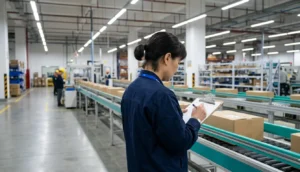
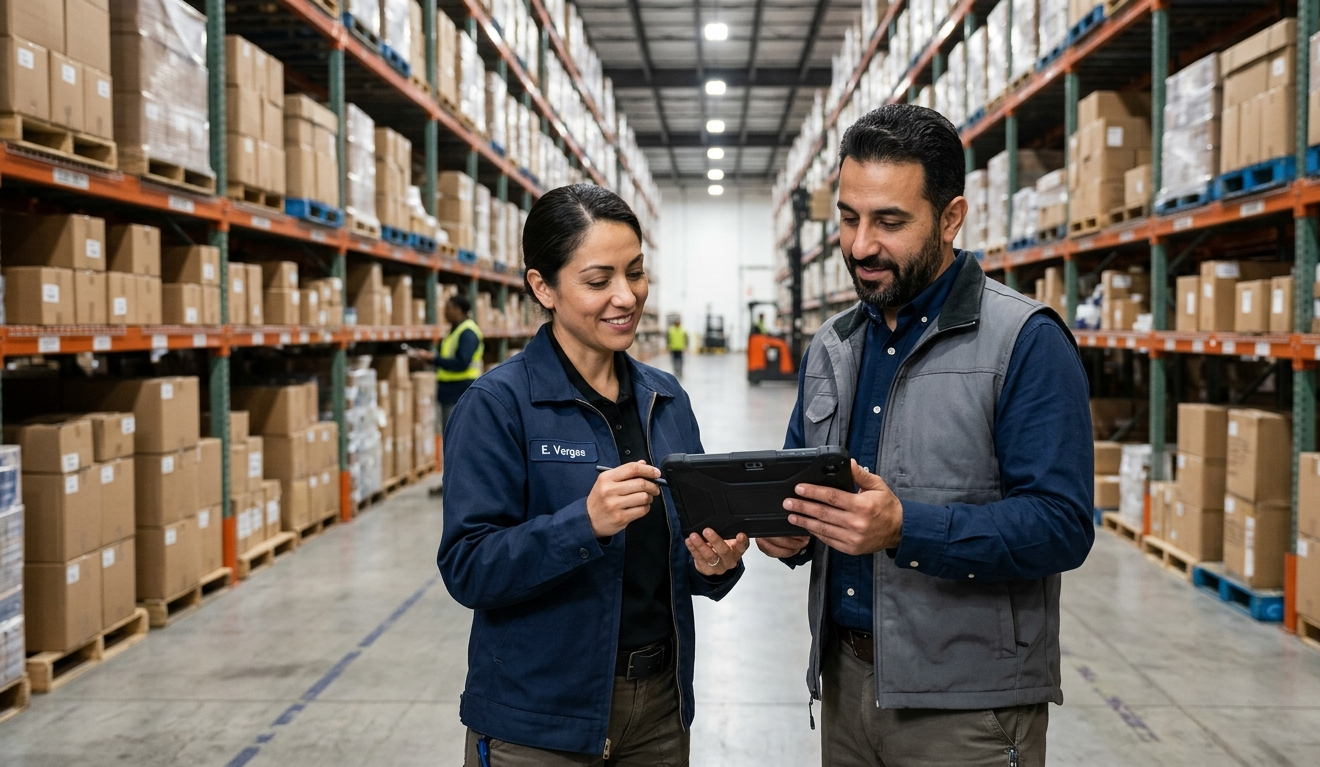
To consolidate shipments from China, you have every supplier deliver to one warehouse in China instead of shipping to you separately. The warehouse checks each delivery, holds it until the last order arrives, then packs everything into one export shipment with one set of customs paperwork. You pay for one freight booking, one customs entry and one delivery at the other end, instead of one for each supplier.
This guide covers how consolidation works, what it saves, how it compares with LCL sea freight and what to tell your suppliers. If you buy from several factories, our consolidation services page shows how we run it.
Fulfillmen runs consolidation from its Shenzhen and Hong Kong warehouses, so we sell what this guide describes. Freight rates in the example are assumptions for illustration. Chargeable weight rules are the standard carrier formulas, and customs fees are CBP’s figures for the year from 1 October 2026.
How a consolidation warehouse works
- You send each supplier the warehouse address and shipping marks for your account.
- Each supplier delivers by domestic truck or courier inside China, which is cheap and quick.
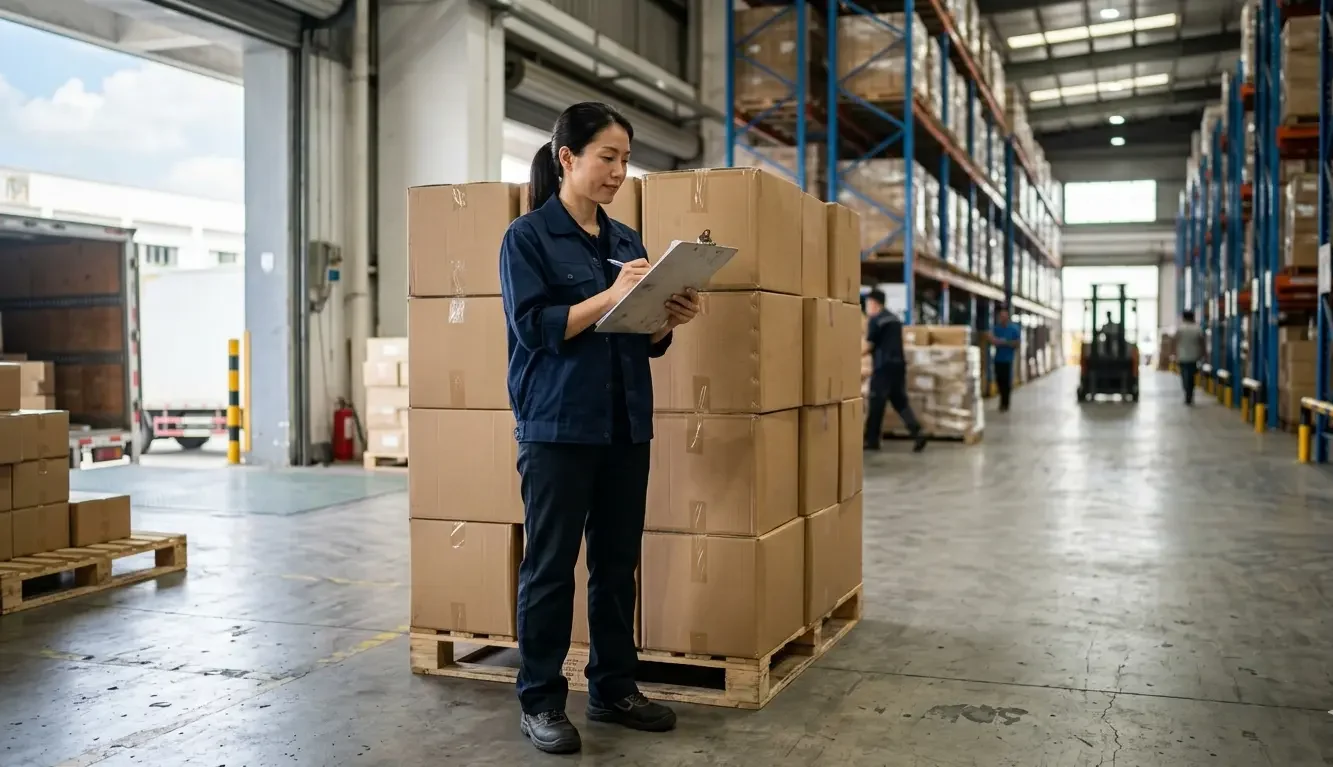
- The warehouse logs every carton against your purchase orders, counts it and flags damage or short shipments.
- Goods wait in storage until the last supplier delivers.
- The warehouse repacks or palletises the cartons to cut volume, then books one export shipment.
- One commercial invoice and packing list cover the whole shipment, so customs clears it once.
The warehouse becomes your single point of contact in China. If a supplier sends 480 units instead of 500, you know before anything is exported, not when the boxes reach you. Our guide to sending supplier inventory to a China fulfillment center covers carton marks and the inbound notice in more detail.
When consolidation saves money
Where consolidation pays off, and where it adds little
| Situation | Saving from consolidation | Why |
|---|---|---|
| Three or more suppliers, small orders from each | High | Removes minimum charges and per-shipment fees on every small parcel |
| Mixed products for one launch or one kit | High | Everything arrives together and can be kitted before export |
| Sea freight from several suppliers | High | One LCL or FCL booking instead of several LCL minimums |
| One supplier, one large order | Low | Already a single shipment |
| Urgent restock from one factory | Low or negative | Waiting for other suppliers delays the stock you need now |
Worked example: four suppliers, one shipment
Four suppliers each send two cartons of 15 kg measuring 50 × 40 × 40 cm. Goods are worth $6,000 in total. Duty is the same in both routes, so it is left out. Our guide to landed cost from China shows how duty fits into the full cost.
Chargeable weight = the higher of actual weight and volume weight
Express carriers usually divide length × width × height in cm by 5,000 to get volume weight in kg. Air freight forwarders usually divide by 6,000.
Illustrative cost, separate express parcels versus one consolidated air shipment. Rates are assumed
| Line | Four separate express shipments | One consolidated air shipment |
|---|---|---|
| Chargeable weight per carton | 16 kg (volume weight 80,000 ÷ 5,000) | 15 kg actual (volume weight 13.3 kg) |
| Total chargeable weight | 4 × 2 × 16 = 128 kg | 8 × 15 = 120 kg |
| Freight (assumed rate) | 4 × 32 kg × $6.50 = $832 | 120 kg × $4.50 = $540 |
| Clearance fees (assumed) | 4 × $25 = $100 | Broker $175 + MPF $34.58 = $209.58 |
| Consolidation handling (assumed) | $0 | 8 cartons × $3 = $24 |
| Total | $932.00 | $773.58 |
Check: 832 + 100 = 932, and 540 + 209.58 + 24 = 773.58, a saving of $158.42 or about 17%. Your 3PL also receives one inbound shipment instead of four, which cuts receiving fees. With sea freight the gap is usually larger, because each separate LCL booking pays its own minimum and origin charges.
Two things drive the result. The first is volume weight: light, bulky cartons cost more by express, and a forwarder using the 6,000 divisor, or repacking to remove empty space, brings the chargeable weight down. The second is fixed fees per shipment, which you pay once instead of four times.
Buying from several suppliers this quarter? List your suppliers, order sizes and destination, and we will compare separate shipping with one consolidated shipment.
Consolidation versus LCL: what is the difference?
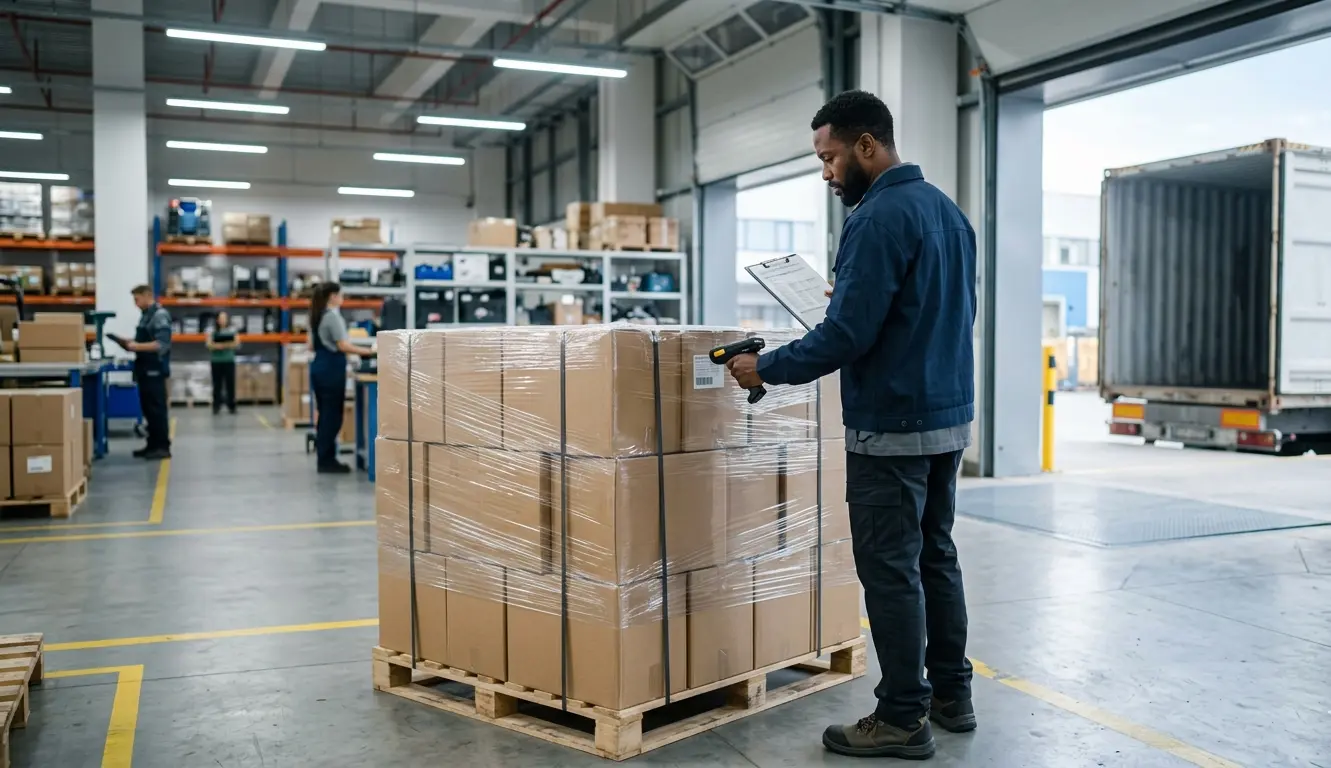
They solve different problems and often work together. Consolidation happens in a warehouse: your goods from several suppliers are combined into one shipment that belongs to you. LCL (less than container load) is a sea freight mode: your shipment shares a container with other importers’ cargo. A consolidated shipment can travel by LCL, by FCL when it fills a container, or by air.
Consolidation, LCL and FCL compared
| Supplier consolidation | LCL sea freight | FCL sea freight | |
|---|---|---|---|
| What it is | Combining your suppliers’ goods in one China warehouse | Sharing a container with other importers | A full container for your goods only |
| Who decides | You and your warehouse | Your forwarder | Your forwarder |
| Typical fit | Two or more suppliers | Roughly 1 to 15 CBM | Larger volumes that fill a 20 or 40 foot container |
| Main benefit | One shipment, one customs entry, goods checked before export | Pay only for the space you use | Lowest cost per CBM at volume |
For a deeper look at freight modes, see our guide to shipping methods from China to the USA.
Who checks the goods before they are combined?
The consolidation warehouse does, and this is where much of the value sits. At receiving, each carton is counted against the purchase order, checked for damage and photographed if anything is wrong. You can add a product inspection for higher-value items, such as checking a sample of units for defects, labels and packaging. Problems are raised with the supplier while the goods are still in China, when a replacement takes days rather than weeks. Our fulfillment quality control guide lists what to check.
How long does consolidation add to lead time?
The shipment leaves when the slowest supplier has delivered. If four suppliers finish production on different days, the first supplier’s goods wait for the last. Plan for that by giving every supplier the same delivery deadline, about three to five days before your planned export date, and by holding back only the orders that are genuinely ready together. Fulfillmen includes up to 90 days of free storage, so early deliveries cost nothing to hold while you wait.
What to tell each supplier
- The full warehouse address in Chinese and English, and a contact phone number.
- Your account code and purchase order number on every carton.
- Carton count, gross weight and dimensions in the delivery note.
- No invoices or price lists inside the cartons if goods will ship to customers or Amazon.
- The delivery deadline and a request to send tracking on dispatch.
Consolidation mistakes to avoid
- Letting suppliers book their own export freight, which splits the shipment again.
- Missing shipping marks, so cartons sit unidentified in receiving.
- No common deadline, so one late factory holds up everything.
- Mixing goods that need different HTS codes on one invoice without listing each line correctly.
- Not checking volume weight before choosing express over air freight.
Do this next
List the suppliers in your next purchase cycle with their order sizes and ready dates, and set one delivery deadline for all of them. Then send us the list and we will set up your account, shipping marks and the cheapest way to export the combined shipment.
Start Consolidating →Frequently asked questions
Can I combine orders from different Chinese suppliers?
Yes. Each supplier delivers to one consolidation warehouse in China, which checks and holds the goods, then ships everything together as one export shipment with one set of customs documents.
How does a consolidation warehouse work?
It receives deliveries from your suppliers, counts and checks each one against your purchase orders, stores the goods until the last supplier delivers, then repacks and ships them as a single consignment.
How much can consolidation save on freight?
It depends on how many suppliers and how small each order is. In our example, four separate express parcels cost $932 and one consolidated air shipment cost $773.58, about 17% less. Savings are usually larger on sea freight.
Is consolidation better than LCL?
They are different things. Consolidation combines your suppliers’ goods into one shipment. LCL is a way of shipping by sea when you do not fill a container. A consolidated shipment can travel by LCL, FCL or air.
How long does consolidation add to lead time?
The shipment waits for the last supplier to deliver, so set one deadline for all suppliers a few days before your export date. Once everything has arrived, repacking and booking usually take a few working days.