
A China sourcing agent is a professional or company based in China that acts as your local representative in the country finding factories, negotiating prices, managing quality inspections, and coordinating shipping on your behalf. That’s the textbook definition. But here’s the honest answer most guides won’t give you: for a significant share of ecommerce brands, a china sourcing agent is not the most efficient or cost-effective solution. A China-based 3PL that includes sourcing services handles the same functions and adds fulfillment, inventory management, and direct shipping under one accountable partner. Knowing which model your business actually needs is worth a lot more than knowing the definition of either.
Our D2C procurement service covers what a sourcing agent does, plus storage and shipping.
This guide explains exactly what a China sourcing agent does, how they structure their fees, what red flags to watch for, and when the agent model makes genuine sense versus when a China 3PL delivers better results. If you’re building a sourcing operation from China in 2026, this is the decision framework you need before you sign anything.
What Is a China Sourcing Agent?
The Definition Most Guides Get Wrong
A China sourcing agent operates in what trade professionals call one of the most information asymmetric environments in global commerce. On one side: manufacturers in Guangdong and Zhejiang who have navigated thousands of buyer relationships and know every pricing lever available to them. On the other: ecommerce brand owners making high-stakes purchasing decisions with zero visibility into factory realities, local pricing norms, or production risks. A competent China sourcing agent sits in the middle but only when structured correctly.
The formal definition: a China sourcing agent is an individual or company that helps international buyers identify verified Chinese manufacturers, negotiate pricing, manage production timelines, conduct quality inspections, and coordinate international shipping. What the definition misses is the operational reality. Most sourcing agents are small operations, often one to five people with deep expertise in a specific product category or manufacturing region, charging a commission of 3 to 10% of your total order value. They represent you, not the factory, which is the key distinction separating them from trading companies.
Sourcing Agent vs Trading Company: The Difference That Costs Brands Money
The distinction between a China sourcing agent and a trading company is the single most misunderstood concept in China importing, and confusing the two is expensive. A trading company buys products from Chinese factories and resells them to you. They are the seller of record, they own the goods, and their margin is baked into your unit price. You typically don’t know who manufactures the product, you have no direct factory relationship, and the trading company has no incentive to share that information because transparency would make them redundant.
A China sourcing agent represents your interests, not the factory’s. They disclose the factory price and charge a transparent commission on top. You know who makes your product, you can build a direct relationship over time, and your IP stays protected because the agent has no incentive to sell your product design to competitors. For brands sourcing custom or private label products, this transparency is the difference between owning your supply chain and renting someone else’s. That said, the sourcing agent model has real limitations which we cover in detail in the comparison section below.
What Does a China Sourcing Agent Do?
Product Sourcing and Supplier Discovery
A China sourcing agent’s primary function is supplier identification but it goes well beyond typing your product into Alibaba. Experienced agents search across their own verified factory networks, trade databases including Made in China and Global Sources, Canton Fair connections, and regional industrial clusters that aren’t visible to international buyers at all. Agents with five or more years operating in a specific category say, Shenzhen electronics or Guangzhou apparel carry knowledge of which factories produce reliably at which price tier, which ones overstate their capacity, and which ones have a history of quality issues that Alibaba reviews would never surface. That on the ground intelligence is what you’re actually paying for when you hire a China sourcing agent. For a detailed breakdown of how to evaluate suppliers directly, see our complete guide on how to source from China.
Factory Verification and Supplier Vetting
Before recommending any supplier, a reliable China sourcing agent verifies legitimacy through a structured process: requesting and reviewing the supplier’s business license (Yingye Zhizhao), visiting factory premises to confirm production capacity, and running production history checks against the claimed order track record. The goal is to filter out trading companies misrepresenting themselves as manufacturers and to identify red flags inconsistent documentation, addresses in commercial rather than industrial districts, or production capacity claims that don’t match facility size before your deposit changes hands. This vetting process is what distinguishes a professional sourcing agent from simply forwarding Alibaba listings, and it’s the service most worth paying for when you’re entering a new product category for the first time.
Quality Inspection and Production Oversight
A China sourcing agent coordinates or directly conducts quality control at three stages: pre production (verifying raw materials meet spec), during production (catching systematic defects before the full batch is completed), and pre shipment (AQL-standard inspection of finished goods before the cargo leaves China). For ecommerce brands without physical presence in China, on-the-ground quality oversight is non-negotiable. A pre shipment inspection catching a defect costs your agent one day of work. That same defect discovered after 25 days of sea freight and a customs delay costs you the value of the return shipment, the replacement production run, and the customer reviews you lost while the problem is resolved. Professional sourcing agents either handle quality inspection in house or coordinate it through third party firms including SGS, Bureau Veritas, and QIMA.
What Does a China Sourcing Agent Cost?
Product Sourcing and Supplier Discovery
A China sourcing agent’s primary function is supplier identification but it goes well beyond typing your product into Alibaba. Experienced agents search across their own verified factory networks, trade databases including Made in China and Global Sources, Canton Fair connections, and regional industrial clusters that aren’t visible to international buyers at all. Agents with five or more years operating in a specific category say, Shenzhen electronics or Guangzhou apparel carry knowledge of which factories produce reliably at which price tier, which ones overstate their capacity, and which ones have a history of quality issues that Alibaba reviews would never surface. That on the ground intelligence is what you’re actually paying for when you hire a China sourcing agent. For a detailed breakdown of how to evaluate suppliers directly, see our complete guide on how to source from China.
Factory Verification and Supplier Vetting
Before recommending any supplier, a reliable China sourcing agent verifies legitimacy through a structured process: requesting and reviewing the supplier’s business license (Yingye Zhizhao), visiting factory premises to confirm production capacity, and running production history checks against the claimed order track record. The goal is to filter out trading companies misrepresenting themselves as manufacturers and to identify red flags inconsistent documentation, addresses in commercial rather than industrial districts, or production capacity claims that don’t match facility size before your deposit changes hands. This vetting process is what distinguishes a professional sourcing agent from simply forwarding Alibaba listings, and it’s the service most worth paying for when you’re entering a new product category for the first time.
Quality Inspection and Production Oversight
A China sourcing agent coordinates or directly conducts quality control at three stages: pre production (verifying raw materials meet spec), during production (catching systematic defects before the full batch is completed), and pre shipment (AQL-standard inspection of finished goods before the cargo leaves China). For ecommerce brands without physical presence in China, on the ground quality oversight is non-negotiable. A pre shipment inspection catching a defect costs your agent one day of work. That same defect discovered after 25 days of sea freight and a customs delay costs you the value of the return shipment, the replacement production run, and the customer reviews you lost while the problem is resolved. Professional sourcing agents either handle quality inspection in house or coordinate it through third party firms including SGS, Bureau Veritas, and QIMA.
What Does a China Sourcing Agent Cost?
The Three Fee Models Explained
China sourcing agent fees in 2026 operate on three primary models. The commission model, the most common and most transparent, charges a percentage of your total FOB order value, typically 3 to 10% depending on order size, product complexity, and negotiation difficulty. According to sourcing fee data published by HiSourcing, the most common commission range for orders between $5,000 and $20,000 is 5 to 8%, dropping to 3 to 4% for orders above $50,000. The flat fee model charges a fixed project fee typically $100 to $500 for sourcing research, plus separate fees for sampling ($50 to $300), factory inspection ($200 to $300 per man-day), and logistics coordination. The markup model embeds the agent’s margin directly into the unit price; you receive one clean quote with no visible service fee line item. Markup models are legitimate when transparent, but require that you independently verify factory pricing to ensure the margin is reasonable.
For a complete fee breakdown with order-value tables, see the full sourcing agent fee breakdown at HiSourcing the most detailed 2026 fee guide currently published.
Hidden Costs Most Brands Miss
The headline commission rate is rarely the true cost of working with a China sourcing agent. Several additional fees compound your total cost in ways that first-time importers consistently underestimate. Sample costs $50 to $300 per sample plus express shipping from China add up quickly when you’re evaluating five suppliers across two product variations. Factory visit fees ($100 to $200 per visit) apply when your agent needs to physically inspect a facility. Rush order premiums of 10 to 15% apply when production timelines are compressed. Import documentation errors, a frequent consequence of agents who don’t specialise in customs, generate customs delays that can cost more in demurrage fees than the original inspection would have. Before signing with any China sourcing agent, request a complete breakdown of all potential fees beyond the headline commission, including what happens if an order fails quality inspection and requires rework. See our import tax from China to USA guide for the customs cost side of the equation.
When You Need a China Sourcing Agent
The 5 Triggers That Mean You Need One
Not every ecommerce brand needs a China sourcing agent. But five specific situations make one genuinely valuable. First: you’re entering a new product category with no existing supplier relationships and no knowledge of which manufacturing region specialises in your product. The agent’s network eliminates 80% of the discovery time. Second: your products require significant customisation, private labeling, or OEM development situations requiring close production oversight, multiple sampling rounds, and Mandarin language negotiation that a buyer operating remotely can’t manage reliably. Third: you’re sourcing from multiple suppliers simultaneously and need someone to consolidate shipments, coordinate quality across factories, and manage a complex logistics operation on your behalf. Fourth: you’ve already experienced a quality or supplier failure that cost you meaningful revenue and you need professional oversight to prevent a repeat. Fifth: your order values exceed $20,000 per run and the 5% commission cost is clearly justified by the price negotiation savings and production risk reduction an experienced agent delivers. According to Shopify’s ecommerce blueprint, brands scaling beyond their first product consistently underestimate the operational cost of managing Chinese suppliers without local support.
When a China Sourcing Agent Is the Wrong Choice
A China sourcing agent is the wrong tool in four common scenarios. If you’re placing small or one off orders under $3,000 in value, the minimum service fees make the agent model uneconomical; you’re paying $150 to $300 in fees for an order where the savings from better factory pricing are minimal. If you need fulfillment, not just sourcing meaning you need products stored, picked, packed, and shipped to your customers as orders arrive a sourcing agent doesn’t provide this. You’ll need a separate 3PL, which means two fees, two communication channels, and two points of failure on every shipment. If your priority is speed over price optimization, agents add process steps that slow down order cycles. And if you’re testing a new product with uncertain demand, the fixed cost of engaging an agent before you’ve validated market fit is money spent before you’ve earned it.
China Sourcing Agent vs 3PL: Which One Does Your Business Actually Need?
Why This Comparison Matters More Than Most Guides Admit
The ‘china sourcing agent vs 3pl’ comparison is the question most ecommerce brands are actually trying to answer when they search this topic and it’s the comparison that almost no competitor content addresses directly. The reason matters: standalone sourcing agent companies don’t want to direct you toward 3PLs, and most 3PL companies don’t publish content that helps you understand the comparison honestly. Fulfillmen operates a China-based fulfillment operation, which means we have every incentive to explain this clearly: sometimes a standalone sourcing agent is the better choice, and sometimes a China 3PL that includes sourcing is. Here’s the framework.
A standalone China sourcing agent is the better choice when: your primary need is factory access in a specialised category you’re entering for the first time, your orders are large and infrequent enough that you don’t need ongoing inventory management, and you have a separate fulfillment operation already handling shipping to customers. A China 3PL with integrated sourcing like Fulfillmen is the better choice when: you need products sourced and shipped to customers on an ongoing basis, you want one accountable partner managing your supply chain from factory floor to customer doorstep, you’re operating without minimum order requirements, and you need real time inventory visibility across multiple SKUs. The economic case is clear: managing a sourcing agent plus a separate 3PL means two service fees, two sets of shipping documentation, and two communication relationships to maintain every time something goes wrong.
Fulfillmen's 5-Trigger Decision Framework: Agent or 3PL?
Fulfillmen’s sourcing team uses a five-trigger framework to advise brands on which model fits their current stage. Trigger 1: Are you ordering fewer than 500 units per month? If yes, a China 3PL with sourcing inclusion is almost always cheaper than a standalone agent plus separate fulfillment. Trigger 2: Do you need products stored and shipped to individual customers as orders arrive? A sourcing agent doesn’t fulfill orders a China 3PL does. Trigger 3: Are you managing more than three SKUs simultaneously? Multi-SKU operations need inventory management infrastructure that sourcing agents don’t provide. Trigger 4: Has a quality failure already cost you money? A China 3PL’s in house QC protocol like Fulfillmen’s three stage inspection provides ongoing protection that a per-order agent inspection can’t match economically. Trigger 5: Is your order frequency weekly or monthly rather than quarterly? High frequency sourcing operations need a permanent partner embedded in your supply chain, not a transactional agent engaged per project.
How to Find and Vet a China Sourcing Agent
Four Non-Negotiable Verification Steps
If a standalone China sourcing agent is the right model for your business, four verification steps are non-negotiable before any money changes hands. Step one: business registration check. Request the agent’s Chinese business license and verify the registered company name matches their bank account name and their online presence. Legitimate agents operating professionally always have formal business registration; individuals operating without a registered entity carry significant legal and accountability risk. Step two: reference calls with current clients. Ask for three client references in your product category and actually call them. Ask specifically about quality failure situations and how the agent handled them. That’s where the character shows. Step three: test order with small quantity. Before committing to a $15,000 production run, place a $500 to $1,000 sample order to evaluate the agent’s communication speed, sourcing quality, and logistics coordination in real conditions. Step four: written contract with performance benchmarks. Define scope, fees, inspection standards, lead time expectations, and what remediation the agent provides if goods fail quality inspection. Verbal agreements in China sourcing are how expensive disputes start.
Red Flags That Signal an Unreliable Agent
Several patterns reliably indicate an unreliable China sourcing agent. Agents who resist showing you factory documentation business licenses, production capacity certificates, past buyer references are concealing information that would reduce their leverage. Agents who can’t provide a specific physical address for their operation, or whose address is in a central business district rather than an industrial area, are likely individual operators without genuine factory networks. Commission rates below 3% on small orders signal an agent operating on a markup model rather than the stated commission your factory prices will be inflated rather than disclosed. Agents who demand large upfront fees before delivering any sourcing results should be treated with significant caution; the standard practice is a small research deposit of $50 to $200 maximum, not hundreds of dollars before a supplier shortlist exists.
Why Fulfillmen Replaces the Need for a Standalone Sourcing Agent
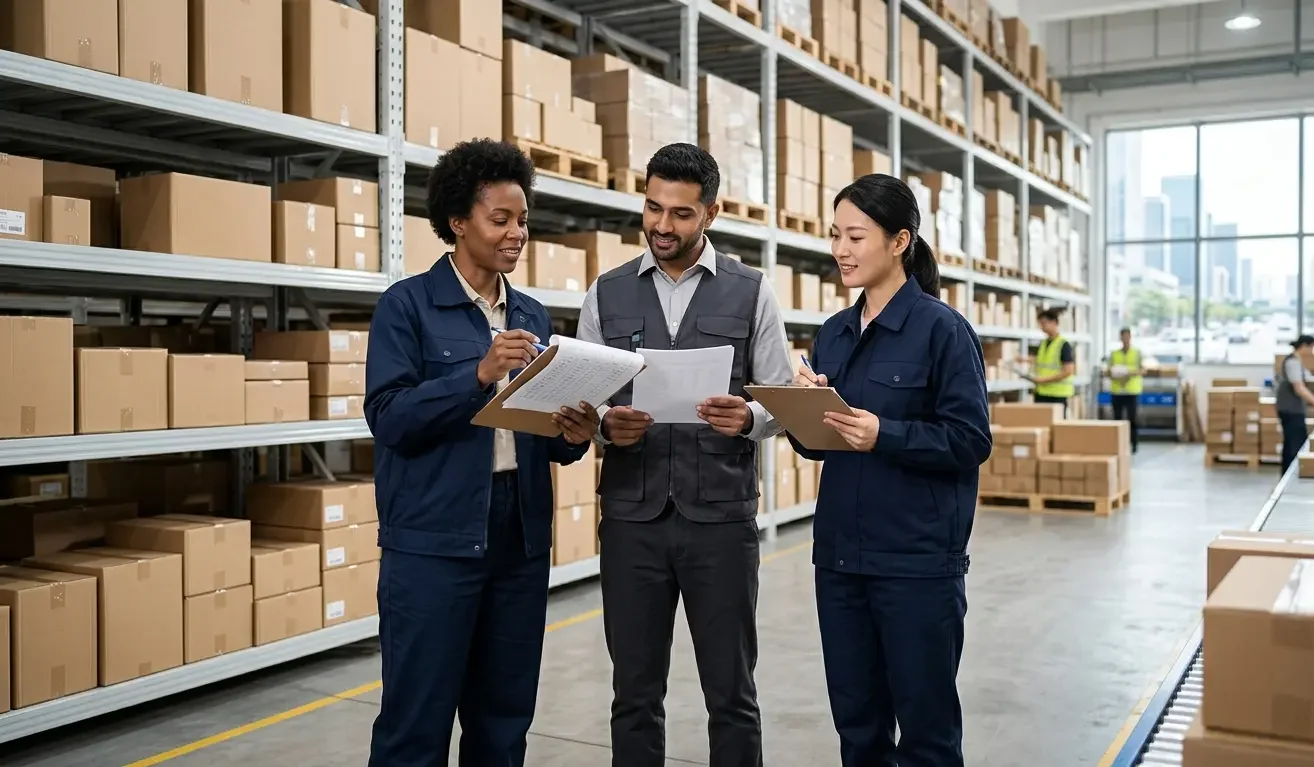
One Partner From Factory to Customer Doorstep
Fulfillmen is a China-based ecommerce fulfillment center with warehouses in Shenzhen, Hong Kong, and India. Our sourcing team operates with direct supplier relationships across Guangdong, Zhejiang, and Yiwu manufacturing clusters which means when a client needs a product sourced, we’re reaching out to verified factories we’ve worked with before, not searching Alibaba cold. That’s the same function a China sourcing agent performs, with one significant difference: when we source your product, it lands in our Shenzhen warehouse, goes through our three-stage quality protocol, and ships to your customers worldwide all under one roof, one invoice, and one communication channel. There’s no handoff between a sourcing agent and a separate 3PL. Our China 3PL fulfillment services include product sourcing as part of an integrated operation.
No Minimums. No Monthly Fees. No Separate Agent Commission.
Fulfillmen operates with no minimum order requirements, no monthly storage commitments, and no lock-in contracts. You pay for the units you ship and the space you use. For brands currently paying a 5 to 8% sourcing agent commission plus separate fulfillment fees to a US or EU-based 3PL, the consolidated model is almost always cheaper in total. We integrate directly with Shopify, WooCommerce, and all major ecommerce platforms, with real-time order syncing, automated tracking pushes, and full inventory visibility through our dashboard. Whether your current challenge is finding the right factory, managing quality on existing products, or building a fulfillment operation that scales without adding headcount, we’re built to handle all three.
Talk to the Team Before You Hire a Sourcing Agent
If you’re evaluating whether to hire a China sourcing agent or work with a China-based 3PL that includes sourcing, the most useful thing you can do is have a 20-minute conversation with a team that does both. Fulfillmen’s sourcing and fulfillment team works with DTC brands, Shopify sellers, Amazon FBA operators, and crowdfunding businesses at every stage from first product to eight-figure supply chains. Get in touch via our contact page, describe your product and current stage, and we’ll give you an honest recommendation including whether a standalone agent is actually the better fit for your situation.
Frequently Asked Questions: China Sourcing Agent
What does a China sourcing agent do?
A China sourcing agent finds verified Chinese manufacturers that match your product specifications, negotiates pricing on your behalf, manages the sampling process, conducts or coordinates quality inspections at pre production, during production, and pre shipment stages, and coordinates international shipping documentation. They act as your local representative in China working on your behalf, not the factory’s, which is the key distinction separating them from trading companies who buy and resell inventory at a marked up price.
How much does a China sourcing agent charge?
Most China sourcing agents in 2026 charge between 3% and 10% of your total FOB order value as a commission, with the 5 to 8% range being most common for orders between $5,000 and $20,000. For smaller orders, flat fees of $100 to $500 per sourcing project are common. Additional costs include sampling ($50 to $300 per sample plus express shipping), factory inspection ($200 to $300 per man-day), and factory visit fees ($100 to $200 per visit). Always request a full fee breakdown before signing any agreement.
What is the difference between a sourcing agent and a trading company?
A China sourcing agent represents your interests and works transparently disclosing the factory price and charging a separate commission. You know who manufactures your product and can build a direct factory relationship over time. A trading company buys products from Chinese factories and resells them to you as the seller of record. Their margin is built into your unit price, factory identity is typically undisclosed, and you have no direct relationship with the manufacturer. For brands sourcing custom or private label products, supply chain transparency makes the sourcing agent model significantly safer.
Do I need a China sourcing agent or a 3PL?
If you need products sourced and then stored and shipped to customers on an ongoing basis, a China-based 3PL that includes sourcing services like Fulfillmen is almost always more efficient and cost-effective than a standalone sourcing agent plus a separate fulfillment provider. A standalone sourcing agent makes sense when you need specialised factory access in a niche category, you’re placing large infrequent bulk orders, and you already have a fulfillment operation handling customer shipments separately.
How do I verify a China sourcing agent is legitimate?
Four verification steps are non-negotiable: request and verify their Chinese business license (Yingye Zhizhao), ask for three client references in your product category and actually call them, place a small test order before committing to a large production run, and sign a written contract that defines scope, fees, inspection standards, and remediation obligations if quality fails. Never pay large upfront fees before any deliverables are produced. Legitimate agents accept small research deposits of $50 to $200 maximum before a supplier shortlist is delivered.
Can a China 3PL replace a sourcing agent?
Yes — for most ecommerce brands operating at consistent volume, a China-based 3PL with integrated sourcing capabilities handles supplier discovery, quality control, inventory management, and fulfillment under one operational roof. This eliminates the handoff between a sourcing agent and a separate logistics provider, reduces the number of communication channels, and creates one accountable partner for your entire supply chain from factory to customer. Fulfillmen operates this model from Shenzhen for DTC brands and Shopify sellers worldwide.