

You request an air freight quote on a Tuesday and it looks manageable. You request the same quote two weeks later for the same route, same weight, same destination and it’s 30% higher. Nothing about your shipment changed. So what changed? Air freight price fluctuation is one of the most frustrating parts of running a supply chain from China, and it catches eCommerce brands off guard more often than it should. This guide breaks down every reason air freight rates move with real data and specific examples so you can plan around the volatility instead of being surprised by it.
What Makes Air Freight Pricing Different From Sea Freight
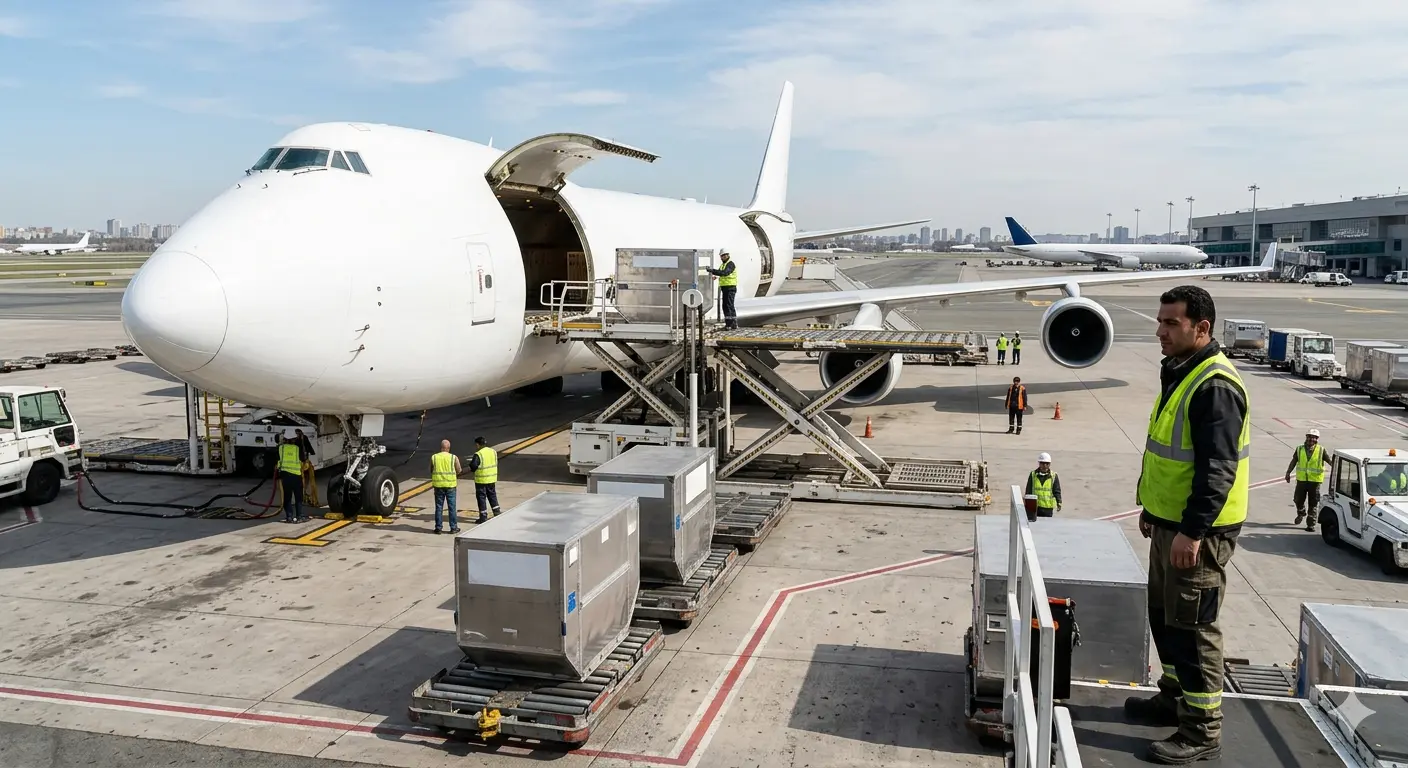
Before getting into the individual causes, it helps to understand why air freight rates are inherently more volatile than ocean freight rates. A container ship holds thousands of tonnes of cargo and operates on a published sailing schedule weeks or months in advance. Capacity changes slowly. Air freight is the opposite a single widebody freighter might carry 80–100 tonnes of cargo, aircraft schedules change weekly, and the market clears in real time. When demand spikes by 10% on a key trade lane, that imbalance shows up in rates almost immediately because there’s nowhere near enough slack in the system to absorb it quietly.
Spot Rates vs Contract Rates
Air freight pricing splits into two categories. Contract rates are agreed in advance typically for three, six, or twelve months and give you a fixed price per kilogram regardless of what the spot market does. Spot rates are what you pay when you book without a contract, at whatever the market is charging that day. During 2024, shippers increasingly moved toward contracts of six months or longer to shield themselves from spot market volatility. According to Xeneta’s analysis, long term air freight contracts accounted for 63% of all agreements valid in Q4 2024, up 16 percentage points from the same period in 2023. But brands without enough volume to justify a contract end up on the spot market and that’s where air freight price fluctuation hits hardest.
How Chargeable Weight Works
Air freight cost isn’t just based on actual weight. Carriers price by chargeable weight the greater of actual weight or volumetric weight. Volumetric weight is calculated as length × width × height in centimetres, divided by 6,000 (or 5,000 for some carriers). A large, lightweight box say, a 60 × 40 × 30cm parcel that weighs 2kg has a volumetric weight of 12kg under the standard formula. You’d pay for 12kg, not 2kg. This is why packaging efficiency matters so much in air freight. Bulky products with low actual weight get hit disproportionately hard.
Reason One: Fuel Surcharges Adjust Constantly
Fuel surcharges are the single most visible source of week to week air freight price fluctuation, and they move fast. Jet fuel accounts for up to 40% of an airline’s operating costs. When oil prices rise, carriers don’t absorb that cost they pass it directly to shippers through a fuel surcharge that updates every two weeks or monthly, depending on the carrier.
How the Fuel Surcharge Is Calculated
Major carriers like FedEx and UPS index their fuel surcharges to the U.S. Gulf Coast spot price for kerosene type jet fuel published by the U.S. Energy Information Administration. FedEx, for example, adjusts its surcharge twice monthly effective on the 1st and 15th based on the prior two-week average. The April 15, 2025 surcharge from UPS was $0.459 per pound. That number fluctuates every adjustment cycle based on where oil markets closed. Fuel surcharges typically represent 20–30% of the total air freight cost on any given shipment. When oil spikes as it did in early 2026 following escalating Middle East tensions carriers adjust fuel surcharges upward almost immediately, and the rate you were quoted last week is no longer valid.
Why Middle East Tensions Matter for Your Shipping Invoice
In March 2026, escalating geopolitical tensions in the Middle East drove a steep increase in jet fuel prices. Dimerco’s April 2026 Asia Pacific Freight Report noted that airlines were raising fuel surcharges, reducing flight frequencies, and cutting available cargo space in response. Shippers on routes out of China found rates elevated and capacity tighter not because their products changed, but because a conflict thousands of miles away moved the oil price. This is the nature of air freight. External events that have nothing to do with your business directly affect what you pay to ship your goods.
Reason Two: Capacity Is Tighter Than Most Brands Realise
Air cargo capacity comes from two sources: dedicated freighter aircraft and the belly hold of passenger planes. Both are more constrained than sellers new to air freight typically expect.
The Belly Cargo Problem
Around 44% of global air cargo volume by weight was carried in passenger aircraft belly holds in mid-2024, according to IATA. This is significant because belly capacity is entirely driven by passenger travel demand, not cargo demand. When passenger flights increase summer holidays, school breaks, business travel peaks belly capacity expands and cargo rates soften. When passenger schedules thin out winter schedule cuts, route suspensions belly capacity contracts and cargo rates rise regardless of what’s happening on the demand side. In December 2024, reduced belly capacity from winter airline schedules on passenger flights pushed Europe to North America spot rates up 21% in a single month, reaching their highest level in over two years. That spike had nothing to do with December shipping volumes. It was a passenger scheduling decision.
Dedicated Freighters Are Running Out of Runway
The freighter fleet is also constrained. Over 120 large widebody freighter aircraft are due for retirement in the coming years, new freighter deliveries have been delayed Boeing’s strike in 2024 pushed back 777-200F deliveries and conversion feedstock for passenger-to-freighter conversions remains limited. More demand chasing less capacity is the textbook formula for higher rates. On the Northeast Asia to Europe route, for example, aircraft were reportedly running at around 90% load factors during peak 2024 periods. When planes are that full, shippers without pre booked space get squeezed on both availability and price.

Reason Three: Seasonal Demand Pushes Rates on a Predictable Calendar
Air freight demand seasonality is probably the most forecastable cause of air freight price fluctuation yet brands still get caught out by it every year because the peaks arrive earlier and hit harder than people expect.
The Four Demand Spikes Brands Need to Know
Chinese New Year (January/February): In the weeks before Chinese New Year, factories race to fulfil orders before the holiday shutdown. Air freight demand surges. Transpacific freighter flights drop around 15% immediately after the holiday, causing rate volatility in both directions up before, uncertain after.
Pre-summer inventory build (May/June): Brands shipping from China begin restocking for summer sales and Q3 inventory cycles. Capacity on China to Europe and China to US routes tightens, and rates begin climbing ahead of Q3.
Golden Week to Double 11 (October/November): Post Golden Week, eCommerce volumes explode as brands prepare for Double 11 China’s largest shopping festival followed immediately by Black Friday, Thanksgiving, and the entire Western holiday retail season. This is consistently the most intense period for air cargo rates out of Asia. In 2024, global air cargo demand in August rose 11% year on year, with average spot rates climbing 24% compared to the same period in 2023.
Chinese New Year runup again: And then the whole cycle restarts. Brands that haven’t secured capacity or at least planned their shipping timelines around these four windows end up booking at the worst possible moment.
eCommerce Is the Biggest Demand Driver Nobody Talks About Honestly
A fifth of global air cargo volumes are now attributed to eCommerce, and that share is growing. The surge of low value consumer goods shipping from China to Europe and the US driven by platforms like Temu, Shein, and AliExpress is not a background trend. It’s a structural force that’s permanently elevated demand on China outbound routes. China’s eCommerce exports grew 30% year on year in the first half of 2024. That volume has to go somewhere, and it competes directly with the capacity available to eCommerce brands that need to move their own stock. When those platforms run a major promotion, your available space on that week’s departures shrinks.
Reason Four: Ocean Freight Disruptions Push Cargo Into the Air
This is one of the most overlooked causes of air freight price fluctuation, and it’s been particularly relevant since late 2023. When ocean freight becomes unreliable through port congestion, carrier delays, or route disruptions time sensitive cargo that would normally travel by sea gets rerouted to air. That sudden demand spike hits an air cargo market that doesn’t have the capacity to absorb it.
The Red Sea Effect on Air Freight Rates
The Houthi attacks on commercial vessels in the Red Sea, which began in late 2023, forced ocean carriers to reroute around the Cape of Good Hope adding roughly 10–14 days to Asia-Europe transit times. Some cargo that couldn’t tolerate that delay shifted to air freight. The Baltic Air Freight Index was 25.9% higher year on ear as of January 6, 2025, partly attributable to this modal shift. As the director general of the International Air Cargo Association put it, it doesn’t take much cargo moving from container shipping to fill a freighter or the belly space of a passenger plane. When ocean freight is disrupted, even a relatively small volume of diverted cargo is enough to move air rates on the affected trade lanes.
Reason Five: Trade Policy Triggers Demand Spikes
Tariff changes and trade policy announcements cause some of the sharpest, fastest moving air freight price fluctuations because they trigger immediate panic buying. When businesses believe import duties are about to increase, they rush to move inventory before the deadline. That frontloading creates a sudden, concentrated demand spike that the market can’t accommodate at existing rates.
How the 2025 US Tariff Uncertainty Moved Air Freight Markets
The threat of new US tariffs on Chinese goods in early 2025 prompted importers to accelerate shipments moving inventory by air to beat potential duty increases. The Bertling February 2025 freight report noted that shippers rushing to get goods in before expected tariff deadlines had driven short term air cargo demand spikes, particularly on transpacific and transatlantic routes. When those tariff deadlines shift, get delayed, or get suspended, demand drops back equally fast taking rates with it. China to North America rates fell 7% to $4.92/kg after the Lunar New Year in early 2025, partly because the frontloading rush had cleared and demand normalised. That kind of 7% swing in a matter of weeks, driven by policy news rather than any change in actual shipping volumes, illustrates exactly how reactive this market is.
Reason Six: Airport Fees, Security Surcharges, and Route Differences
Beyond fuel and demand, air freight quotes also absorb a layer of fixed and semi fixed charges that vary by origin airport, destination airport, and route. Origin handling charges, destination terminal fees, security surcharges, and customs processing fees all sit on top of the base freight rate and fuel surcharge. Direct routes command premium pricing because they’re faster and more reliable. Routes with transshipments are cheaper but slower and carry higher damage risk. A shipment from Shenzhen to London direct is priced differently from the same shipment routing through Dubai or Frankfurt, even if the difference in transit time is only 12 hours.

How eCommerce Brands Can Manage Air Freight Price Fluctuation
Air freight price fluctuation is a market reality that isn’t going away. But there are practical steps that reduce your exposure to the worst of it.
Book Ahead and Know the Calendar
Most air freight rate volatility is predictable at the macro level. Chinese New Year, Golden Week, Double 11, and Q4 holiday peaks happen every year. If you know your inventory needs six weeks ahead of each of those windows, you can book before capacity tightens rather than scrambling when it already has. Booking even two weeks early during peak periods can save 15–25% on spot rates and guarantee you actually have space.
Consider Longer Term Capacity Agreements
If you’re shipping by air regularly, talk to your freight forwarder about block space agreements or short-term contracts. You don’t need the volume of a major importer to negotiate something more stable than pure spot rates. Even a three month agreement at a fixed rate removes some of the weekly uncertainty from your cost planning.
Work With a China 3PL That Reduces Your Reliance on Air Freight
Here’s what most air freight guides won’t tell you: the best way to manage air freight price fluctuation isn’t to get better at booking air freight it’s to reduce how much you need it. When your inventory sits close to your factory in a China fulfillment center, you can replenish by sea freight on a planned cycle while using air freight only for urgent or high-value top-ups. That hybrid approach keeps your total logistics cost down because the volume going through the more volatile mode stays small.
HOW FULFILLMEN REDUCES YOUR EXPOSURE TO AIR FREIGHT VOLATILITY
Fulfillmen’s China fulfillment center sits close to major manufacturing zones in Shenzhen, which means your inventory moves from factory to warehouse in days — not weeks. From there, you choose how each outbound shipment moves: express carriers for urgent orders, economy shipping for standard delivery windows, and sea freight for your bulk replenishment runs. You’re not locked into air freight by default.
Multi-Carrier Shipping That Adapts to the Market
We route every outbound order through the best available carrier for that destination and that week’s rates DHL, FedEx, UPS, USPS, and more. When rates on one carrier spike due to a capacity crunch, we use another. You don’t have to monitor the market yourself. We do it on your behalf as part of the standard service.
Inventory Positioned to Reduce Urgency
When your inventory sits in our Shenzhen warehouse with 90 days free storage, you’re not scrambling to air freight a restocking shipment because your overseas warehouse ran dry. You can plan replenishment cycles around the sea freight calendar, use air only for genuine urgent requirements, and keep the volume — and cost of air freight minimal.
Transparent Logistics Costs With No Surprises
Every shipment from Fulfillmen comes with a clear per-unit cost covering pick, pack, and shipping. No fuel surcharge ambush on the invoice, no mystery destination charges you didn’t see in the quote. If you’d like to talk through how our setup can reduce your air freight dependency, get a free quote here.
FREQUENTLY ASKED QUESTIONS
What causes air freight prices to fluctuate so much?
Air freight price fluctuation is driven by a combination of factors that change independently and simultaneously. Fuel surcharges which account for 20–30% of total air freight costs update every two weeks based on jet fuel prices. Cargo capacity is constrained by both freighter availability and passenger flight schedules, meaning belly hold space shrinks when airlines cut winter routes. Seasonal demand surges around Chinese New Year, Double 11, Black Friday, and Christmas push rates sharply higher. And geopolitical events Red Sea disruptions, tariff announcements create sudden demand spikes as shippers scramble to reroute or frontload inventory.
Why do air freight rates spike before Chinese New Year?
In the weeks before Chinese New Year, factories rush to fulfil outstanding orders before shutting down for the holiday. Exporters ship as much finished goods inventory as possible to overseas warehouses and 3PL facilities before the break. This creates a concentrated surge in cargo volumes on all China outbound routes and because air freight capacity is fixed in the short term, prices climb quickly to match the excess demand. After Chinese New Year, transpacific freighter flight frequencies typically drop by around 15%, causing further rate volatility as the market rebalances.
What is a fuel surcharge in air freight and how is it calculated?
A fuel surcharge is a separate fee on top of the base air freight rate, designed to let airlines recover their jet fuel costs when oil prices rise. Major carriers like FedEx and UPS calculate their fuel surcharges based on the U.S. Gulf Coast spot price for kerosene type jet fuel, published every week by the U.S. Energy Information Administration. The surcharge adjusts every two weeks and is typically charged per pound or per kilogram of chargeable weight. Fuel can account for up to 40% of an airline’s total operating costs, which is why even moderate oil price movements translate directly into noticeable surcharge changes.
When is air freight from China cheapest?
Air freight from China tends to be cheapest during the quieter periods between the main demand spikes typically February through April after the Chinese New Year rush, and again in June/July before the Q3 build begins. Rates also soften in the post-holiday lull of January immediately after the year end peak. These windows aren’t always predictable exactly, but brands that understand the seasonal demand calendar and book during low demand periods consistently pay less than those who book reactively during peak windows.
How does ocean freight disruption affect air freight prices?
When ocean freight becomes unreliable through port congestion, carrier delays, or route disruptions like the Red Sea crisis cargo that would normally travel by sea shifts to air freight because businesses can’t afford the extended transit times. This modal shift injects additional demand into an air cargo market that doesn’t have spare capacity to absorb it cleanly. According to the Baltic Exchange, the Baltic Air Freight Index was 25.9% higher year on year in January 2025, partly due to demand pulled from disrupted ocean lanes during the Red Sea shipping crisis.
What is belly cargo and why does it affect air freight rates?
Belly cargo refers to freight carried in the lower hold of passenger aircraft, below the passenger cabin. Around 44% of global air cargo volume travels this way, according to IATA data from mid 2024. Because belly space availability is entirely driven by passenger flight schedules not cargo demand cargo rates can move significantly when airlines add or cut passenger routes. When airlines reduce winter passenger schedules, belly hold capacity contracts and cargo rates rise, even if shipping volumes haven’t changed at all. This is one of the reasons air freight rates spike in certain months with no obvious cargo side explanation.
How can I reduce the impact of air freight price fluctuation on my business?
The most effective approach combines three things: planning shipments around the known seasonal demand calendar so you book before peaks rather than during them; negotiating short term capacity agreements or block space arrangements if your air freight volumes are regular enough to justify it; and reducing overall dependence on air freight by positioning inventory closer to your manufacturer in a China fulfillment center so bulk replenishment moves by sea freight while air is reserved for urgent or high value shipments only. The brands least exposed to spot market spikes are the ones whose supply chains are designed to avoid needing air freight urgently.