Incoterms short for International Commercial Terms are the 11 standardised rules that define who pays for shipping, who carries the risk of loss or damage, and who handles customs clearance at each stage of an international shipment. Published by the International Chamber of Commerce (ICC) and first introduced in 1936, they are the universal language of global trade used in sales contracts, purchase orders, and letters of credit in over 200 countries. The current edition, Incoterms 2020, has been in force since 1 January 2020 and remains fully valid in 2026. There is no Incoterms 2026 update the ICC revises the rules approximately every ten years, making the next revision due around 2030. Any reference to ‘Incoterms 2026’ in supplier quotes or platform documentation is using a year label for marketing clarity, not indicating a new edition.
For ecommerce brands importing from China and other global markets, understanding incoterms is not optional; it determines how much you pay for freight, where your liability starts and ends, whether your goods are insured in transit, and who handles import duties at destination. Every supplier quote you receive ends in a three letter incoterm for a reason: it defines what that price actually includes. This guide covers all 11 incoterms, the four that matter most when sourcing from China, the most expensive mistake importers make with FOB, and how your logistics services partner manages the inbound freight once the incoterm handover point is reached. For a broader view of international freight, our post on what is a freight forwarder explains the role freight forwarders play within these same shipping arrangements.
What Incoterms Actually Define: and What They Don't
Every incoterm answers three questions for a specific point in the shipment journey: who pays the cost at that point, who carries the risk of loss or damage at that point, and who handles the required documentation. Understanding what are incoterms properly means understanding that they define delivery, not ownership. The point at which title to the goods transfers from seller to buyer is governed by the sales contract incoterms determine where the seller’s obligations end and the buyer’s obligations begin, not who legally owns the goods at any given moment.
Incoterms also do not define payment terms, the price to be paid, or the consequences of a contract breach. Those elements live in the sales contract. What incoterms do with remarkable precision is remove ambiguity from the logistics chain. When a supplier quotes ‘FOB Shenzhen’ and a buyer accepts, both parties know exactly which costs, risks, and tasks belong to each side from the factory gate to the destination port.
All 11 Incoterms 2020: The Complete Reference Table
The 11 incoterms 2020 are divided into two groups based on transport mode. Seven apply to any mode of transport air, road, rail, and sea. Four apply exclusively to sea and inland waterway transport. This distinction matters practically: using a sea only term like FOB for a containerised shipment travelling by road to a port creates legal ambiguity that can affect insurance coverage and liability claims. The table below covers all 11 refer to this as your incoterms cheat sheet when reviewing supplier quotes or drafting purchase orders.
Rules for Any Mode of Transport
Code | Full Name | Transport | What It Means for the Buyer |
EXW | Ex Works | Any mode | Seller makes goods available at their premises. Buyer takes all responsibility from that point loading, export clearance, freight, insurance, import duties. Maximum buyer obligation. |
FCA | Free Carrier | Any mode | Seller delivers goods to a named carrier or location typically a port, terminal, or freight forwarder’s depot. Risk transfers to the buyer at that point. Correct term for containerised sea freight under Incoterms 2020. |
CPT | Carriage Paid To | Any mode | Seller pays freight to a named destination. Risk transfers to buyers when goods are handed to the first carrier. The seller does not pay insurance. |
CIP | Carriage & Insurance Paid To | Any mode | Same as CPT but sellers must also arrange and pay for insurance. Incoterms 2020 raised minimum insurance to Institute Cargo Clauses (A) the highest level. |
DAP | Delivered at Place | Any mode | Seller delivers goods ready for unloading at a named destination. Seller pays freight and bears risk throughout. Buyer handles import duties and unloading. |
DPU | Delivered at Place Unloaded | Any mode | Same as DAP but seller also unloads goods at destination. Seller bears risk until unloading is complete. Formerly called DAT. |
DDP | Delivered Duty Paid | Any mode | Seller handles everything freight, insurance, export and import customs clearance, duties, and delivery to buyer’s premises. Maximum seller obligation. Seller acts as importer of record at destination. |
Rules for Sea and Inland Waterway Transport Only
Code | Full Name | Transport | What It Means for the Buyer |
FAS | Free Alongside Ship | Sea only | Seller delivers goods alongside the vessel at the named port of shipment. Buyer loads, pays freight, insurance, and import duties. Rare in modern ecommerce. |
FOB | Free on Board | Sea only | Seller loads goods on board the vessel at the named port. Risk transfers when goods are on board. Correct for bulk cargo and non containerised sea freight. Commonly misused for containerised shipments see below. |
CFR | Cost & Freight | Sea only | Seller pays freight to the destination port. Risk transfers when goods are loaded on board at origin before arrival. Buyer arranges insurance for the sea leg. |
CIF | Cost, Insurance & Freight | Sea only | Same as CFR but seller arranges and pays minimum insurance. Common in China export trade. Buyer should consider whether minimum insurance covers actual cargo value. |
For a detailed breakdown of each term including cost examples, see the GoFreight Incoterms guide and Freightos Incoterms explainer for supplementary reference.
The 4 Incoterms Ecommerce Brands Actually Encounter

Of the 11 incoterms, ecommerce brands importing from China, South Asia, or other global manufacturing markets will encounter four in the vast majority of supplier negotiations: EXW, FOB, FCA, and DDP. The others exist primarily in commodity trading, bulk freight, and enterprise supply chain contracts. Understanding these four and specifically the difference between FOB and FCA for containerised shipments is the practical knowledge that protects your margins in incoterms china import transactions.
EXW (Ex Works) Maximum Buyer Control, Maximum Buyer Responsibility
Under EXW, the seller’s only obligation is to make the goods available at their premises, factory, warehouse, or named location. Everything that follows is the buyer’s responsibility: loading the goods onto a truck, arranging export customs clearance in China, booking and paying for freight to the destination country, arranging transit insurance, handling import customs clearance, paying import duties, and final delivery. EXW gives the buyer maximum control and visibility over every cost in the chain but it also places significant operational burden on the buyer or their freight forwarder. For brands new to importing, EXW is rarely the right starting point because managing Chinese export customs as a foreign entity without an established local presence or experienced freight partner is operationally complex.
FOB (Free on Board): The Most Commonly Misused Incoterm in Ecommerce
FOB is the incoterm brands encounter most often in China supplier quotes and the one most commonly used incorrectly. Under FOB, the seller loads goods onto the vessel at the named port of origin, and risk transfers to the buyer at that point. The buyer then pays ocean freight, destination port charges, import duties, and delivery to their warehouse. FOB is a sea only term designed for non containerised bulk cargo loose goods loaded directly into a ship’s hold.
The problem: almost all ecommerce shipments from China travel in containers, not as bulk cargo. For containerised freight, the goods are handed to the carrier typically at the port terminal or a freight forwarder’s depot before they are loaded onto the vessel. Under FOB, the seller remains liable for the goods until they are on board the ship, which creates a liability gap in the terminal that neither party clearly owns under the strict definition. This is why Incoterms 2020 strongly recommends FCA over FOB for containerised shipments and why the common practice of using ‘FOB China’ for container shipments is technically incorrect, even if it has become a trade shorthand accepted by most parties.
FCA (Free Carrier): The Correct Incoterm for China Container Imports
FCA is the technically correct incoterm for containerised shipments under Incoterms 2020, and the one the ICC explicitly recommends when FOB is being considered for container freight. Under FCA, the seller delivers goods to a named carrier or location this can be the factory gate, a freight forwarder’s terminal, or the port and risk transfers to the buyer at that point. Incoterms 2020 added a specific provision allowing the buyer to instruct the carrier to issue a bill of lading with an ‘on board’ notation to the seller, which resolves the letter of credit compatibility issue that previously made FCA awkward for trade finance purposes.
In practice: for most ecommerce brands sourcing from China, asking suppliers for both an EXW and an FCA price gives you the most useful baseline for comparison. EXW reveals the factory gate product cost. FCA tells you the total cost to get goods to the carrier at origin and from that point, your freight forwarder or consolidation services partner takes over the inbound freight management.
DDP (Delivered Duty Paid): Maximum Seller Responsibility
Under DDP, the seller handles everything: export clearance, international freight, insurance, import customs clearance, import duties, and delivery to the buyer’s named premises. It is the only incoterm where the seller acts as the importer of record at the destination country. DDP is the simplest option for the buyer operationally the total landed cost is bundled into a single quoted price but it also transfers all cost risk to the seller, who may pad their price to account for duty uncertainty. DDP can create complications when the seller is not established as an importer in the destination country, particularly for US imports where customs compliance requirements are specific. For brands sourcing from China at early stages who want simplified logistics, DDP provides the lowest operational overhead but always verify the seller’s import compliance capability before agreeing to DDP terms for large orders.
Which Incoterm Should You Use? A Decision Framework for Ecommerce Buyers
The right incoterms for ecommerce depends on your operational capability, the size of your order, your relationship with your freight forwarder, and whether you have an established customs brokerage arrangement at destination. The decision framework below covers the most common sourcing scenarios for brands importing from China.
Your Situation | Use This Term | Why |
First order, new supplier, no established freight forwarder | DDP | Simplest option seller handles everything. Verify they are compliant importers at your destination. |
Regular imports from China, established freight forwarder | FCA | Technically correct for containers. Gives you control of freight booking and carrier selection. |
Comparing factory-gate product costs across multiple suppliers | EXW | EXW price reveals true product cost before logistics. Use alongside FCA quote for full landed cost comparison. |
Bulk commodity or non-containerised sea freight | FOB | Correct term for bulk/break-bulk cargo. Not appropriate for standard container shipments. |
Sourcing from multiple suppliers, combining shipments | FCA | Combine with Fulfillmen consolidation services to merge multiple FCA inbounds into a single outbound freight movement. |
High-value goods where transit insurance matters | CIP (any mode) or CIF (sea) | CIP now requires Institute Cargo Clauses (A) the highest level. CIF only requires minimum coverage; check if it covers your cargo value. |
For brands at the stage where you are sourcing from multiple China manufacturers simultaneously, our post on how to find manufacturers in China covers the full supplier identification and verification process that precedes the incoterm negotiation.
What Happens After the Incoterm Risk Transfer Point
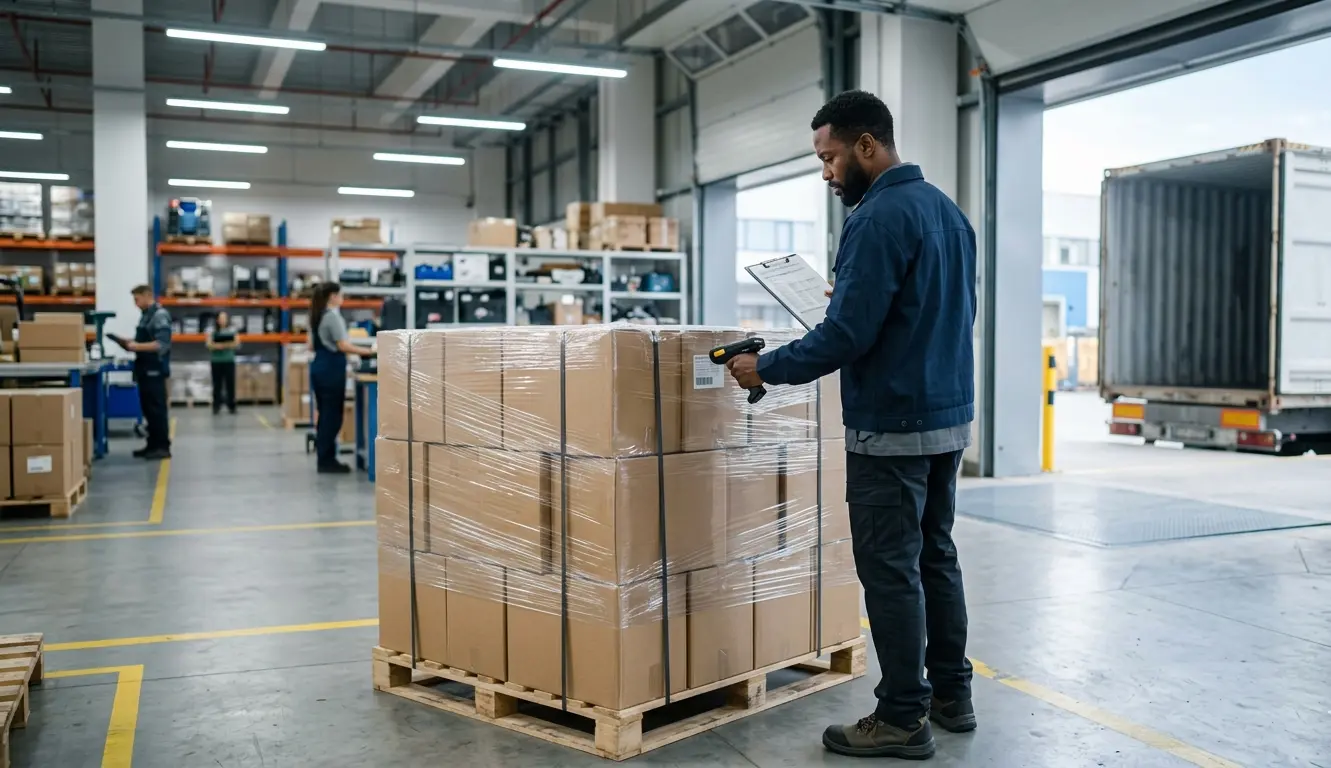
Every incoterm has a handover point the moment where seller responsibility ends and buyer responsibility begins. Most sourcing guides stop there. What happens next is the operational reality that determines whether your supply chain actually works: the goods need to be received at a warehouse, checked in, stored, and eventually picked, packed, and dispatched to customers globally. The incoterm defines the hand-off. Your fulfillment infrastructure handles everything that follows.
How Fulfillmen Manages Inbound Freight from the Incoterm Handover to Global Dispatch
Fulfillmen’s logistics services cover air freight, ocean freight, rail, and cross-border transport the full inbound freight chain from the moment goods leave a China factory under FCA or FOB terms through to arrival at Fulfillmen’s warehouse facilities in Shenzhen, Hong Kong, and India. Our logistics team manages customs documentation, export clearance at origin, and import clearance at destination, working across all major global trade lanes with real-time shipment tracking from dispatch to warehouse receiving.
Once inbound freight arrives, Fulfillmen’s fulfillment services take over: goods are received into the Warehouse Management System, quality-checked, and stored in warehouse services facilities with real-time inventory visibility. Orders auto-sync from your Shopify, WooCommerce, or other connected platform the moment a customer checks out, triggering pick, pack, and dispatch via DHL, FedEx, UPS, USPS, and regional carrier partners globally without manual intervention. For brands sourcing from multiple manufacturers at different origin points, our consolidation services combine multiple inbound shipments into a single dispatch, reducing international freight cost and customs complexity.
For brands new to international sourcing who want to understand the full procurement and logistics chain before placing a first order, Fulfillmen’s D2C Procurement service manages the supplier relationship, quality control at origin, and inbound freight routing including incoterm negotiation with manufacturers — so the operational chain from factory to customer runs through one partner. For more on how 3PL fulfillment fits into the broader sourcing and logistics picture, see our post on what is a 3PL. To understand how incoterms interact with supplier minimum quantities when planning your first order, see our post on minimum order quantity.
Whether you are negotiating your first FCA quote with a Shenzhen manufacturer or optimising a multi-supplier inbound logistics chain, the incoterm you agree with your supplier defines where Fulfillmen’s inbound management begins. From that point, we handle the rest freight, customs, receiving, storage, and global dispatch. For a complete overview of what this operational model offers, see why Fulfillmen.
Frequently Asked Questions About Incoterms
What are incoterms in simple terms?
Incoterms are 11 standardised three-letter codes published by the International Chamber of Commerce that define who pays for what, who carries the risk of loss or damage, and who handles customs clearance at each stage of an international shipment. Every supplier quote for cross-border goods includes an incoterm that tells you exactly what that quoted price covers and where the seller’s obligations stop and yours begin.
Are incoterms 2020 still valid in 2026?
Yes Incoterms 2020 are fully valid in 2026 and are the current edition. The International Chamber of Commerce revises Incoterms approximately every ten years; the 2020 edition took effect on 1 January 2020 and the next revision is not expected until around 2030. Any reference to ‘Incoterms 2026’ in supplier quotes or trade documentation is using a year label for marketing or clarity purposes not indicating that new rules have been published.
What is the difference between FOB and FCA?
FOB (Free on Board) and FCA (Free Carrier) both transfer risk from seller to buyer at the origin country, but at different points and for different transport types. FOB is designed for non-containerised bulk sea freight risk transfers when goods are on board the vessel. FCA is designed for any transport mode including containerised sea freight risk transfers when goods are handed to the first carrier at a named location. For almost all ecommerce container shipments from China, FCA is the technically correct term under Incoterms 2020. FOB is still widely used as trade shorthand for container shipments, but creates a liability gap at the port terminal that FCA resolves cleanly.
What does DDP mean in shipping?
DDP Delivered Duty Paid means the seller handles every aspect of the shipment: export clearance, international freight, insurance, import customs clearance at destination, import duties and taxes, and delivery to the buyer’s named premises. It is the incoterm with maximum seller obligation and minimum buyer involvement. The buyer receives a single all-in quoted price. DDP is the simplest option for buyers new to importing, but requires the seller to act as the importer of record at the destination country which requires them to have import compliance capability there.
Which incoterm is best for buying from China?
For most ecommerce brands, FCA is the recommended incoterm for China container imports it is technically correct for containerised freight, gives the buyer control over freight booking and carrier selection, and transfers risk at a clearly defined point. DDP is the simplest option for first-time importers who want the seller to manage the entire logistics chain. EXW is useful for comparing true factory-gate product costs across suppliers before logistics costs are added. For more guidance on navigating China supplier relationships, see our posts on how to source from China and how to find manufacturers in China.
Do incoterms cover insurance?
Two incoterms require the seller to arrange and pay for insurance: CIF (Cost, Insurance and Freight) for sea transport, which requires only minimum insurance coverage, and CIP (Carriage and Insurance Paid To) for any mode, which under Incoterms 2020 now requires the higher Institute Cargo Clauses (A) standard. All other incoterms leave insurance to the buyer’s discretion. Regardless of which incoterm you agree, buyers are strongly advised to arrange their own cargo insurance for high-value shipments even when minimum seller insurance is included minimum CIF coverage often does not cover the full value of the goods.
Can I negotiate incoterms with my supplier?
Yes incoterms are agreed between buyer and seller as part of the sales contract negotiation, not imposed by any third party. Most experienced China manufacturers are comfortable quoting EXW, FCA, FOB, and DDP prices on request. Asking for both EXW and FCA quotes from the same supplier is common practice and gives you a clear view of the factory-gate product cost versus the cost to get goods to the carrier at origin. The incoterm you ultimately agree determines how much control you want over the freight chain and how much logistics management you are prepared to handle or delegate to a freight forwarder or 3PL partner.