Knowing how to find manufacturers in china is one of the most searched questions in ecommerce sourcing and one of the most poorly answered. Most guides hand you a list of platforms and stop there. The reality is that finding a manufacturer is only the first step. Vetting them, communicating effectively, placing a qualifying order, and then getting the goods into a fulfillment system that ships globally these are the steps that determine whether your sourcing decision works or costs you months of margin. This guide covers the complete process, from the right platforms and trade shows to supplier verification, regional manufacturing clusters, and the fulfillment infrastructure you need on the other side of the order. If you are new to the broader sourcing process, our guide on how to source from China covers the full procurement framework this post sits inside.
China accounts for roughly 28 percent of global manufacturing output, more than the next two largest producers combined. That scale means you can find a manufacturer for almost any product category, at almost any order volume, if you know where to look and how to evaluate what you find. The ecommerce fulfillment services side of that equation matters just as much as the sourcing side: a manufacturer relationship only succeeds long-term when the logistics that follow it are built to scale.
Where to Find Manufacturers in China: 5 Channels That Work
There is no single best channel for finding Chinese manufacturers. The right starting point depends on your product category, order volume, and how much qualification work you are willing to do upfront. Most experienced buyers use two or three channels in combination, not one exclusively.

Alibaba — The Widest Net for China Manufacturer Discovery
Alibaba is the default starting point for most buyers and for good reason: it covers virtually every product category, shows transaction history and buyer reviews, and includes Trade Assurance protection on qualifying orders. When searching for alibaba manufacturers, use specific product terminology rather than broad category names ‘brass die cast drawer locks’ returns more relevant results than ‘hardware.’ Filter for Verified Supplier status, which confirms the company’s business registration, and for Trade Assurance, which provides payment protection. One important caveat: many listings on Alibaba are trading companies, not factories. A trading company aggregates products from multiple factories and adds a margin. For standard products this is often fine. For custom manufacturing, direct factory access matters and identifying it requires more than checking a profile badge. According to Alibaba’s supplier verification guide, ‘Verified’ status confirms existence, not quality treat it as a floor, not a ceiling.
Global Sources — Better Vetting for Higher-Volume Buyers
Global Sources applies stricter supplier assessments than Alibaba, which tends to attract larger factories with established export experience. It is particularly strong for electronics, hardware, and consumer goods sourced at higher volumes. Many suppliers listed on Global Sources China also exhibit at the Canton Fair, which means you can meet them in person after making initial contact online. This dual-channel approach to online discovery, in-person qualification compresses the trust-building timeline significantly.
1688.com — Direct Factory Access at Domestic Prices
1688.com is Alibaba’s Chinese domestic B2B marketplace. It lists factories that do not maintain English-language profiles on international platforms, often the most cost-efficient manufacturers in any category, operating without the 15 to 30 percent commission that Alibaba charges suppliers for international exposure. Accessing 1688.com sourcing as an international buyer typically requires a China sourcing agent or a Chinese-speaking partner who can navigate the platform, communicate with factories directly, and handle the domestic payment system. The price advantage is real: experienced importers report unit costs 30 to 40 percent lower than equivalent listings on Alibaba for the same factory. The trade-off is communication complexity and the need for an intermediary.
The Canton Fair — In-Person Manufacturer Discovery at Scale
The Canton Fair held twice yearly in Guangzhou is the largest trade event of its kind globally, attracting over 26,000 exhibitors and 180,000 buyers across three phases covering different product categories. Attending in person lets you examine samples physically, compare multiple manufacturers in a single day, gauge a factory’s professionalism in real time, and begin a supplier relationship with a face-to-face conversation. Canton Fair suppliers tend to be export-experienced and already set up for international orders which reduces the onboarding friction that comes with approaching smaller factories cold. For buyers sourcing at volume or evaluating custom manufacturing requirements, attending at least one Canton Fair phase is worth the travel cost.
TikTok and Social Media — The Underrated 2026 Discovery Channel
Many Chinese factories now use TikTok, Facebook, and WeChat to showcase their production lines and finished products, often factories that do not list on Alibaba because they rely on direct referral and social discovery instead. Searching product keywords on TikTok (‘CNC machine parts manufacturer’, ‘custom packaging factory’) surfaces factories showing real production footage, which provides more authentic quality signals than a curated Alibaba listing. Training the algorithm by watching and engaging with relevant factory content pushes more manufacturers into your feed. This channel works best for finding smaller specialist factories that standard platforms miss.
China's Manufacturing Regions: Match Your Product to the Right Location
One of the most valuable pieces of context that most sourcing guides skip entirely is China’s regional manufacturing specialisation. Factories cluster geographically around shared infrastructure, supply chains, and industry expertise built over decades. Targeting the right region before you search a platform reduces search noise, improves factory quality, and often shortens lead times because raw material suppliers are nearby.
China Manufacturing Regions by Product Category
Region | Best For | Key Search Term |
Shenzhen / Guangdong | Electronics, PCBs, tech accessories, cables, smart devices | shenzhen electronics manufacturer |
Guangzhou / Guangdong | Garments, textiles, furniture, household goods | Best for apparel and home goods |
Yiwu / Zhejiang | Small commodities — toys, stationery, gifts, accessories | Low MOQ, high variety |
Wenzhou / Zhejiang | Shoes, leather goods, lighters, hardware | Category-specialist factories |
Hangzhou / Zhejiang | Silk, digital commerce, tech services | High-quality textiles, digital suppliers |
Foshan / Guangdong | Ceramics, lighting, furniture, building materials | Interior and construction categories |
Dongguan / Guangdong | Plastics, electronics manufacturing, paper products | Mid-to-large volume manufacturing |
Knowing the right region means your platform searches, factory visits, and agent briefs all target the correct manufacturing ecosystem from the start. A china manufacturing regions search with a specific city or province name consistently returns more relevant factory results than a generic product search across all of China.
How to Verify Chinese Suppliers Before You Order
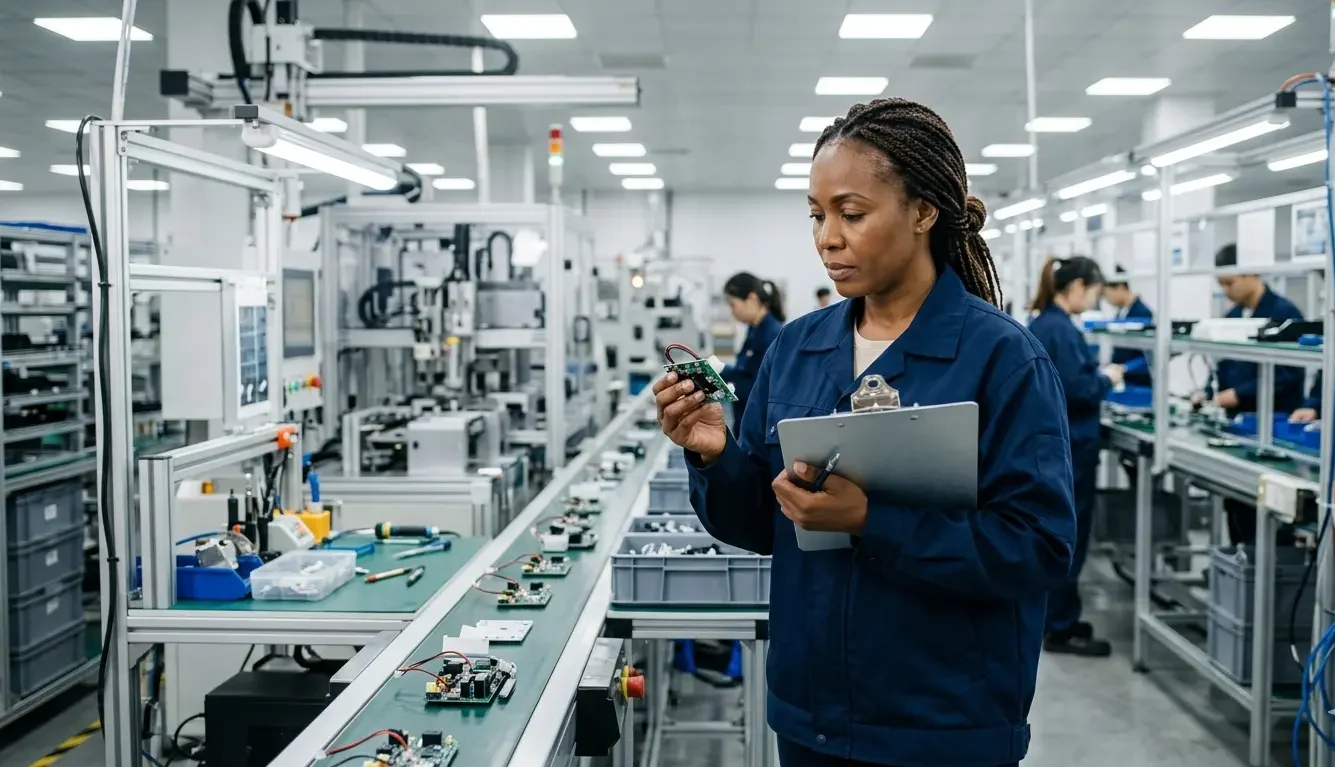
Finding a manufacturer is the easier part. Verifying that the manufacturer is legitimate, financially stable, and capable of producing your product to specification is where most sourcing problems originate. A structured verification process before your first order is the only reliable way to avoid expensive mistakes.
The 5-Step Supplier Verification Process
- Cross-reference the supplier’s profile across multiple platforms Alibaba, Global Sources, Made-in-China and verify that their company name, address, phone number, and export licence number are consistent. Discrepancies between platforms are the first red flag.
- Request the supplier’s business licence, tax registration certificate, and export permit. Verify the business licence against China’s National Enterprise Credit Information Publicity System, which is publicly accessible. Confirm the company has been registered for at least two years and that its business scope covers your product category.
- Ask for client references from buyers in your country or region who have placed similar orders. A legitimate manufacturer will have a reference track record. Evasiveness on references is a signal not a guarantee, but a signal.
- Order a sample before committing to any production run. A sample order reveals production quality, packing standards, lead time reliability, and communication responsiveness simultaneously. The cost of a sample is negligible relative to the risk of a full production run with an unverified supplier.
- Commission a factory audit for orders above a threshold that justifies the cost typically from $280 per day through verified third-party inspection services. An on-site audit confirms actual production capacity, worker conditions, equipment quality, and whether the factory physically matches its platform profile. Many factories on B2B platforms outsource production to sub-contractors and an audit will expose this.
How to Contact Chinese Manufacturers and Write an RFQ
Once you have identified and shortlisted manufacturers, knowing how to contact Chinese manufacturers professionally significantly improves your response rate and the quality of quotes you receive. Email is the standard opening channel used for formal documentation, specifications, and written agreements. WeChat is the standard real-time communication tool in China once a relationship is established, WeChat is where day-to-day questions, photo updates, and production check-ins happen. Use both channels in tandem. When writing your initial Request for Quotation (RFQ), be specific: product name, material specification, dimensions, target quantity, quality standards required, target unit price range, and delivery destination. A vague RFQ returns vague quotes and signals an inexperienced buyer. A detailed RFQ signals a serious order and attracts a serious manufacturer’s attention. Where language is a barrier, consider working with a China sourcing agent who can handle communication, translation, and initial qualification on your behalf.
What Happens After You Find the Manufacturer
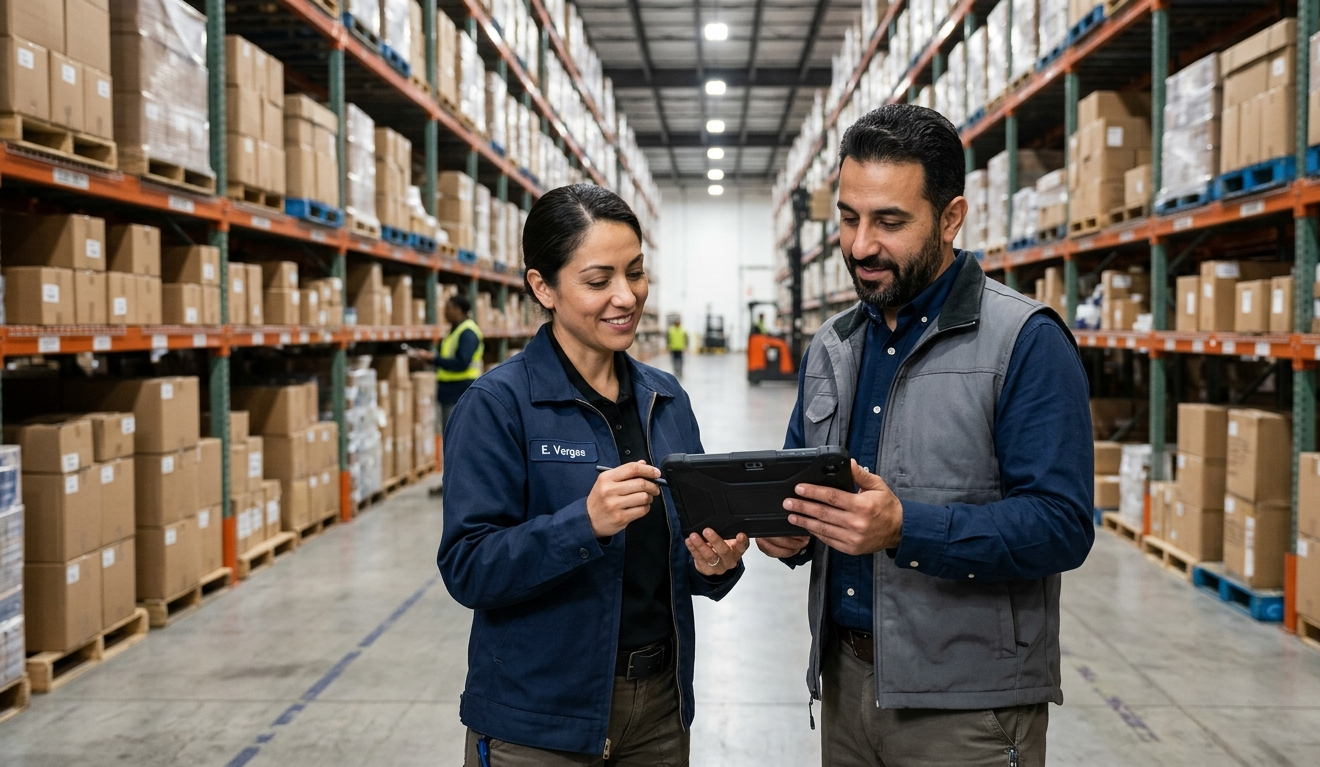
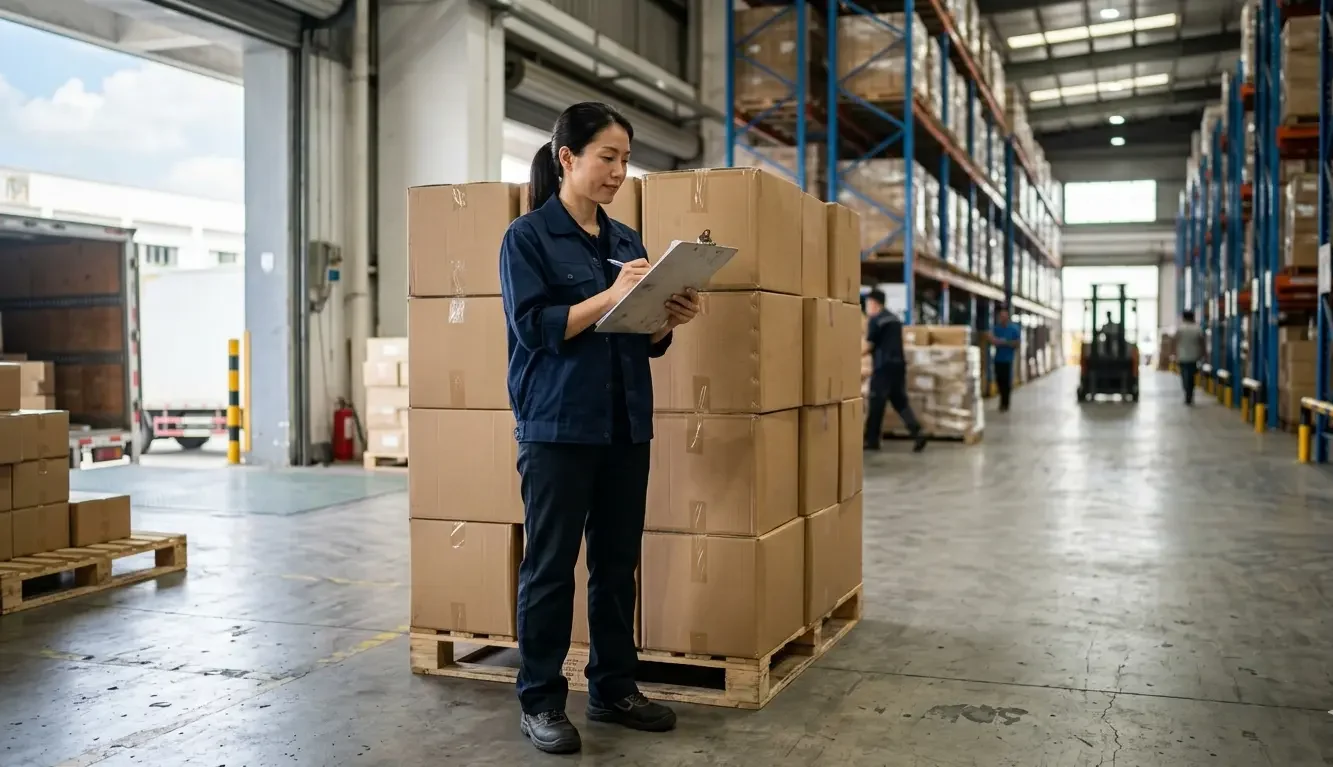
Every guide on how to find manufacturers in China ends at the point of placing the order. What happens next the inbound shipment, the receiving, the storage, the pick-and-pack, the global dispatch is the operational infrastructure that determines whether your manufacturer relationship is actually profitable. A sourcing decision made without a fulfillment plan is only half a decision.
How Fulfillmen Connects China Manufacturing to Global Fulfillment
Fulfillmen operates as a global ecommerce fulfillment service with warehouses across China, Hong Kong, and USA positioned specifically to bridge the gap between China manufacturer and global customer. Once your inbound stock arrives at a Fulfillmen facility, our real-time Warehouse Management System takes over: orders auto-sync from your Shopify, WooCommerce, or other connected platform the moment a customer checks out, triggering pick, pack, and dispatch without manual intervention.
Our D2C Procurement service extends further upstream: we connect brands with vetted manufacturers, manage quality control at the factory, coordinate inbound shipments, and plan inventory quantities aligned with realistic sell-through before you commit to production. For brands navigating manufacturer selection for the first time, this removes the single biggest risk in China sourcing: committing capital to a supplier relationship before it has been operationally validated.
Our consolidation services allow brands sourcing from multiple manufacturers simultaneously to combine inbound shipments into a single dispatch reducing international freight costs and cutting the complexity of managing multiple inbound logistics streams. From there, our logistics services handle air freight, ocean freight, and cross-border routing globally, with multi-carrier dispatch via DHL, FedEx, UPS, USPS, and regional carrier partners. According to Fulfillmen’s own operational data, the system runs 2.5 times faster than industry-average fulfillment with shipping costs averaging 20 percent below standard carrier rates with no minimum order volumes and no hidden fees. For a deeper comparison of fulfillment models, see why Fulfillmen.
For brands managing inventory across multiple manufacturers, our warehouse services provide real-time WMS tracking, AI demand forecasting, and no minimum storage requirements meaning you pay only for what ships, not for what sits. The entire sourcing-to-fulfillment chain, from identifying a manufacturer in Shenzhen to delivering an order to a customer in the US, UK, or Australia, runs through one connected operational system. That is what separates a sourcing decision from a logistics strategy.
Frequently Asked Questions About Finding Manufacturers in China
What is the best platform for finding manufacturers in China?
There is no single best platform; the right choice depends on your product and order volume. Alibaba is the widest starting point and covers virtually every category. Global Sources applies stricter vetting and attracts larger export-experienced factories, making it better for electronics and hardware at higher volumes. Made-in-China.com is strong for industrial and mechanical products with inspection services built in. 1688.com offers the lowest prices by connecting you directly to domestic factories, but requires a Chinese-speaking agent or partner to navigate effectively. Most experienced importers use two or three of these platforms in combination rather than relying on one.
How do I verify a Chinese manufacturer is legitimate?
A reliable five-step process: cross-reference the company’s details across multiple platforms for consistency; request and verify the business licence against China’s National Enterprise Credit Information Publicity System; ask for client references from buyers in your region who have placed similar orders; order a sample before any production commitment to assess quality, lead time, and communication; and commission a third-party factory audit for orders above a cost-justified threshold on-site audits confirm actual production capacity and expose sub-contracting arrangements that platform profiles will not reveal.
Is 1688.com better than Alibaba for finding manufacturers?
For unit cost, yes 1688.com connects you to domestic Chinese factories at prices 30 to 40 percent lower than equivalent Alibaba listings for the same manufacturer, because factories avoid the platform commission. For accessibility, no 1688.com is a Chinese domestic marketplace requiring Chinese-language navigation, domestic payment methods, and typically an agent or local partner to use effectively as an international buyer. It is the better option for experienced importers who have already identified a target product and factory region and want to find the most cost-efficient direct source.
Do I need a sourcing agent to find manufacturers in China?
Not always but a sourcing agent adds the most value in three specific situations: when you are sourcing a complex or custom product that requires detailed technical specification, factory selection, and quality oversight; when you want to access 1688.com or smaller factories that do not maintain English-language international profiles; and when you are placing your first orders from China and want an experienced intermediary managing supplier communication, sample collection, and quality control. For straightforward commodity products on Alibaba with Trade Assurance, a sourcing agent is optional. For anything requiring customisation or factory-level negotiation, a good agent typically pays for themselves within the first two orders.
What is the Canton Fair and should I attend?
The Canton Fair is the largest trade event in China, held twice yearly in Guangzhou across three phases each covering different product categories. It attracts over 26,000 exhibitors and 180,000 buyers. Attending allows you to examine samples physically, compare multiple manufacturers in a single day, and begin supplier relationships face-to-face which compresses months of email qualification into hours of in-person conversation. It is particularly valuable for buyers making their first China sourcing trip or evaluating custom manufacturing options. Registration is free and available online in advance. For those who cannot attend in person, many Canton Fair exhibitors now offer virtual tours and video-based product showcases.
How do I contact a Chinese manufacturer for the first time?
Open with a formal email that includes your company name, target product specifications, intended order quantity, quality standards required, and target unit price range. Be specific vague enquiries attract vague responses and signal an inexperienced buyer. Follow up with a WeChat message once the email is sent, as WeChat is the primary real-time communication tool for Chinese businesses. If you receive a response, request a video call to qualify the factory further before investing in a sample order. AI-powered translation tools have significantly reduced the language barrier in 2026, but for complex technical specifications, working through a bilingual sourcing agent or translator is still the most reliable approach.
What happens after I find and verify a manufacturer?
After verification and a successful sample order, the next step is placing your first production order and planning your fulfillment infrastructure before the goods ship. This means selecting a 3PL partner to receive, store, and fulfill your inventory, integrating your store with their warehouse management system, and setting up inbound shipping routing from the factory to the fulfillment center. Brands that plan fulfillment before the first order ships avoid the most common post-sourcing problem: a successful manufacturer producing goods that then sit in expensive or poorly-located storage. If you are working through this for the first time, our post on what is a freight forwarder covers the inbound logistics step, and what is a 3PL covers the fulfillment infrastructure decision.