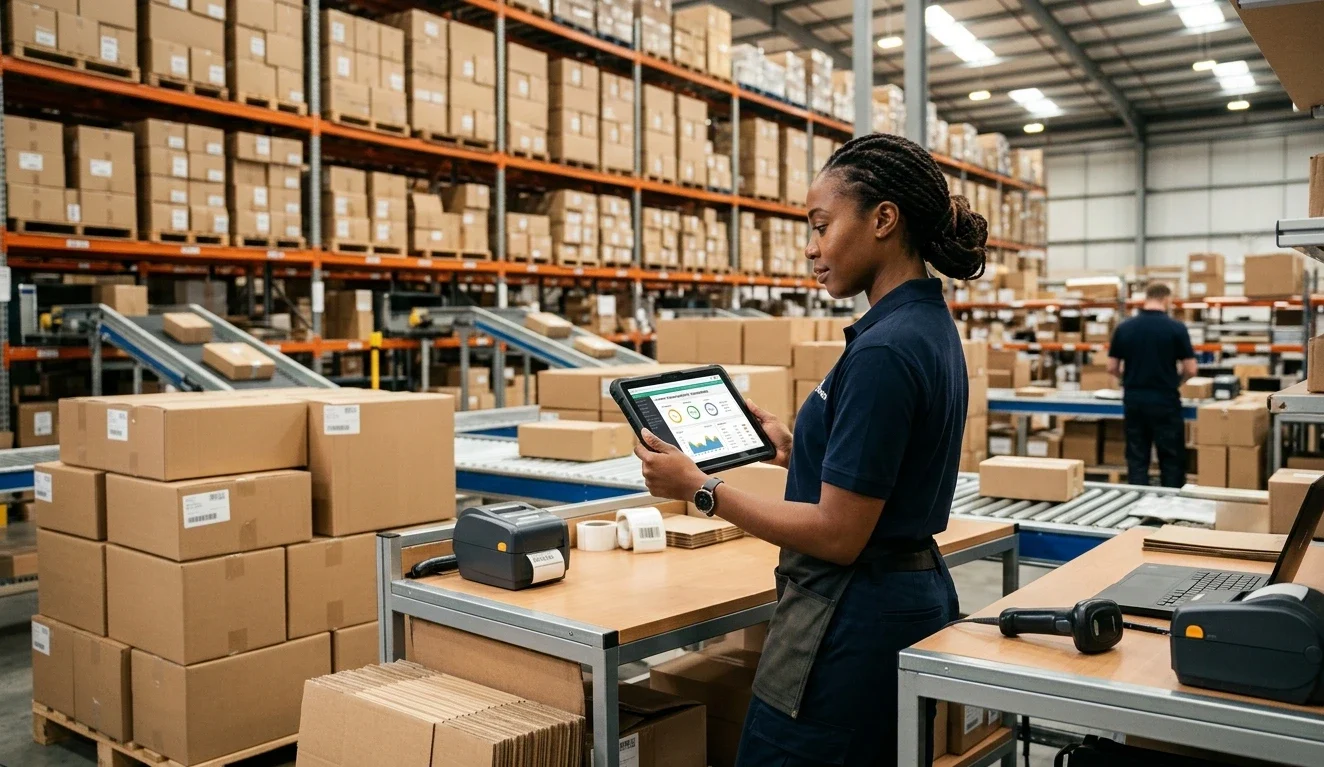
The dropshipping fulfillment process is everything that happens between a customer clicking buy and that same customer receiving their order. It sounds simple in the textbook version: customer orders, seller forwards the order to a supplier, supplier ships to the customer. But the actual process has six distinct stages and every single one creates either a trust signal or a trust risk for the customer on the other end. Understanding each stage, what can go wrong at each one, and how different fulfillment models handle them is the operational knowledge that separates dropshipping stores with strong review scores and repeat purchase rates from stores that churn customers after a single order.
Our dropshipping fulfillment service runs every one of these stages for you.
The dropshipping industry is projected to generate $476 billion in e-commerce sales in 2026, according to Shopify’s industry data. That scale is built on the fulfillment infrastructure behind it. Here’s exactly how that infrastructure works and what your customer experiences at every step.
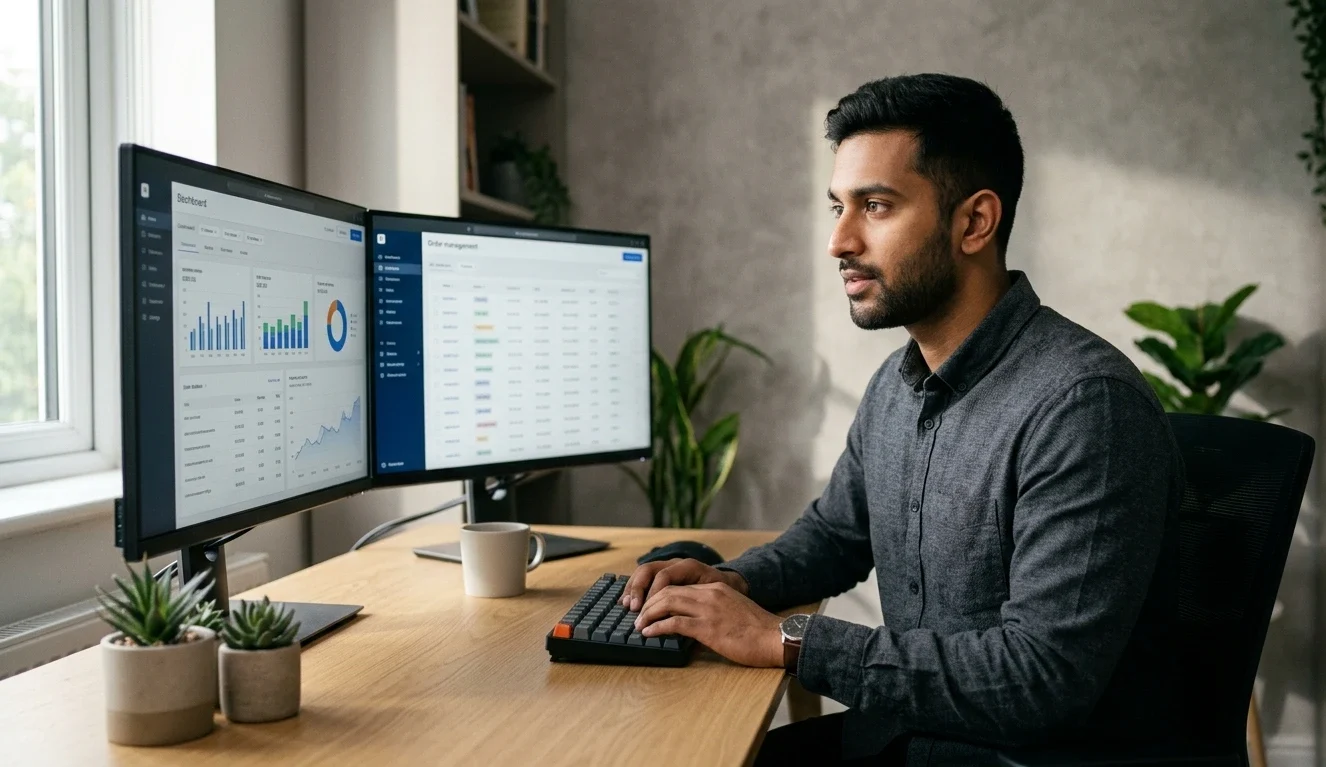
What Is Dropshipping Fulfillment — and Why It Differs From Standard E-commerce
Dropshipping fulfillment is a retail fulfillment method where the seller never holds physical inventory. When an order is placed, the seller routes it to a third party supplier or fulfillment partner who picks the product, packs it, and ships it directly to the end customer. The seller manages the store, the marketing, the pricing, and the customer experience. The supplier manages the physical side of the order.
How Dropshipping Fulfillment Differs From Traditional Retail Fulfillment
In traditional e-commerce fulfillment, the seller owns inventory, stores it in a warehouse, picks and packs orders in house, and ships directly. They control every stage. In dropshipping, the seller has no direct control over the physical stages pick, pack, and ship because those happen at the supplier’s facility, not theirs. This is the core trade-off of the dropshipping fulfillment process: you gain the ability to sell without holding inventory, and in exchange, you lose direct control over the customer’s physical experience of your brand.
The Two Models of Dropshipping Fulfillment
There are two fundamentally different structures for dropshipping fulfillment. Supplier direct fulfillment means a supplier typically on AliExpress, CJ Dropshipping, or Zendrop ships each customer order individually from their warehouse, usually in China or another production hub. 3PL supported fulfillment means inventory is bought in advance and held at a third party logistics warehouse, where orders are picked, packed, and shipped under the seller’s brand from a domestic location. The fulfillment process itself is the same in both models. What differs is who controls each stage, where the physical goods are, and what the customer receives on the other end.
Stage 1 — Order Placement: What Happens the Moment a Customer Buys
The dropshipping fulfillment process starts the instant a customer completes a purchase. Your store records the sale, charges the customer’s payment method, and generates an order record. From that moment, the clock is running on your fulfillment SLA, your stock commitment, and the customer’s delivery expectation.
What Your Store Does Automatically
A properly configured Shopify or WooCommerce store with a connected dropshipping app automatically sends the order details to your supplier or fulfillment partner at the moment of purchase. DSers pushes AliExpress orders. AutoDS routes to whichever supplier in its network has the product in stock. Spark Shipping applies intelligent order routing choosing which supplier fulfills based on price, location, and current stock availability. If your store isn’t set up with automated order forwarding, you’re manually copying order details to your supplier a process that doesn’t scale past 20 to 30 daily orders without introducing errors.
The Inventory Check That Most Dropshippers Skip
Every order placement triggers an implicit inventory check. If your supplier is out of stock on the product that just sold, you have a problem the customer doesn’t know about yet. Real-time inventory syncing where your store’s listed quantity updates automatically as your supplier’s stock changes prevents overselling. Without it, you’re relying on a supplier to honor an order they may not be able to fulfill. AutoDS and DSers both offer real-time inventory sync for their connected suppliers. For sellers not using automation, manual stock checks before listing and regular supplier confirmation are the only backstop.
Stage 2 — Order Forwarding and Confirmation: The Handoff Stage
Once the order hits your system, it needs to reach your supplier. In an automated setup, this happens within seconds. In a manual setup, it happens when you next log in to process orders. The speed and accuracy of this handoff directly determines your fulfillment start time and therefore your customer’s delivery window.
What Automated Order Forwarding Actually Does
A connected dropshipping app packages the order details product SKU, variant, customer shipping address, and any special instructions and transmits them to the supplier in a format their system can process. The supplier’s system generates a pick ticket, confirms stock availability, and queues the order for fulfillment. You receive a confirmation that the order has been accepted. This entire sequence takes seconds in a properly integrated setup.
Where Manual Order Forwarding Fails at Scale
Manual order forwarding copying customer details from your store into a supplier portal or email introduces three failure points: transcription errors on shipping addresses, delays when orders come in outside your working hours, and no confirmation that the supplier actually received and accepted the order. At five daily orders, manual forwarding is manageable. At 30 daily orders, it’s a full-time job. At 100 daily orders, it’s the operational ceiling that caps your store’s growth until you automate or outsource.
Stage 3 — Pick: Locating and Retrieving the Product
Pick is the first physical stage of the dropshipping fulfillment process. A warehouse worker or an automated picking system locates the ordered product in the warehouse, retrieves it, and brings it to the packing station. In a supplier-direct dropshipping model, you have no visibility into or control over this stage. In a 3PL model, the picking process is managed by the 3PL’s warehouse management system (WMS), which tracks every item’s precise warehouse location and generates optimized pick routes to minimize errors and time.
Why Picking Accuracy Matters for Your Store's Review Score
A picking error wrong product, wrong variant, wrong quantity doesn’t just create a return. It creates a customer service conversation, a negative review, and a potential chargeback. Research from Amazon MCF shows that 3PLs using WMS automation achieve significantly lower picking error rates than manual warehouse operations. When your supplier picks incorrectly and ships a wrong item to your customer, the customer contacts you not the supplier. Your review score absorbs the error regardless of where it originated.
Quality Control at the Pick Stage
In a professional 3PL fulfillment operation, each picked item passes a quality check before reaching the packing station. Damaged units, incorrect batches, and specification mismatches are caught here before the customer ever sees them. In supplier-direct dropshipping, quality control at the pick stage doesn’t exist. The supplier picks whatever is in their inventory at the time the order is queued. Batch inconsistency where successive orders of the same product arrive with different materials or finishes is a direct result of this absence of QC at pick.
Stage 4 — Pack: The Stage That Defines Your Brand
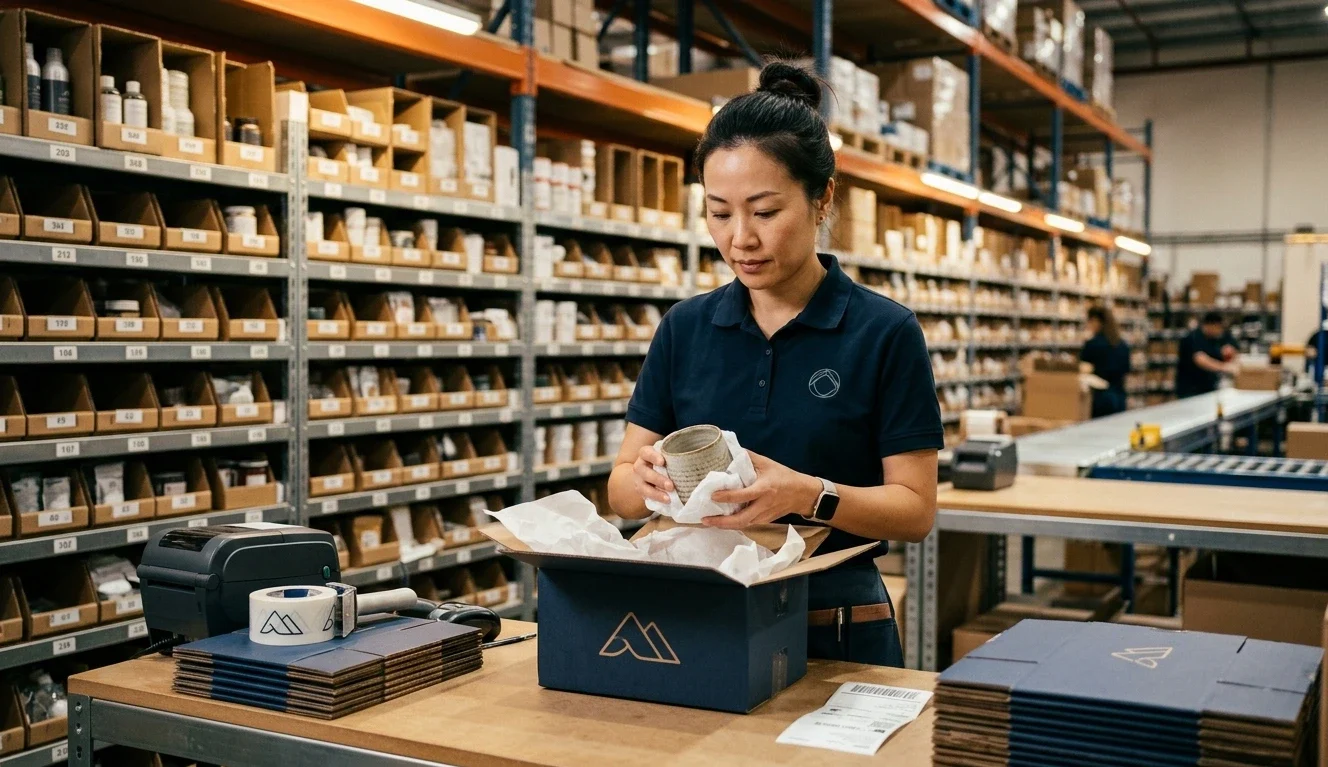
Packing is the most brand-critical stage in the dropshipping fulfillment process. It’s the moment your invisible operation becomes a physical reality for your customer. What they open the box, the materials, the presentation, the inserts is the entirety of your physical brand experience. Everything else about your store is digital. This is real.
What Supplier-Direct Packing Looks Like
In supplier-direct dropshipping, your product ships in whatever packaging the supplier uses typically an unbranded poly mailer or generic cardboard box, sometimes with the supplier’s own branding or AliExpress standard packaging materials. You have no control over this. Your customer receives a package that communicates nothing about your brand, offers no branded inserts, and sometimes arrives with supplier documentation the customer shouldn’t see. It’s a functional delivery. It’s a missed brand-building opportunity on every single order.
What Branded Fulfillment Packing Looks Like
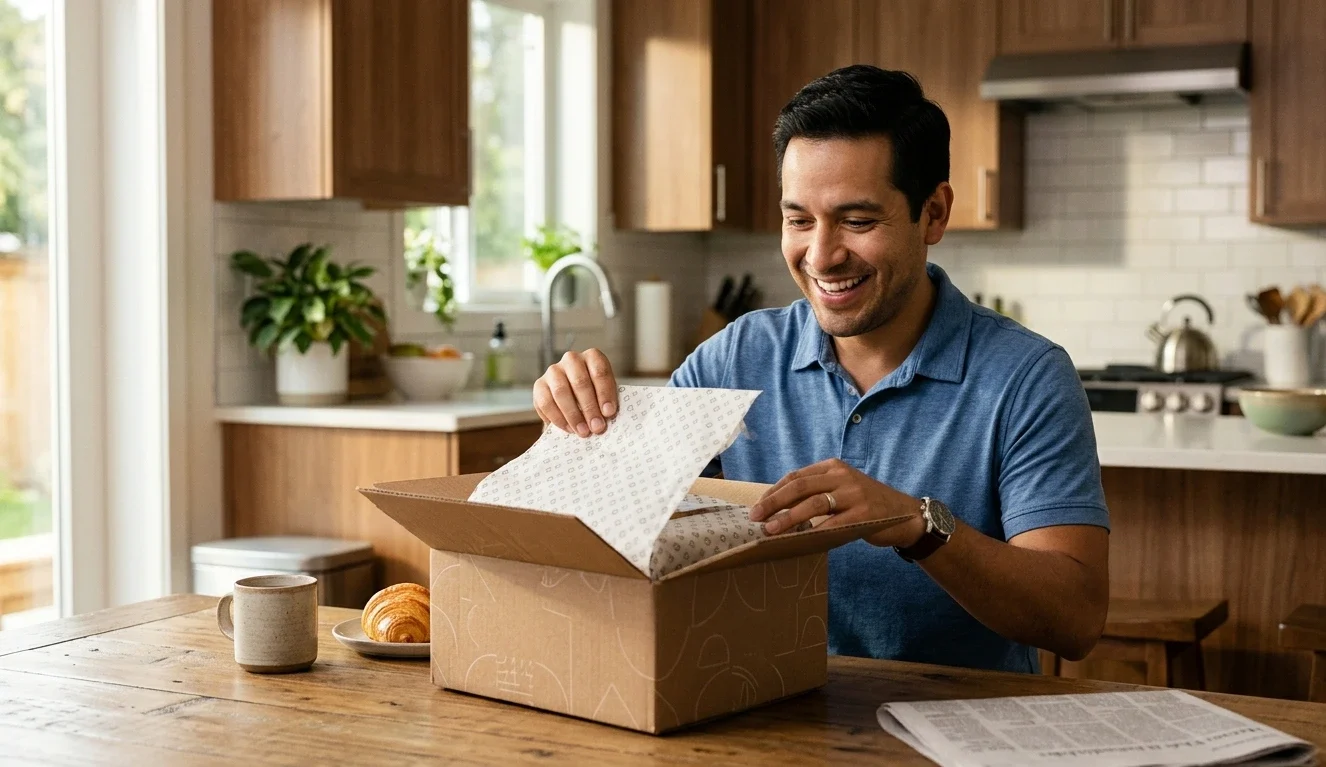
A 3PL offering branded fulfillment packs every order in your specified packaging custom boxes, branded poly mailers, tissue paper, custom inserts, thank-you cards, and promotional materials. The customer’s unboxing experience is identical to receiving from a brand with its own warehouse operation. Research consistently shows that branded unboxing experiences drive higher repeat purchase rates. A customer who receives a thoughtfully packaged order is meaningfully more likely to order again than one who receives a generic poly mailer, regardless of how good the product itself is. At scale, that difference compounds into a material revenue gap between stores that control their packaging and stores that don’t.
Stage 5 — Ship: Getting the Order Into the Carrier Network
Shipping is the stage most dropshippers focus on first and it’s genuinely important. But shipping speed is only part of what the customer experiences. Shipping consistency and tracking visibility are equally important and far more within a seller’s control than raw transit time.
Shipping Methods and Their Real Impact on Customer Experience
Standard supplier direct shipping from China AliExpress Standard Shipping, China Post, ePacket delivers in 15 to 30 days to the US. Premium supplier-direct shipping via DHL, YunExpress, or 4PX delivers in 7 to 12 days. Domestic 3PL fulfillment delivers in 2 to 5 days via USPS, UPS, or FedEx. The difference isn’t just speed it’s tracking visibility. Domestic shipments generate scan-by-scan tracking updates from despatch to door. International shipments from China often generate an origin scan, then go dark until a US arrival scan, then generate a delivery confirmation. That mid-transit tracking silence is the primary driver of “where is my order” customer service tickets and dispute filings, regardless of whether the package is actually on time.
How the De Minimis Elimination Changed Shipping Economics
The April 2025 elimination of the US $800 de minimis threshold means every package shipped directly from China to a US customer now requires individual customs screening and potential duty payment. This added both cost and delay to every direct China-to-customer shipment. Sellers use a 3PL model bulk importing from China to a US warehouse, then fulfilling domestically processed customs clearance once at the bulk level. Their individual customer shipments move through the domestic carrier network without customs inspection, at US domestic speeds.
Stage 6 — Delivery, Tracking, and the Post-Purchase Experience
The dropshipping fulfillment process doesn’t end when the carrier collects the package. It ends when the customer has received the order, is satisfied with what arrived, and has either decided to come back or decided not to.
Tracking Communication as a Retention Tool
Every tracking update your customer receives is a touchpoint that either builds confidence or erodes it. An order that ships with real time scan-by-scan tracking and automated email updates at each stage generates a different customer experience than one that ships with a tracking number that doesn’t scan for three days. Automated post-purchase email flows order confirmation, despatch notification, mid-transit update, delivery confirmation reduce “where is my order” tickets by giving customers the information before they need to ask for it. This isn’t a nice-to-have in 2026. It’s the baseline expectation shaped by every major e-commerce platform customers interact with daily.
Returns — The Stage Supplier-Direct Fulfillment Handles Worst
Dropshipping returns are complex in supplier direct models because the return process involves the customer, the seller, and the supplier across potentially international logistics. A customer requests a return. The seller requests an RMA (return merchandise authorization) number from the supplier. The customer ships the product back sometimes internationally, sometimes at their own cost, sometimes to an address they don’t trust. The supplier inspects it and determines whether to issue credit. Every supplier has different policies. Some don’t accept returns at all. Some charge restocking fees. The customer’s experience of this process becomes the seller’s reputation for customer service.
In a 3PL model, returns come back to the domestic warehouse. The 3PL inspects, restocks sellable units, and disposes of unsellable ones. The customer ships domestically. The process is faster, cheaper, and within the seller’s control.
How Fulfillmen Manages Every Stage of the Dropshipping Fulfillment Process
Fulfillmen is built as the fulfillment infrastructure for DTC brands and dropshipping stores that have outgrown supplier-direct fulfillment and need a model that performs at every stage.
Stage Control That Supplier-Direct Fulfillment Can't Match
Fulfillmen controls the pick stage through incoming quality inspection every unit arriving at the warehouse is checked before it enters fulfillment stock, so batch inconsistency never reaches a customer. Fulfillmen controls the pack stage through branded fulfillment custom packaging, branded inserts, and consistent presentation on every order, regardless of volume. Fulfillmen controls the ship stage through its US domestic warehouse network every customer order ships at 2 to 5 day delivery speeds with real time scan-by-scan tracking from despatch to door.
D2C Procurement — Factory Cost Without Supplier-Direct Compromise
Fulfillmen’s D2C Procurement service handles the sourcing side: finding products from Chinese manufacturers at factory level pricing, managing quality inspection at origin, and shipping inventory to Fulfillmen’s US warehouse network by sea freight. You get 1688-level product pricing combined with branded domestic fulfillment the economics of China sourcing with the brand experience of a US operation. No sourcing agent to manage. No 1688 language barrier to navigate. One partner from Chinese factory to your customer’s door.
90 Days Free Storage — The Buffer That Changes Fulfillment Economics
Fulfillmen’s 90-day free storage model reshapes the cost structure of the entire fulfillment process. Send inventory from China by sea freight during planned replenishment windows. Hold it in Fulfillmen’s US warehouse at zero storage cost for up to 90 days. Fulfill individual customer orders at 2 to 5 day domestic speeds with no per-order international shipping costs. The result is the lowest per-unit landed cost from China combined with the fastest per-order customer delivery in the market simultaneously, without compromise. [Get a quote from Fulfillmen today] and build your fulfillment process on infrastructure that performs at every stage.
Common Dropshipping Fulfillment Mistakes and How to Avoid Them
Most dropshipping fulfillment failures follow predictable patterns. Recognizing them before they become customer-facing crises is the highest-leverage operational knowledge a seller can have.
Not Automating Order Forwarding Early Enough
The most expensive hour in dropshipping is the hour spent manually processing orders that an automation tool could process in seconds. Set up automated order forwarding through DSers, AutoDS, or your chosen platform before you need it — not after manual processing has already become a bottleneck.
Setting Delivery Promises the Fulfillment Model Can't Keep
A product page that promises “fast shipping” when your supplier ships from China in 15 to 30 days is the single fastest way to generate negative reviews and chargebacks. Your delivery promise must be accurate to your actual fulfillment capability. If your fulfillment model can’t support fast delivery, either change the model or be specific and honest about the timeline.
Ignoring the Pack Stage Entirely
Most dropshipping guides never discuss packaging as a business decision. Packaging is a brand decision, a retention driver, and a customer experience differentiator. The transition from generic supplier packaging to branded fulfillment is one of the highest-ROI upgrades available to a dropshipping store doing consistent daily sales. It doesn’t require changing your product. It doesn’t require changing your marketing. It changes what your customer receives and whether they come back.
FAQs — Dropshipping Fulfillment Process
What is the dropshipping fulfillment process step by step?
The dropshipping fulfillment process has six stages. One: a customer places an order on your store and payment is collected. Two: the order details are forwarded to your supplier or fulfillment partner, either automatically through a connected app or manually. Three: the supplier’s warehouse picks the ordered product from inventory. Four: the product is packed in branded or generic packaging depending on your fulfillment model. Five: the packed order is handed to a carrier and shipped to the customer’s address. Six: the customer receives the order, tracking updates complete, and the fulfillment cycle closes. Returns, if they occur, add a seventh stage involving the reverse logistics process back to the supplier or 3PL warehouse.
How long does dropshipping fulfillment take?
Fulfillment time depends entirely on your model. In supplier-direct dropshipping with China-based suppliers, total delivery time is typically 15 to 30 days using standard shipping or 7 to 12 days using premium carriers like DHL or YunExpress. In 3PL-based fulfillment with domestic US warehousing, total delivery time is 2 to 5 days via USPS, UPS, or FedEx. The order processing and forwarding stage from customer purchase to supplier pick ticket takes seconds in an automated setup or hours to days in a manual setup. Most professional 3PL operations achieve a 24 to 48 hour dock-to-ship window from order receipt to carrier handoff.
What is the difference between dropshipping and 3PL fulfillment?
In dropshipping, the supplier owns the inventory and ships each customer order individually, directly from their warehouse. The seller never takes physical custody of the product. In 3PL fulfillment, the seller owns inventory and stores it at a third-party logistics warehouse. When an order comes in, the 3PL picks, packs, and ships under the seller’s brand. The core difference is control: dropshipping gives the seller no control over pick accuracy, packaging quality, shipping speed, or returns handling. 3PL fulfillment gives the seller full control over all of these stages. Many scaling dropshipping businesses use a hybrid model sourcing from China at low cost and fulfilling through a 3PL at domestic speed.
Should I use a 3PL for my dropshipping store?
The transition to 3PL fulfillment makes sense when your store is processing 30 to 50 consistent daily orders and one or more of the following is true: supplier-direct delivery windows are harming your review score or repeat purchase rate; you can’t control packaging quality or presentation; Chinese New Year and other supplier disruptions are creating fulfillment gaps; or your dispute rate is above 3% and traced to fulfillment issues rather than product issues. Below 30 daily orders, supplier-direct fulfillment through DSers or AutoDS is usually more cost-effective. Above it, the customer experience improvements and margin protection of 3PL fulfillment typically outweigh the additional operational cost.
How do I automate the dropshipping fulfillment process?
Automating dropshipping fulfillment has three layers. First, connect your Shopify or WooCommerce store to a dropshipping platform DSers for AliExpress sourcing, AutoDS for multi-supplier automation, or Spark Shipping for enterprise-level order routing. This handles automated order forwarding, inventory sync, and tracking updates back to your store. Second, set up post-purchase email automation through Klaviyo or a similar platform to send order confirmation, despatch notification, and delivery confirmation emails automatically. Third, if you’re at volume, connect to a 3PL with WMS integration to your store this automates the pick, pack, and ship stages entirely. At that point, the entire dropshipping fulfillment process from customer purchase to carrier handoff runs without manual intervention.
What happens when a dropshipping order goes wrong?
When a fulfillment error occurs wrong product shipped, damaged item, lost parcel the customer contacts the seller, not the supplier. The seller is responsible for the resolution regardless of where the error originated. In supplier-direct dropshipping, resolution involves coordinating with the supplier across time zones, language barriers, and the supplier’s own return policy. In 3PL fulfillment, resolution is handled domestically, typically within the 3PL’s standard return and reshipment protocol. To protect against fulfillment errors: use automation to eliminate manual transcription mistakes, order samples to verify supplier quality before listing at volume, require QC inspection at the pack stage, and maintain a clear written returns policy that your customer sees before purchasing.