Custom packaging for ecommerce is the difference between a delivery and a brand experience. Every order that leaves your warehouse is a physical touchpoint one of the few moments in ecommerce where your brand occupies the same physical space as your customer. According to a Dotcom Distribution 2025 packaging study, 40 percent of online shoppers say they are more likely to share a purchase on social media when it arrives in branded packaging, and 52 percent say premium packaging makes them more likely to reorder. That is marketing and retention working simultaneously from a box. This guide covers every element of custom ecommerce packaging: the types available, the realistic cost per unit, the unboxing strategy that drives repeat purchases, when the economics make sense to upgrade, and how your fulfillment services partner executes it all without you managing a single insert in-house. If you are new to how order fulfillment works end-to-end, our post on what is a 3PL covers the infrastructure behind every package that ships.
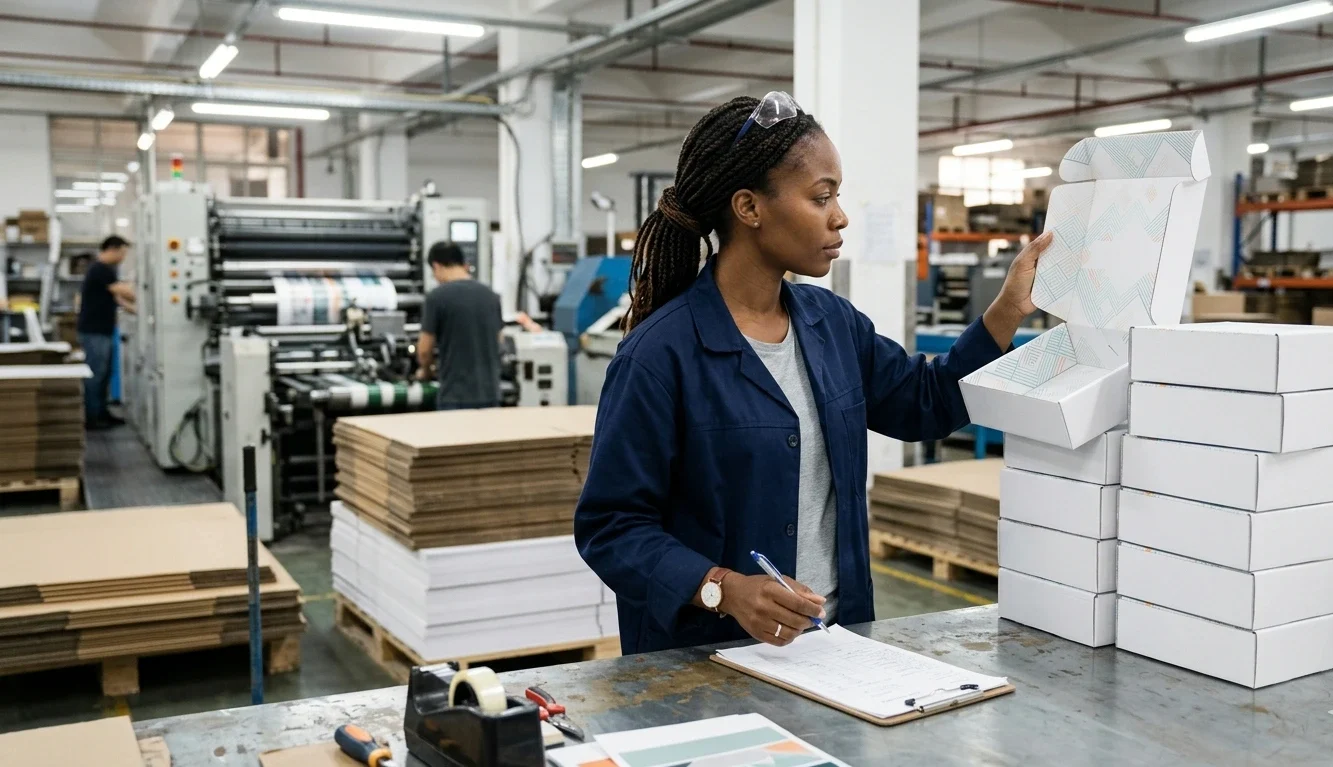
Types of Custom Packaging for Ecommerce
Custom ecommerce packaging is not a single product, it is a system of components that work together to create the experience a customer has when they open their order. Each element serves a different function, carries a different cost, and affects the brand impression at a different moment in the unboxing sequence. Understanding the full range of options lets you invest where the return is highest for your product and order volume.
Custom Mailer Boxes — The Flagship Branded Packaging Format
Custom mailer boxes are the primary format for DTC brands shipping direct to consumer. They are corrugated or rigid chipboard boxes, printed on the exterior and optionally on the interior, designed to arrive at a customer’s door as a brand statement rather than a generic brown cardboard delivery. Exterior printing starts at one-colour logo application and scales up to full-colour photographic print with matte or gloss laminate finishes. Interior printing adds $0.15 to $0.40 per box over exterior-only but dramatically increases the first-reveal moment when the customer opens the lid. Custom mailer boxes typically carry minimum order quantities of 500 to 1,000 units for offset printing, dropping to as low as 100 to 250 units for digital printing which makes them accessible for growing brands before they reach high volume.
Custom Poly Mailers — Branded Packaging at the Lowest Per-Unit Cost
Custom poly mailers are the cost-efficient branded format for soft goods: apparel, accessories, lightweight items that do not require rigid protection. They are printed plastic mailing envelopes exterior branding only that communicate brand identity at a fraction of the cost of a custom box. Per-unit costs for custom poly mailers typically run $0.15 to $0.40 at 1,000 units, making them the most accessible entry point into branded ecommerce packaging. The trade-off is tactile experience: a poly mailer does not create the same unboxing moment as a rigid box, which is why brands selling premium or gift-oriented products consistently upgrade to mailer boxes as they scale. For dropshipping services models, poly mailers are often the practical starting format — lightweight, low-cost, and easy to store alongside product inventory.
Packaging Inserts — The Highest-ROI Element in Your Unboxing Stack
Packaging inserts for ecommerce thank-you cards, discount code cards, product information inserts, loyalty programme invitations are the lowest-cost element in a branded packaging system and consistently produce the highest return relative to spend. A printed thank-you card with a 10 percent discount code for a second order costs $0.05 to $0.15 per unit at scale, and directly influences repeat purchase rate. Branded tissue paper at $0.10 to $0.20 per sheet adds a layer of visual presentation before the product is revealed, extending the unboxing moment and increasing the probability of the customer photographing or filming the experience. Branded thank you cards with a personalized message, even a pre-printed signature signal to the customer that the order was packed with care rather than assembled by a machine. Each insert is a low-cost, high-impact brand communication at the exact moment the customer is most receptive.
Branded Tape, Stickers and Void Fill — The Supporting Layer
The supporting layer of custom ecommerce packaging includes branded packing tape, custom stickers sealing tissue paper or inner packaging, and branded void fill replacing plain bubble wrap or paper. None of these elements is individually expensive; branded tape typically costs $0.04 to $0.08 per box, stickers $0.03 to $0.06 each but together they close the gap between a ‘branded box with plain insides’ and a fully considered unboxing experience. Brands that apply branded tape on the exterior of plain stock boxes as a first step toward custom packaging report meaningful improvements in perceived professionalism before investing in a full custom box programme.
How to Design an Unboxing Experience That Drives Repeat Purchases
The unboxing experience of ecommerce brands design is not an aesthetic project it is a retention and acquisition strategy. A well-designed unboxing experience generates social shares that reduce paid acquisition cost, increases the probability of a second purchase, and builds brand memory in a category where digital advertising creates none. The structure of an effective unboxing experience follows a deliberate layering logic: each element reveals the next, building anticipation and extending the time the customer is actively engaged with your brand before even reaching the product.
The Layered Unboxing System: What Each Element Does
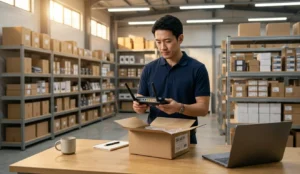
A complete branded unboxing stack, from outer packaging to product reveal, works as follows. The outer custom mailer box is the first impression exterior branding communicates brand identity before the box is opened and signals to anyone nearby that something worth noticing has arrived. Custom printed packing tape sealing the box extends the branded surface and prevents the ‘plain brown box with a logo sticker’ aesthetic that undermines premium positioning. On opening, branded tissue paper in your brand colour creates a visual pause; the product is obscured until the tissue is moved aside, extending the reveal. A branded sticker or wax seal holding the tissue adds a tactile closure ritual. The product itself sits in a die-cut insert or its own inner packaging. A thank-you card with a discount code for the next order is the final element placed on top so it is the first thing seen, or tucked underneath so it is discovered after the product.
Custom Packaging Cost Breakdown: What a Full Unboxing Stack Costs Per Order
The custom packaging cost question is most useful when answered as a complete per-order stack rather than individual components. Based on industry pricing data from Cubit Packaging’s cost guide, a complete branded unboxing experience at 1,000 units breaks down as follows:
Packaging Element | Cost Per Unit at 1,000 Units |
Custom mailer box (exterior 1-colour print) | $1.20–$2.50 per unit |
Custom printed packing tape | $0.04–$0.08 per box |
Branded tissue paper (2 sheets) | $0.10–$0.20 total |
Branded sticker seal | $0.03–$0.06 |
Thank-you card with discount code | $0.05–$0.15 |
Die-cut product insert (if required) | $0.20–$0.50 |
Total per-order unboxing cost | $1.62–$3.49 per order |
At 500 to 1,000 orders per month, that per-order cost is offset by the reduction in paid acquisition spend that organic unboxing shares generate, and by the direct revenue impact of discount code redemption on second orders. For brands storing inventory in a warehouse services facility, packaging components are stored alongside product inventory and picked to order automatically no manual kitting or in-house packing management required.
China's Manufacturing Regions: Match Your Product to the Right Location
One of the most valuable pieces of context that most sourcing guides skip entirely is China’s regional manufacturing specialisation. Factories cluster geographically around shared infrastructure, supply chains, and industry expertise built over decades. Targeting the right region before you search a platform reduces search noise, improves factory quality, and often shortens lead times because raw material suppliers are nearby.
China Manufacturing Regions by Product Category
Region | Best For | Key Search Term |
Shenzhen / Guangdong | Electronics, PCBs, tech accessories, cables, smart devices | shenzhen electronics manufacturer |
Guangzhou / Guangdong | Garments, textiles, furniture, household goods | Best for apparel and home goods |
Yiwu / Zhejiang | Small commodities — toys, stationery, gifts, accessories | Low MOQ, high variety |
Wenzhou / Zhejiang | Shoes, leather goods, lighters, hardware | Category-specialist factories |
Hangzhou / Zhejiang | Silk, digital commerce, tech services | High-quality textiles, digital suppliers |
Foshan / Guangdong | Ceramics, lighting, furniture, building materials | Interior and construction categories |
Dongguan / Guangdong | Plastics, electronics manufacturing, paper products | Mid-to-large volume manufacturing |
Knowing the right region means your platform searches, factory visits, and agent briefs all target the correct manufacturing ecosystem from the start. A china manufacturing regions search with a specific city or province name consistently returns more relevant factory results than a generic product search across all of China.
When to Switch from Plain to Custom Packaging
The order volume threshold for custom ecommerce packaging is not fixed; it depends on your product category, average order value, and customer lifetime value but a working rule used widely across the industry is 300 to 500 orders per month. Below that volume, the per-unit setup cost of custom packaging typically exceeds the incremental retention and social sharing benefit. Above it, the economics shift: MOQs of 500 to 1,000 units match natural order cadence, per-unit costs drop to a level where the margin impact is negligible relative to the brand value created, and the unboxing experience begins generating meaningful organic reach.
Three Signals You Are Ready to Upgrade to Custom Packaging
- You are consistently shipping 300 or more orders per month and holding enough inventory that a packaging MOQ of 500 to 1,000 units represents less than two months of supply meaning the packaging investment does not tie up capital for a damaging length of time.
- Your product category has a social sharing trigger for beauty, wellness, apparel, gifting, subscription boxes where the unboxing moment is inherently shareable and custom packaging directly reduces your cost per acquisition through organic content.
- Your repeat purchase rate is below your category benchmark and you have ruled out product quality and pricing as the primary cause. Custom packaging and inserts with a second-order discount code are one of the highest-ROI retention interventions available at the per-order cost level.
Eco-Friendly Ecommerce Packaging: Now a Baseline Expectation
Eco-friendly ecommerce packaging has moved from a brand differentiator to a baseline expectation among a growing segment of online shoppers. Recycled corrugated boxes, compostable poly mailers, soy-based inks, and paper-based void fill have all reached price parity or near-parity with their conventional equivalents at sufficient order volumes meaning the cost argument against sustainable packaging has largely disappeared. For brands sourcing custom packaging from China through how to source from China channels, sustainable packaging options are widely available from Guangdong and Zhejiang manufacturers who produce FSC-certified corrugated, recycled-content mailers, and water-based ink printing as standard offerings. Brands communicating their sustainability credentials on packaging inserts or outer box copy consistently report higher perceived value and brand trust scores among eco-conscious demographics. For a deeper look at certified sustainable materials, EcoEnclose provides a useful reference point for material standards and certification levels.
How Fulfillmen Handles Custom Packaging at Pick-and-Pack
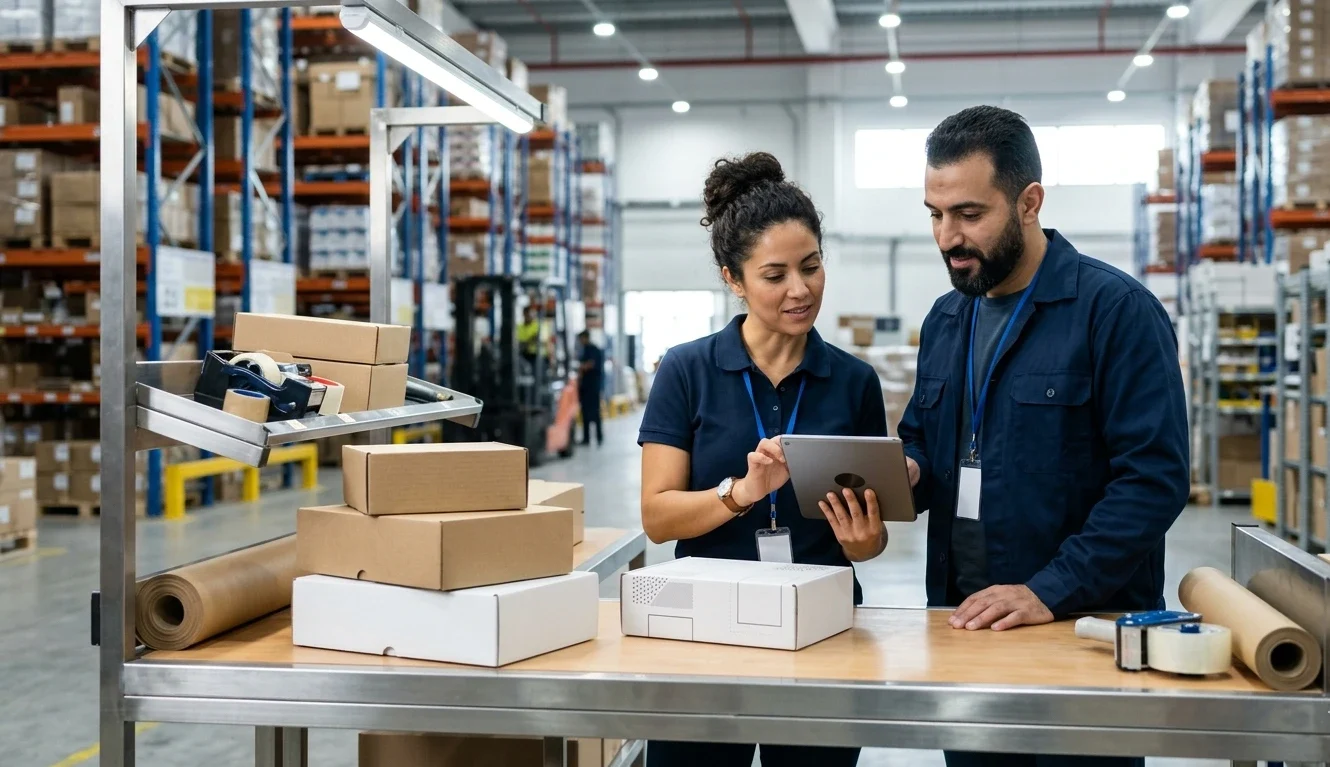
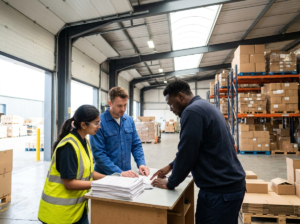
The question most ecommerce brands arrive at once they have designed their custom packaging is operational: who manages it once the boxes, mailers, tissue, inserts, and stickers arrive? Storing packaging components separately from product inventory, coordinating which insert goes into which order, and maintaining packaging stock levels across multiple SKUs is significant operational overhead when handled in-house. This is the point where the 3PL execution layer becomes as important as the packaging design itself.
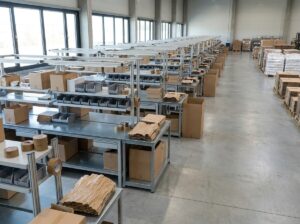
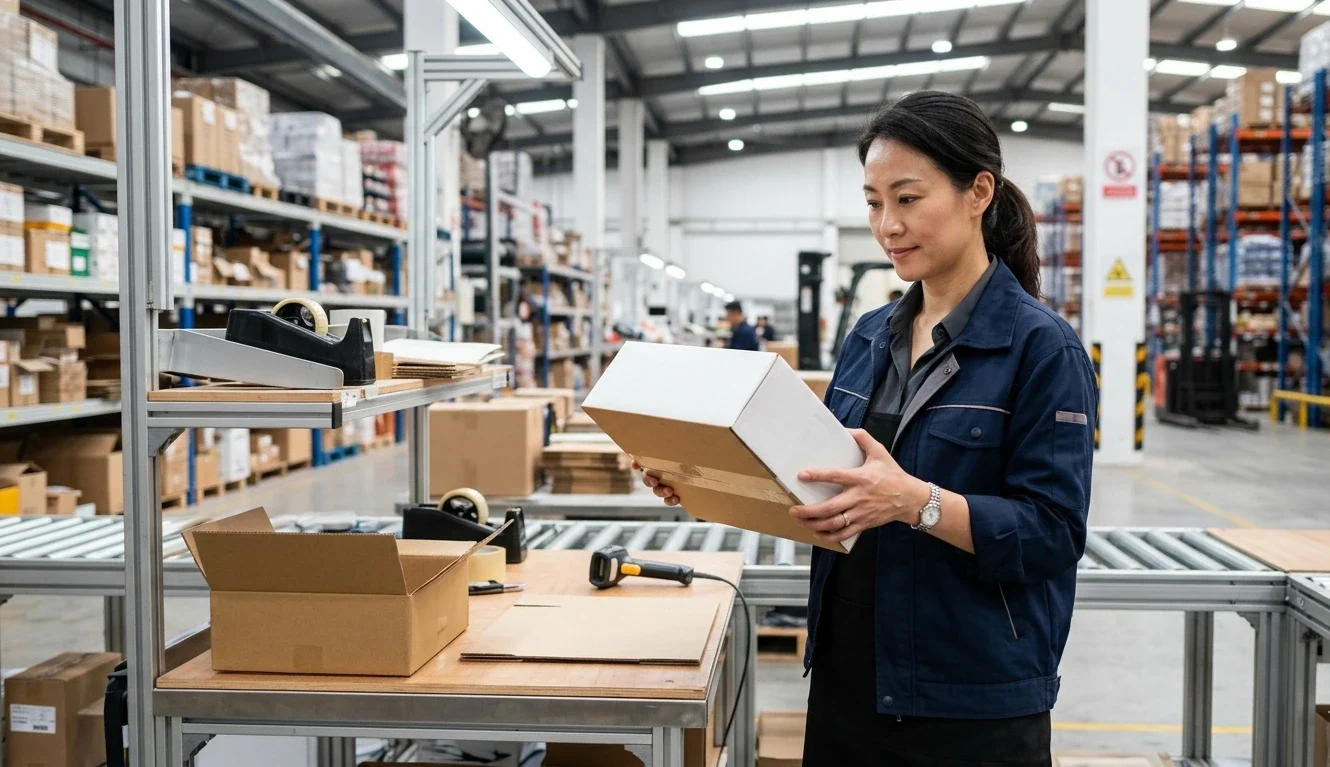
Fulfillmen’s fulfillment services include custom packaging execution built directly into the pick-and-pack process. Custom branded boxes, poly mailers, printed tissue paper, branded tape, stickers, thank-you cards, and product inserts with discount codes are all supported stored at Fulfillmen’s warehouse facilities in Shenzhen, Hong Kong, and India alongside your product inventory, and applied to every order automatically at the packing stage. There is no manual coordination required from your side. Orders auto-sync from your Shopify, WooCommerce, or connected platform the moment a customer checks out, triggering the correct packaging configuration for that order type without intervention.
For brands not yet manufacturing their custom packaging, Fulfillmen’s D2C Procurement service connects you with vetted packaging manufacturers in China custom mailer boxes, poly mailers, tissue paper, and insert cards produced at factory-direct pricing, quality-checked before dispatch, and shipped directly to Fulfillmen’s warehouse ready for the fulfillment line. This closes the loop between packaging design, procurement, and execution in a single operational relationship. Fulfillmen’s own packaging fee structure is calculated at 2 to 5 percent of product cost depending on packaging specification and order volume making it a predictable line item in your per-order economics rather than a variable overhead.
Brands managing multiple packaging configurations, different insert cards for first-time versus returning customers, seasonal box designs, promotional kits for product launches use Fulfillmen’s consolidation services to combine multiple packaging component shipments into a single inbound dispatch, reducing freight cost and warehouse receiving complexity. The system runs 2.5 times faster than industry-average fulfillment at 20 percent below standard carrier rates, with no minimum order volumes on the fulfillment side and no hidden fees. That operational infrastructure is what makes a custom packaging strategy scalable rather than a project that grows more expensive and complex as order volume increases. For a complete view of what makes this model work, see why Fulfillmen.
Whether you are comparing dropshipping vs 3PL as a fulfillment model or already running an inventory-holding ecommerce brand, custom packaging delivered through a 3PL partner removes the last operational barrier between a packaging strategy and a packaging programme that actually ships at scale every day.
Frequently Asked Questions About Custom Packaging for Ecommerce
What is custom packaging for ecommerce?
Custom packaging for ecommerce is branded packaging designed specifically for your business custom-printed boxes, poly mailers, tissue paper, stickers, and inserts that carry your brand’s visual identity rather than plain stock packaging. It turns the delivery moment into a branded experience that communicates professionalism, builds brand memory, and increases the probability that the customer shares the unboxing or reorders. Custom packaging is available at any scale, from digital-print runs of 100 units to offset-print programmes of 5,000 or more.
How much does custom ecommerce packaging cost?
The cost of a complete branded unboxing stack, custom mailer box, branded tape, tissue paper, sticker seal, and thank-you card with discount code typically runs $1.62 to $3.49 per order at 1,000 units. Individual components range from $0.03 for a sticker to $1.20 to $2.50 for a custom mailer box. Custom poly mailers cost $0.15 to $0.40 per unit at 1,000 units for brands shipping soft goods. Costs decrease at higher volumes. For brands sourcing packaging from China through a procurement partner, factory-direct pricing typically reduces per-unit costs by 30 to 40 percent compared to domestic packaging suppliers.
When should I switch from plain to custom packaging?
The most widely used threshold is 300 to 500 orders per month. At that volume, the MOQ for most custom packaging formats 500 to 1,000 units represents less than two months of supply, making the inventory investment manageable. Above 300 monthly orders, the per-unit economics of custom packaging typically produce a positive return through repeat purchase rate improvement and organic social sharing that reduces paid acquisition cost. Below that volume, starting with branded tape, custom stickers, and a printed thank-you card on stock packaging achieves a significant portion of the brand impression at a fraction of the custom packaging MOQ cost.
What is the minimum order quantity for custom packaging?
Minimum order quantities for custom packaging vary by format and print method. Digital printing enables MOQs as low as 100 units for custom mailer boxes and 250 units for folding cartons making it accessible for growing brands. Offset printing, which produces higher quality at lower per-unit cost, typically requires 1,000 to 2,500 units. Custom poly mailers often carry MOQs of 500 to 1,000 units. Packaging sourced from China through a procurement partner can access lower effective MOQs by consolidating with other buyers at the same factory. For a full breakdown of how MOQs work in procurement, see our post on minimum order quantity.
Can a 3PL handle my custom packaging and inserts?
Yes, a 3PL that supports custom packaging stores your branded boxes, mailers, tissue paper, inserts, and other packaging components in their warehouse alongside your product inventory, and applies the correct packaging configuration to each order automatically at the packing stage. This removes the need for you to manage packaging inventory, coordinate insert placement, or maintain separate storage for packaging components. Fulfillmen supports full custom packaging execution at pick-and-pack custom printed boxes, branded tape, stickers, tissue, thank-you cards, and product inserts with discount codes all applied to orders without manual coordination from your side.
Is eco-friendly ecommerce packaging worth the cost?
At most order volumes, yes sustainable ecommerce packaging has reached near price-parity with conventional packaging for standard formats. Recycled corrugated boxes, compostable poly mailers, and water-based inks are all available from manufacturers in China and globally at competitive unit costs when ordered at sufficient volume. Beyond cost, the brand value of communicating sustainable credentials on packaging consistently tracks positively with repeat purchase intent among eco-conscious consumer demographics. The incremental premium where it still exists is typically offset by the brand positioning value and by growing packaging regulations in the EU and parts of the US requiring recycled content minimums.
What should I include in ecommerce packaging inserts?
The most effective ecommerce packaging inserts serve a clear commercial purpose alongside the brand impression: a thank-you card with a discount code for the next order drives repeat purchase directly; a product information card reduces return rates by setting the correct usage expectation; a loyalty programme invitation with a QR code captures customer data and builds a retention channel. Inserts are most effective when they are specific; a first-order insert should differ from a repeat-customer insert and when they are placed at the top of the packaging rather than buried under the product. For brands operating at scale through a 3PL, different insert configurations for different customer segments can be programmed into the fulfillment workflow automatically. For more on sourcing insert cards from China at factory-direct cost, see what is dropshipping for context on how sourcing and fulfillment connect.