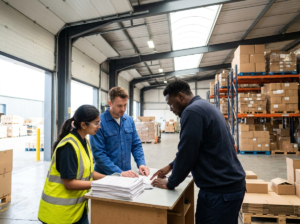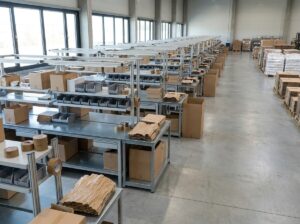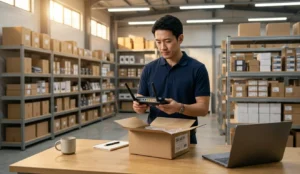

China dropshipping reliability isn’t a yes or no question. The honest answer is that China dropshipping is reliable when it’s properly managed and unreliable when it isn’t. The problems that most sellers experience with China dropshipping aren’t caused by China as a sourcing location. They’re caused by supplier-direct fulfilment: a model where a seller has no control over packaging, quality, despatch timing, or tracking consistency because a supplier on another continent is making every post order decision. The same Chinese factories that supply unreliable AliExpress dropshippers also supply the US warehouse networks where orders ship in 2 to 5 days with professional quality control and branded packaging on every unit.
That is how our dropshipping fulfillment service works: stock is held, checked and shipped from our own warehouse instead of the supplier’s.
China still accounts for the lion’s share of dropshipping inventory sold globally in 2026, according to NewBuyingAgent’s 2026 wholesale guide. The global dropshipping market is projected to reach $537.8 billion by 2026, per Grand View Research. That scale doesn’t exist if China dropshipping doesn’t work. What’s changed is the operating standard required to make it work. This guide covers every real reliability problem in China dropshipping, what causes each one, and what the infrastructure solution is for sellers who want to keep the sourcing advantage without the operational chaos.
The Real Problems With China Dropshipping — Separated From the Myths
China dropshipping gets blamed for a lot of problems that are actually caused by how the fulfilment is structured, not where the products come from. Before fixing anything, it’s worth being precise about what’s actually going wrong and why.
Myth: China Dropshipping Is Inherently Slow
The perception of China dropshipping as a 20 to 30 day process is based on standard AliExpress shipping using ePacket or China Post, the cheapest available option. That’s a cost choice, not a geographic inevitability. Dedicated shipping lines from China to the US and EU now routinely achieve 7 to 12 day delivery windows, according to NewBuyingAgent’s 2026 logistics data. Suppliers using YunExpress, 4PX, or CNE regularly hit those windows. The speed is available. The question is whether you’ve built your supplier and logistics setup around it or whether you’re using the default because it’s free.
The Real Problem: Unpredictability, Not Speed
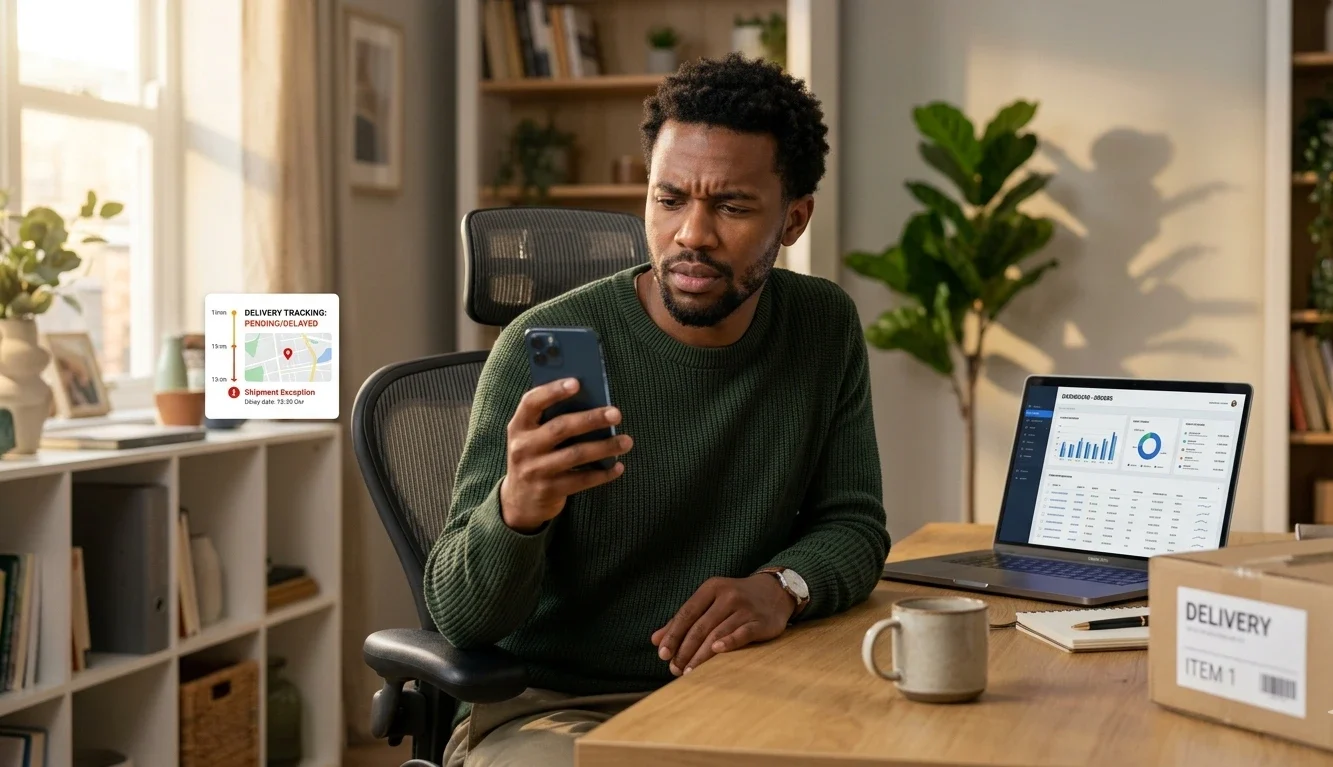
Here’s the insight that no other guide makes explicit: your customers don’t leave negative reviews because their package took 14 days. They leave negative reviews because they had no reliable idea when it would arrive. A tracking number that goes silent after leaving China. An estimated delivery window that comes and goes without an update. A customer support conversation where you can’t tell them anything concrete. That’s what triggers chargebacks and 1-star reviews, not the number of days itself, but the uncertainty. Sellers who set honest, specific delivery windows and maintain visible tracking throughout consistently report lower dispute rates than sellers who promise fast shipping they can’t deliver. Expectation management is a reliability lever as powerful as shipping speed.
Quality Inconsistency Is Real — But It's a QC Problem, Not a China Problem
China manufactures an enormous percentage of the world’s consumer goods, including the products that appear in premium US retail stores. The quality inconsistency that plagues dropshippers isn’t a Chinese manufacturing standard; it’s the absence of a quality control layer between the factory and the customer. When your supplier ships directly to your customer with no inspection step, you have zero visibility into what they actually received. Industry data from Buckydrop shows a US home goods seller running a 12% return rate dropped it significantly after adding a basic QC layer before despatch. The product hadn’t changed. The manufacturing hadn’t changed. The QC process changed. That’s the lever.
China Dropshipping Problems — The Full Breakdown
Understanding each problem precisely is the first step to choosing the right solution. Here’s every genuine reliability issue in China dropshipping and what actually drives it.
Shipping Delays and When They Happen
Standard shipping from China to the US takes 15 to 30 days via AliExpress Standard Shipping or China Post. Premium options DHL, FedEx, UPS, YunExpress, CNE deliver in 7 to 12 days at higher cost. The delay problem compounds during three specific periods: Chinese New Year (February, factories close for 7 to 21 days and logistics capacity drops 40 to 60 percent), Q4 peak season (September to November, air cargo rates spike 20 to 40 percent and booking lead times extend from two to six weeks), and during US customs examination holds (document exams add 2 to 3 days, physical inspections add 7 to 14 days). Sellers who plan around these windows building inventory buffers and switching to domestic fulfilment during disruption periods maintain consistent delivery performance. Sellers who ignore them absorb the full impact in customer complaints and refund requests every cycle.
Quality Variation Between Batches
Two consecutive orders from the same AliExpress supplier listing can arrive with different materials, finishes, or dimensions not because the supplier is dishonest, but because they’re sourcing from multiple factories depending on stock availability and are marking up a product they don’t manufacture or control. This batch variation is the specific quality problem unique to dropshipping from China. It can’t be solved by choosing a higher-rated supplier on AliExpress. It can only be solved by either moving to a direct factory relationship through 1688 or a sourcing agent or working with a fulfilment partner who runs incoming quality inspections before goods reach your customers.
Communication Delays and Language Barriers
Most Chinese suppliers don’t speak fluent English. Time zone differences between China and the US mean a simple product question sent in the morning gets answered the following day at the earliest. Multiply that across a growing order volume where multiple issues need resolution simultaneously and the communication overhead becomes a significant operational bottleneck. Sellers who build supplier relationships over time, communicate via WeChat rather than platform messaging for speed, and use sourcing agents for Mandarin language platforms reduce this friction substantially. Those who rely purely on AliExpress platform messaging at volume find it increasingly unworkable.
US Tariff Changes and the De Minimis Elimination
The single most significant structural change to China dropshipping economics in recent years happened in April 2025, when the US eliminated the $800 de minimis threshold that previously allowed low value packages from China to enter duty-free. Every package from China to a US customer now requires customs screening and potentially duty payment. Shipping times have lengthened as a result of increased inspection volumes. Costs have increased as duties are factored into landed cost. Some product categories electronics, textiles, certain home goods are exposed more than others. Sellers who responded by moving to a hybrid model (bulk importing from China to a US warehouse, then fulfilling domestically) eliminated this problem entirely, because the customs clearance happens once at the bulk import level, not on every individual customer parcel.
Chinese New Year — The Annual Reliability Crisis
Chinese New Year is the most predictable reliability problem in China dropshipping and the one most sellers handle worst. CNY 2026 fell on February 17. Most Chinese suppliers and warehouses began slowing down two to three weeks before that date. Logistics capacity across major Chinese ports dropped 40 to 60 percent during the holiday period. Standard delivery times extended to 30 to 45 days. Most 3PL operations based in mainland China closed for 15 to 21 days. Sellers who pre-built inventory in US warehouses before January maintained normal operations throughout. Sellers who relied on supplier direct fulfilment from China experienced their worst customer service period of the year every year without fail.
Is China Dropshipping Still Profitable in 2026?
The honest answer is yes but the model that was profitable in 2021 is not the same model that’s profitable in 2026. Several structural shifts have changed the economics.
What's Changed in 2026
Margins have compressed compared to the early 2020s due to increased competition, rising advertising costs, and the de minimis threshold elimination adding duty costs to China origin shipments. Average net profit margins for optimised China dropshipping operations run between 15% and 30% after all costs, according to TrueProfit’s analysis of Shopify stores. The stores maintaining those margins in 2026 are not running supplier direct AliExpress operations at scale. They’re running hybrid models: China sourcing for cost, domestic warehousing for speed, and branded fulfilment for retention.
What Hasn't Changed
China’s manufacturing depth and pricing advantage are structural, not cyclical. The country produces a majority of the world’s consumer goods. Product categories spanning electronics, home goods, fashion, pet accessories, and fitness equipment are all manufactured primarily in China at costs that no other geography matches at equivalent scale. That cost advantage remains real. What’s changed is the infrastructure needed to capture it reliably. In 2021, listing products directly from AliExpress and shipping to customers worked because customer expectations and competitive standards were lower. In 2026, the same sourcing strategy needs a different fulfilment model to remain competitive.
The Hybrid Model Is the Profitable Model
The sellers consistently achieving 20 to 30 percent net margins in 2026 are using a specific operating structure: source from China at factory or near-factory pricing, ship in bulk to a US warehouse by sea freight at the lowest per-unit cost, and fulfil individual customer orders domestically at 2 to 5 day speeds. This model captures China’s cost advantage while eliminating every reliability problem caused by direct China-to-customer shipping. It’s not a workaround. It’s the logical next step for any China dropshipping operation that has validated its products and wants to scale without the operational ceiling of supplier-direct fulfilment.
How to Make China Dropshipping Reliable — The Practical Framework
Knowing the problems is useful. Knowing the specific actions that solve each one is what actually changes your store’s reliability. Here’s the operational framework for China dropshipping that consistently performs.
Supplier Selection That Eliminates Most Quality Problems
Don’t source from the cheapest AliExpress listing. Source from suppliers with over 1,000 fulfilled orders on the specific listing, response times under 24 hours, and a documented return policy for defective units. Order samples to your personal address before listing anything not your business address, a personal one, so you receive exactly what your customers receive. For sellers doing consistent volume on proven products, moving to 1688 through a sourcing agent reduces both cost and batch variation because you’re buying closer to the actual manufacturer rather than a middleman reselling on AliExpress.
Shipping Method Selection That Controls Delivery Windows
Standard China Post and ePacket shipping are appropriate for product testing at low volume where speed isn’t your competitive advantage. For any product doing consistent daily sales, switch to a premium shipping line YunExpress, 4PX, CNE, or equivalent that offers reliable 7 to 12 day delivery to the US with consistent tracking throughout the journey. The per-unit cost difference is typically $2 to $4. At a product selling price of $40 to $80, that difference is absorbable while meaningfully reducing your customer service overhead from shipping complaints.
Customer Communication That Turns Slow Shipping Into a Trust Signal
Set honest delivery windows not optimistic ones. A product page that says “ships within 2 business days, arrives in 10 to 14 days” and delivers on that consistently generates fewer negative reviews than a page that says “fast shipping” and delivers in 18 days. Use automated post purchase email flows: order confirmation, despatch notification with tracking link, mid-transit check in, and delivery confirmation. Every touchpoint reduces uncertainty. Every reduction in uncertainty reduces dispute probability. Track dispute rates by shipping method and use that data to make method decisions not assumptions.
How Fulfillmen Solves China Dropshipping Reliability at Every Level
The infrastructure solution to China dropshipping reliability isn’t a better supplier app. It’s a 3PL partner who holds your inventory in a US warehouse, quality checks every unit before despatch, and ships under your brand at domestic speeds. That’s precisely what Fulfillmen is built for.
The Hybrid Model — China Sourcing Economics, US Fulfilment Speed
Fulfillmen’s model allows you to source products from China at factory-level pricing through its D2C Procurement service, ship inventory to Fulfillmen’s US warehouse network by sea freight at the lowest per-unit transport cost, and fulfil every customer order domestically at 2 to 5 day delivery speeds. You keep China’s cost advantage. You eliminate every reliability problem caused by direct China to customer shipping. The de minimis issue disappears because customs clearance happens once at the bulk import level. The 15 to 30 day shipping window disappears because orders ship from inside the US. The tracking uncertainty disappears because domestic USPS, UPS, and FedEx tracking is reliable and visible throughout.
4-Day CNY Disruption vs the Industry's 15–21 Days

Every unit arriving into Fulfillmen’s warehouse is inspected before it’s added to fulfilment stock. Defective batches are identified before they reach customers not after. That single operational step is what separates a 12% return rate from a 2% return rate on the same product from the same Chinese manufacturer. Quality control isn’t about the product’s origin. It’s about whether someone checks it before it ships to your customer. At Fulfillmen, someone does.
Quality Control Before Every Despatch
Every unit arriving into Fulfillmen’s warehouse is inspected before it’s added to fulfilment stock. Defective batches are identified before they reach customers not after. That single operational step is what separates a 12% return rate from a 2% return rate on the same product from the same Chinese manufacturer. Quality control isn’t about the product’s origin. It’s about whether someone checks it before it ships to your customer. At Fulfillmen, someone does.
90 Days Free Storage — The Buffer That Eliminates Emergency Shipping
Fulfillmen’s 90-day free storage model means you can ship inventory from China by sea freight during normal operating windows and hold it in a US warehouse at zero storage cost. That buffer eliminates the pressure that causes most emergency air freight decisions, the moments when a seller runs low on stock and pays $8 per unit to express-ship from China because they didn’t build an adequate runway. Planned sea freight plus 90 days of free domestic storage costs a fraction of reactive air freight. It also produces a more reliable customer experience than supplier-direct shipping at any speed. [Contact Fulfillmen today] to discuss what a hybrid fulfilment setup looks like for your current product range and order volume.
China Dropshipping Red Flags — When Your Setup Is the Problem
Most China dropshipping reliability failures are diagnosable before they become customer facing crises. Here’s what to watch for.
Dispute Rate Above 3%
A dispute rate above 3% on any product is a signal, not just a number. It means either delivery is consistently missing its window, product quality is inconsistent with the listing, or customer communication during transit is absent. Each of these is fixable. None of them are fixed by finding a different AliExpress supplier. They’re fixed by changing the shipping method, adding a QC layer, or improving post-purchase communication. If your dispute rate stays above 3% after addressing all three, the product itself may have a mismatch between supplier quality and your price point.
Return Rate Above 5% on a Specific Product
A product-specific return rate above 5% almost always indicates a quality consistency problem. The product may have performed well in samples but is showing variation in production batches. Either move to a direct factory relationship on that product through a sourcing agent, or bring it into a fulfilment model where incoming QC can identify bad batches before they ship.
Tracking Updates That Disappear Mid-Route
If your tracking regularly shows movement through the Chinese origin scan, then goes silent until delivery confirmation in the US, your customers are experiencing a predictability gap that generates support tickets regardless of whether the package arrives on time. Upgraded to a shipping line with mid-route scanning YunExpress and 4PX both offer intermediate tracking scans across major transpacific routes. Domestic fulfilment eliminates this entirely because USPS, UPS, and FedEx provide scan-by-scan tracking from dispatch to door.
FAQs — China Dropshipping Reliability
Is China dropshipping reliable in 2026?
China dropshipping is reliable when it’s properly managed and unreliable when it isn’t. The problems most sellers experience are caused by supplier-direct fulfilment, not Chinese manufacturing. When China sourced inventory is held in a US warehouse and fulfilled domestically, the same products ship in 2 to 5 days with consistent tracking, professional quality control, and no exposure to CNY disruptions or de minimis customs complications. China’s manufacturing cost advantage is structural and real. The infrastructure question is how you fulfil from it, not whether you source from it.
What are the biggest problems with China dropshipping?
The five most significant problems in China dropshipping are: shipping time and unpredictability (15 to 30 days standard, with variable tracking visibility throughout); quality inconsistency between batches from the same supplier; Chinese New Year disruption (40 to 60 percent logistics capacity reduction, 15 to 21 day supplier closures); the elimination of the US $800 de minimis threshold in April 2025, which added customs duties and inspection delays to every China origin parcel; and supplier communication latency from time zone differences and language barriers. Every one of these problems is solvable through the right operational infrastructure.
How do I make China dropshipping more reliable?
Three changes have the highest impact. First, upgrade your shipping method from standard AliExpress or China Post to a dedicated shipping line YunExpress, 4PX, or CNE that delivers in 7 to 12 days with consistent mid-route tracking. Second, add a quality control step between your supplier and your customers. Third, transition to a hybrid fulfilment model where inventory is held in a US warehouse and customer orders are fulfilled domestically. That last step eliminates the de minimis duty problem, removes CNY exposure, and reduces your delivery window from 15 to 30 days to 2 to 5 days while keeping China’s sourcing cost advantage intact.
Is China dropshipping dead in 2026?
No but the version of China dropshipping that worked in 2021 is largely uncompetitive in 2026. Listing products from AliExpress and shipping directly to US customers with 15 to 30 day delivery windows is no longer viable against stores running hybrid fulfilment models. China dropshipping as a sourcing strategy using China’s manufacturing depth and pricing to source products cost-effectively is very much alive. The sellers reporting 20 to 30 percent net margins in 2026 are doing exactly that. What’s dead is treating supplier-direct AliExpress shipping as a scalable fulfilment strategy for stores with proven, consistent daily order volume.
How do US tariffs affect China dropshipping in 2026?
The elimination of the $800 de minimis threshold in April 2025 was the most impactful regulatory change to China dropshipping economics since the model emerged. Before April 2025, packages from China valued under $800 entered the US duty-free with minimal customs processing. After elimination, every package requires customs screening and potentially duty payment adding both cost and delay to every direct China-to-customer shipment. Sellers using a hybrid model bulk importing from China to a US warehouse, then fulfilling domestically are not affected, because their customs clearance happens once at the bulk level rather than on every individual customer parcel.
When should I move from AliExpress dropshipping to a 3PL for China products?
The transition point is typically 30 to 50 consistent daily orders. Below that threshold, AliExpress-direct fulfilment through DSers or similar tools handles the operational load and the learning-phase flexibility justifies the slower delivery. Above it, variable delivery windows, batch quality inconsistency, and CNY exposure start generating customer service volume that costs more to manage than the 3PL infrastructure costs to run. The 3PL transition also eliminates the de minimis issue, introduces branded packaging, and enables 90-day inventory buffers that prevent the emergency air freight decisions that silently destroy margins for high-volume AliExpress operators.