
Most sellers who want to automate dropshipping logistics start in the wrong place. They install an automation tool, connect it to their store, and assume the hard part is done. But software automation and logistics automation are two completely different things and confusing the two is exactly why so many dropshipping stores hit a ceiling they can’t explain. Your order routing can be instant, your tracking emails automated, and your inventory sync running every 30 minutes, while on the other side of that workflow someone is still manually picking, packing, and queuing your orders for a carrier pickup that happens once a day.
Our dropshipping fulfillment service automates the physical logistics side, not just the order sync.
To automate dropshipping logistics properly, you need automation working at every layer: the digital workflow, the physical fulfillment operation, and the carrier handoff. This guide covers each layer in sequence the workflows to automate first, the tools that handle the digital side, and the fulfillment infrastructure that makes the physical side run without manual intervention. Because here’s what most guides won’t tell you: the automation that actually moves the needle isn’t in your Shopify dashboard. It’s in your 3PL’s warehouse.
What Does It Actually Mean to Automate Dropshipping Logistics?
The Two Layers Most Sellers Miss
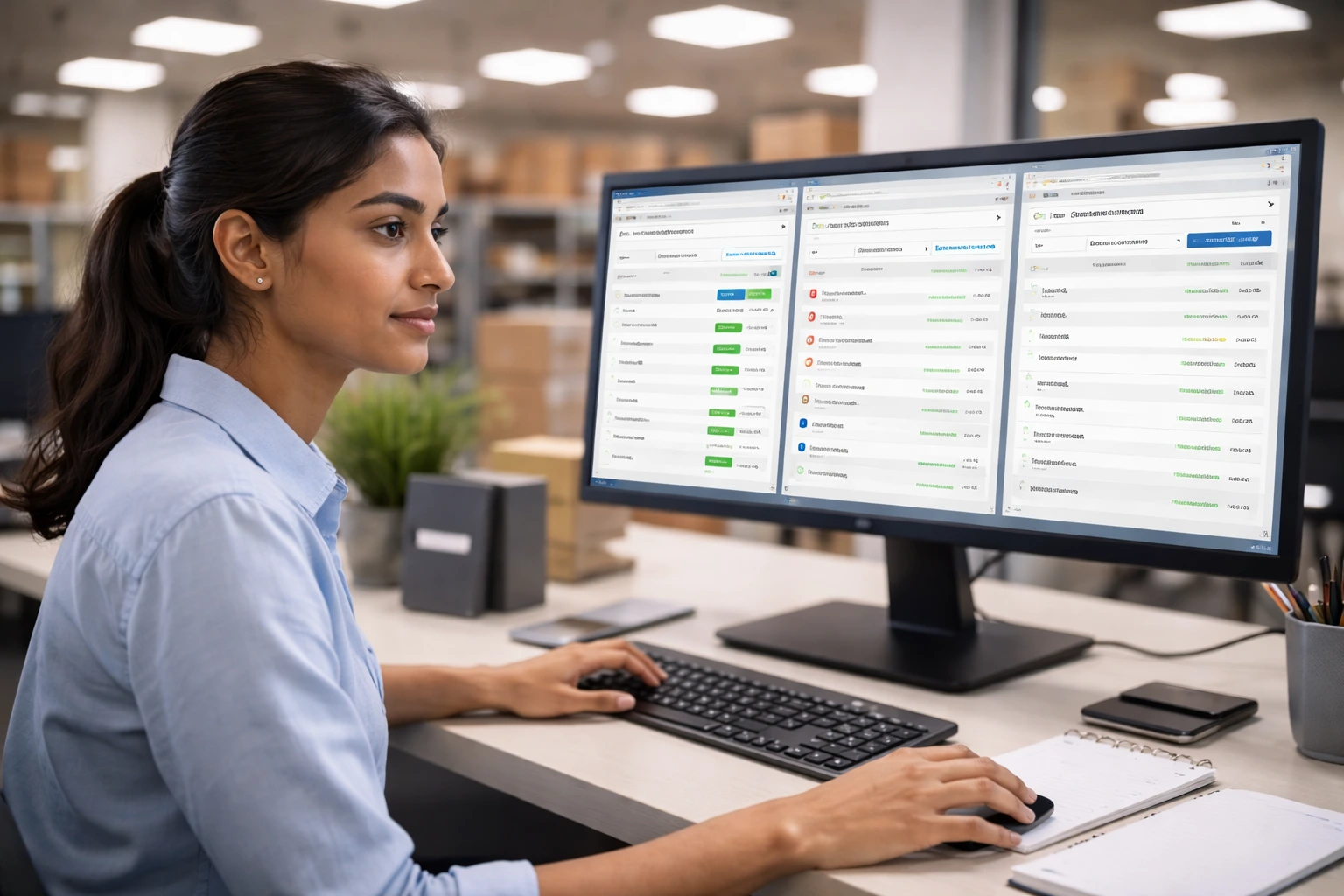
To automate dropshipping logistics means eliminating manual intervention at every point between a customer placing an order and that order arriving at their door. That covers two distinct layers that most guides treat as one. The first is the digital layer order routing, inventory syncing, tracking updates, pricing rules, and customer notifications. The second is the physical layer pick, pack, quality check, carrier handoff, and last mile execution. Software tools handle the first layer. Your fulfillment partner handles the second. Both need to be automated for the workflow to run without you.
Why Software Alone Isn't Enough
Dropshipping automation tools process orders in seconds. That’s real, and it matters. But the moment that order hits your supplier or fulfillment center, you’re entirely dependent on their physical operation. If they’re manually processing orders, working off spreadsheets, or batching carrier pickups every 48 hours, your software automation is just moving paperwork faster toward the same slow bottleneck. According to a 2025 Shopify analysis, automation saves sellers an average of 5.4% of their total working hours but that figure assumes the physical fulfillment layer is already optimised. Without it, you’re automating the easy part and leaving the hard part exactly as it was.
The Five Workflows to Automate First
Inventory Synchronisation
Inventory sync is the foundation of any dropshipping workflow automation. When your store’s stock levels don’t match your supplier’s actual availability, you oversell and overselling is the single most damaging operational error in dropshipping. Real-time inventory sync pulls stock data from your supplier or 3PL’s warehouse management system and updates your listings automatically. Set your sync frequency to every one to four hours minimum. Automate product hiding when stock hits zero and price alerts when supplier costs shift. Without this, every other automation you build is sitting on a broken foundation.
Automated Order Routing
Once a customer places an order, your automation tool should forward it to the correct supplier or fulfillment center without any manual step. That means selecting the right supplier based on stock availability and cost, splitting orders when products come from different sources, and retrying failed orders automatically. The best dropshipping automation tools including DSers, AutoDS, and Spark Shipping handle this routing layer well. What they can’t control is how fast the fulfillment center on the receiving end actually processes that routed order. That’s where your 3PL selection matters as much as your software selection.
Tracking Number Updates
Customers expect real time tracking visibility. Manually copying tracking numbers from carrier portals into your store and then into customer emails is one of the most time consuming tasks in dropshipping and one of the easiest to eliminate entirely. Automated tracking updates pull numbers from your fulfillment partner’s system the moment a shipment label is generated, push them to your store platform, and trigger the customer notification email automatically. Most dropshipping automation tools handle this natively when connected to a fulfillment partner with a real-time WMS.
Pricing Rules and Margin Protection
Dynamic pricing automation adjusts your retail prices when supplier costs shift, protecting margins without manual monitoring. Set rules that trigger price increases when your cost crosses a defined threshold, and automatic repricing when competitors move. That said, pricing automation works best as a guardrail set the rules, monitor the exceptions, and override manually when a product requires strategic pricing decisions that a rule can’t anticipate.
Customer Notification Sequences
Order confirmation, dispatch notification, tracking update, and delivery confirmation should all trigger automatically based on fulfillment status events. These four touchpoints account for the majority of inbound customer service enquiries when they’re missing. Automate them and you don’t just save time you reduce the support volume that was consuming it.
The Tools That Handle the Digital Automation Layer
Order Management and Routing Tools
DSers is the official AliExpress partner for bulk order processing and is best suited to high volume AliExpress based stores. AutoDS offers end to end automation across multiple supplier sources including monitoring, fulfillment, and tracking in one platform. Spark Shipping connects to any supplier regardless of feed format CSV, XML, API, EDI making it the right choice for stores with complex multi supplier ecosystems. For most eCommerce sellers sourcing from China, the right tool depends on whether you’re working with a single supplier, multiple suppliers, or a 3PL that provides its own order management system integration.
Store Platform Integrations
Your automation stack needs to connect directly to your store platform without middleware that adds latency or failure points. Shopify, WooCommerce, and BigCommerce all support native integrations with major dropshipping automation tools. The connection between your store and your fulfillment partner’s WMS is the most critical integration in the entire workflow it’s the point where digital orders become physical fulfilment instructions. If that connection requires manual exports, email forwarding, or CSV uploads, you don’t have automated fulfillment dropshipping. You have automated order collection and manual fulfillment.
The Physical Fulfillment Layer: Where Most Automation Breaks Down
Why Your 3PL Choice Determines Your Automation Ceiling
This is the content gap every dropshipping automation guide misses. You can have perfect digital automation instant order routing, real-time inventory sync, automated tracking updates and still have orders sitting unpacked in a warehouse for 36 hours because your fulfillment partner doesn’t have the infrastructure to match your software’s speed. A genuinely automated dropshipping operation requires a fulfillment partner with a real time WMS that accepts orders automatically, picks and packs on the same day orders are received, generates tracking numbers immediately on dispatch, and pushes status updates back to your store without manual intervention. Without that, your dropshipping workflow automation stops at the warehouse door.
What to Look For in a China Fulfillment Partner
When evaluating a China based 3PL for automated fulfillment dropshipping, the critical questions aren’t about pricing. They’re about infrastructure. Does the 3PL’s WMS integrate directly with your store platform? Do they offer same day order processing? How frequently do they sync tracking data back to your system? What’s their process for flagging exceptions damaged goods, out of stock situations, address errors without requiring your manual involvement? A fulfillment partner that can answer all of these clearly is one that’s built for automation. One that can’t is one that will become your bottleneck regardless of how well your software layer is configured.
How Fulfillmen Automates Your Dropshipping Logistics End to End
Real-Time Store Integration
Fulfillmen integrates directly with Shopify, WooCommerce, and other major eCommerce platforms, syncing orders automatically the moment they’re placed. There’s no manual export, no CSV upload, and no email forwarding step between your store and the fulfillment operation. Orders flow in, get processed, and tracking flows back all without you touching a single order individually. With 20+ years of logistics experience and a pay as you send model with no MOQ and no minimum storage requirement, Fulfillmen is built specifically for the dropshipping model that automation is designed to serve.
Same Day Pick, Pack, and Dispatch
Fulfillmen’s warehouse operation processes orders with the same speed discipline that your automation software demands. Orders received are picked, quality checked, packed, and dispatched the same day with tracking numbers generated at dispatch and pushed back to your store automatically. That physical speed is what closes the gap between digital automation and real automation. It’s 2.5x faster than standard China fulfillment operations, at 20% lower cost, which means your automation stack actually delivers the customer experience it promises.
No MOQ, No Volume Commitment Automation That Scales With You
The pay as you send model means Fulfillmen’s automation infrastructure is available at any order volume. You don’t need to hit a monthly minimum to access real-time WMS integration, same day processing, or automated tracking sync. Whether you’re processing 10 orders a day or 1,000, the workflow runs identically. That’s the operational foundation that makes automate order fulfillment genuinely scalable not just fast at current volume, but structurally capable of handling whatever growth your store generates. Ready to automate your dropshipping logistics from China end to end? Get a free quote from Fulfillmen today.
FAQs: How to Automate Dropshipping Logistics
Can dropshipping be fully automated?
The digital workflow order routing, inventory sync, tracking updates, pricing rules, and customer notifications can be fully automated with the right tools. The physical fulfillment layer requires a 3PL partner with real time WMS integration, same day processing, and automated tracking sync. When both layers are in place, the only tasks requiring human attention are exceptions: damaged goods, address errors, and supplier substitutions that fall outside preset rules, typically 2–3% of total order volume.
What is the best tool to automate dropshipping order fulfillment?
For AliExpress based stores, DSers handles bulk order forwarding reliably at low cost. For multi supplier operations, AutoDS and Spark Shipping offer more flexible routing logic. For China-based fulfillment with direct 3PL integration, the most effective setup is connecting your store platform directly to a fulfillment partner’s WMS eliminating the middleman tool entirely and reducing the failure points in your automation stack.
How do I connect my store to a China fulfillment center for automated fulfillment?
Most China based 3PLs provide direct Shopify and WooCommerce integration through their own order management system. The setup process typically involves installing a platform plugin or connecting via API, mapping your product SKUs to the fulfillment center’s inventory, and testing with a live order before going fully automated. Fulfillmen’s onboarding process covers all three steps with direct support.
What workflows should I automate first in dropshipping?
Automate in this priority order: inventory sync first, order routing second, tracking updates third, customer notifications fourth, and pricing rules fifth. Inventory sync prevents overselling the most expensive operational error in dropshipping. Order routing eliminates the biggest manual time cost. Tracking and notification automation reduces customer service volume. Pricing rules protect margins passively. Each layer compounds the benefit of the one before it.
How much time does dropshipping logistics automation save?
Sellers processing 50+ orders daily typically save 15–20 hours per week through full workflow automation, based on AutoDS and Shopify 2025 research. At 100+ daily orders, that figure rises because manual processing time scales linearly while automated processing time stays flat. The key variable is whether your physical fulfillment layer is automated to match if your 3PL still processes orders manually, the time savings from software automation are partially offset by the delays that manual fulfillment introduces.
What's the difference between dropshipping automation tools and a 3PL?
Dropshipping automation tools handle the digital workflow they route orders, sync inventory data, update tracking numbers, and trigger customer emails. A 3PL handles the physical workflow they receive inventory, pick and pack orders, perform quality checks, and hand shipments to carriers. Both are necessary for a fully automated dropshipping logistics operation. The tools move the data. The 3PL moves the product. Automation without a capable 3PL behind it is just faster paperwork.