The right warehousing solutions for your ecommerce business depend on three variables: your current order volume, where you’re sourcing your products from, and how fast you need to scale. There’s no single correct answer: a startup shipping 200 orders a month needs something entirely different from a growing brand doing 5,000 orders and sourcing from manufacturers in China. What this guide does is map the most widely used warehousing solutions against those three variables so you can identify which model fits your actual situation, not a generic ideal.
If you need storage close to your suppliers, see our multi-location warehouse services.
We’ll cover the four main types of warehousing solutions available to ecommerce businesses, the cost structures behind each, the decision framework that experienced operations teams use when evaluating options, and how geography, specifically proximity to your supply source — affects which warehousing solution actually delivers the outcomes you need. By the end, you’ll have a clear picture of what to look for, what to avoid, and what the right questions are before you commit to a provider.
What Warehousing Solutions Actually Include
Beyond Storage: What Modern Warehousing Covers
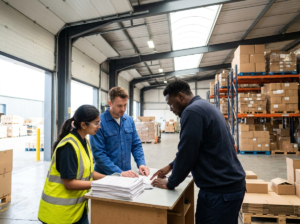
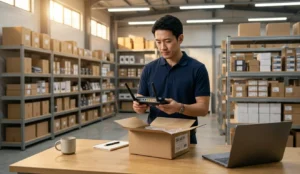
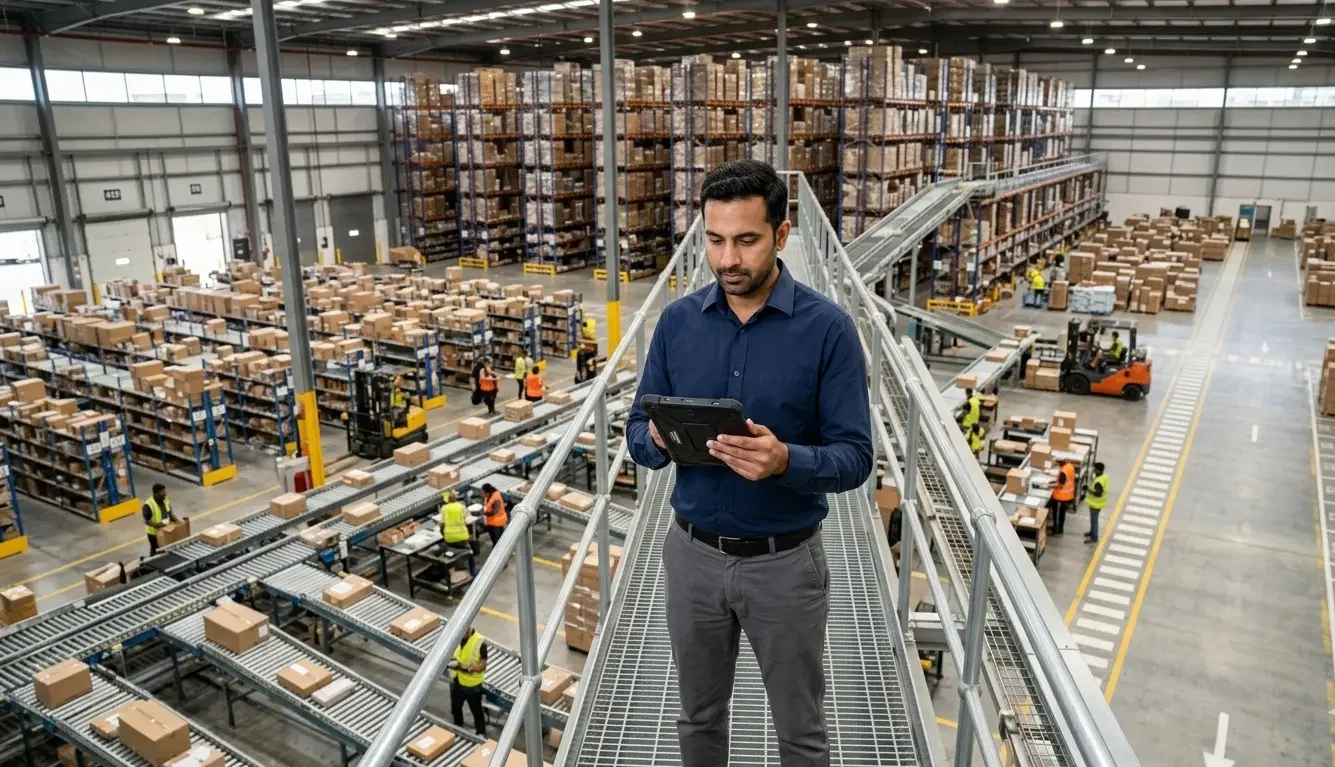
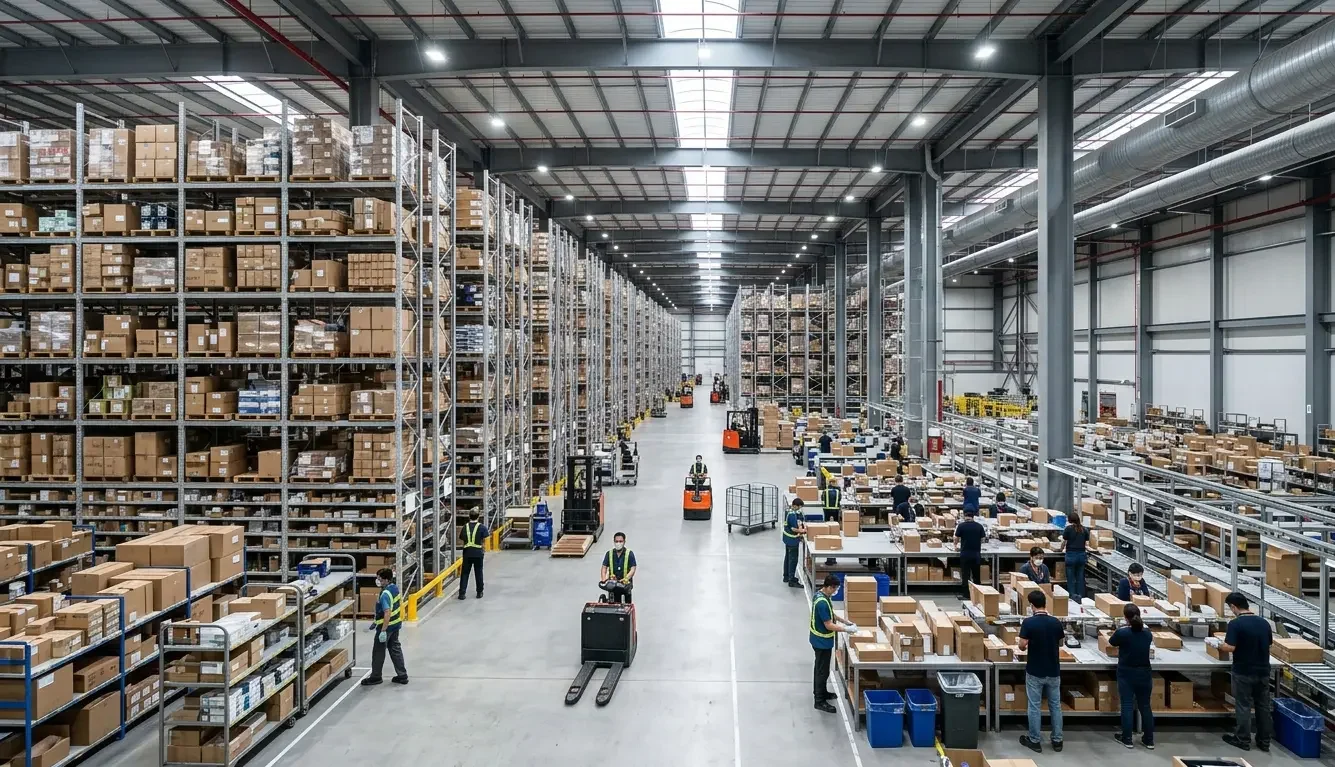
The term warehousing solutions is often used as shorthand for storage, but that’s a narrow reading of what the category actually includes. Modern ecommerce warehousing solutions encompass the full operational chain from the point goods arrive at the warehouse to the point they leave as fulfilled customer orders. That includes receiving and inspection verifying inbound inventory against purchase orders and checking for damage or defects. It includes storage, organizing inventory by SKU, location, and movement velocity so high-demand items are fastest to pick. It includes pick and pack selecting the correct items for each order and packaging them to your specifications. And it includes outbound shipping carrier selection, label generation, manifesting, and handoff. A warehousing solution that only does storage and hands you back the rest isn’t a warehousing solution, it’s a self-storage unit for pallets.
The Difference Between Warehousing and Fulfilment
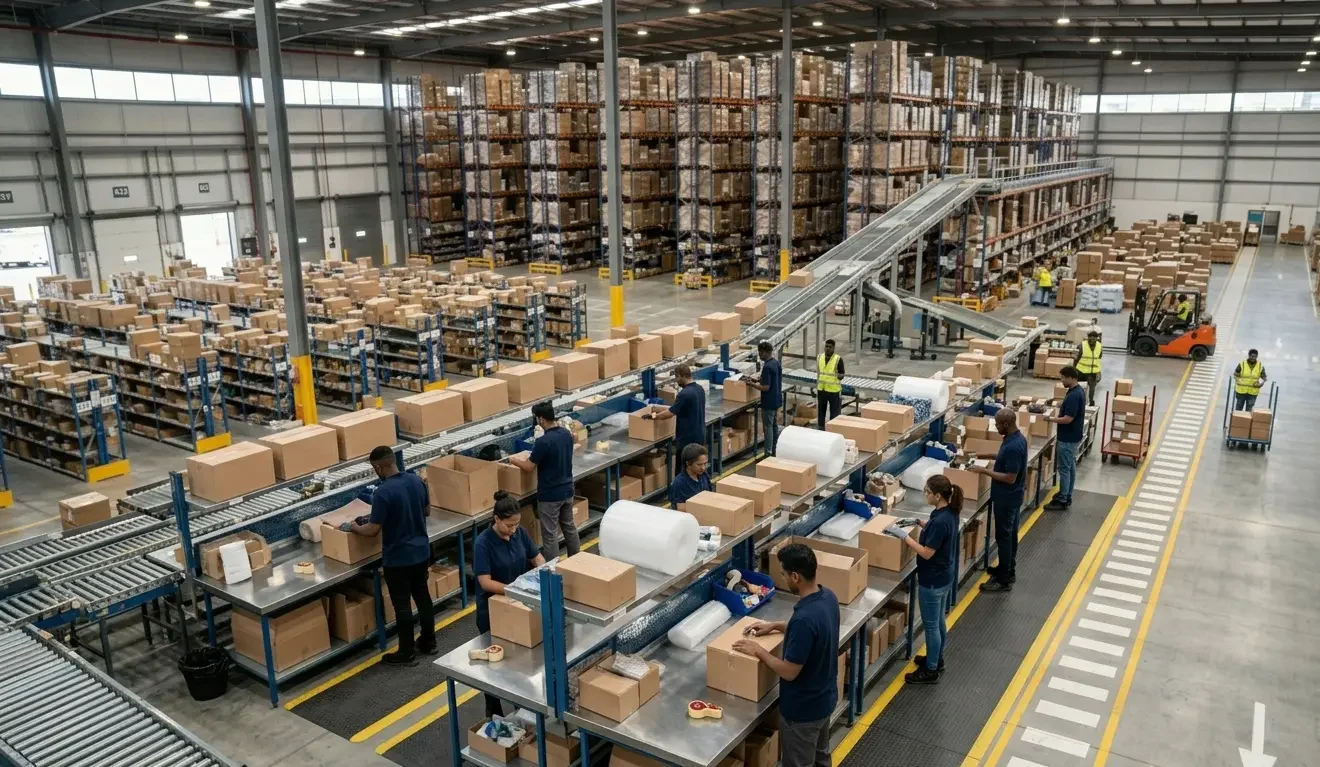
Warehousing and fulfilment are used interchangeably but they describe different service scopes. A warehouse stores goods. A fulfilment centre stores goods and processes individual orders for direct-to-consumer delivery. A traditional warehouse might receive pallets from a manufacturer and hold them until a retailer places a bulk purchase order that’s B2B warehousing. A fulfilment centre receives the same pallets, breaks them into individual units, picks single-item orders, and ships directly to end customers. The distinction matters when you’re evaluating providers because some warehouse operators offer only the former. Ecommerce brands need the latter. And the operational infrastructure required to do high-velocity, single-unit picking and packing accurately is significantly more complex than pallet storage, which is why not every warehouse can serve as a fulfilment centre regardless of what their website says.
Warehouse Management Systems: The Technology Layer
Every serious warehousing solution operates on a warehouse management system software that tracks inventory in real time, routes pick orders to the most efficient locations, manages inbound receiving, and provides the client-facing dashboard that lets you see your stock levels, order statuses, and shipping performance without calling anyone. The quality of the WMS is often a more reliable indicator of service quality than the physical warehouse itself. A well-run warehouse on dated software produces slower, less accurate fulfilment than a well-run warehouse on a modern WMS with real-time visibility. When evaluating warehousing solutions, ask specifically about the WMS: what client-facing reporting it provides, how it integrates with your ecommerce platform, and whether inventory updates are real-time or batch-processed. Batch-processed inventory creates gaps where your store shows in-stock items your warehouse has already fulfilled.
The Four Main Types of Warehousing Solutions
Public Warehousing — Flexible, Lower Commitment
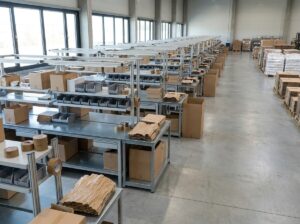
Public warehousing is space rented from a third-party operator on flexible terms typically month-to-month or on a per-unit stored basis. You share the facility with other businesses, and the warehouse operator handles the infrastructure, staffing, and management. You pay for what you use: a per-pallet monthly storage fee, a per-order handling fee, and typically an inbound receiving fee. Public warehousing is well-suited to businesses with variable or seasonal inventory, those testing a new market without committing to long-term infrastructure, or growing brands that haven’t yet reached the volume where a dedicated solution makes financial sense. The limitation is that you have less control over how your inventory is handled, and during peak periods shared facilities can experience throughput bottlenecks that affect your order processing speed.
Private Warehousing — Control at Scale
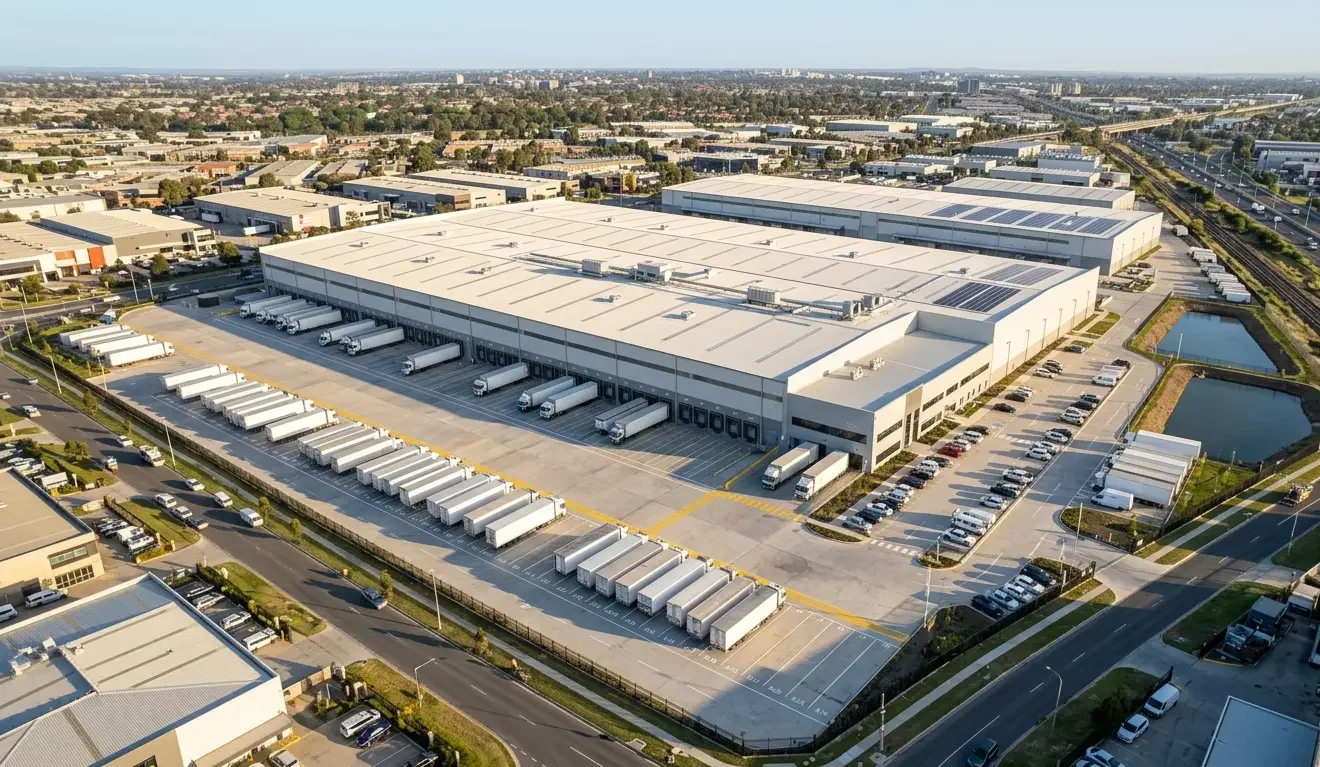
Private warehousing means owning or leasing a dedicated facility operated exclusively for your business. You control the layout, the staffing, the processes, and the technology. For large-volume ecommerce operations, typically those fulfilling tens of thousands of orders per month, private warehousing can offer lower per-unit costs than outsourced alternatives because you’re not paying a service margin to a third party. The barriers are significant: capital investment in facility, equipment, and technology; ongoing labour costs regardless of volume; and the operational expertise required to manage a warehouse efficiently. For most ecommerce brands below enterprise scale, private warehousing is the wrong solution. The fixed cost structure creates financial strain during slower periods and the operational management diverts attention from product, marketing, and growth.
Bonded Warehousing — The Import and Customs Solution
A bonded warehouse is a government-authorised facility where imported goods can be stored without paying import duties until the goods are released into the domestic market or re-exported. The duty clock starts when goods leave the bonded warehouse, not when they arrive in the country. For ecommerce brands importing goods from China or other manufacturing markets and selling into multiple countries, bonded warehousing allows flexibility in market allocation you can store goods in a bonded facility and decide later whether to sell into the domestic market (triggering duty payment) or re-export to another market (no duty). It’s particularly useful for brands managing cross-border inventory across multiple destination markets, or for those in regulatory-sensitive product categories where customs classification requires verification before duty payment is committed.
3PL Warehousing — The Outsourced Operations Model
Third-party logistics warehousing 3PL warehousing is the outsourced fulfilment model used by the majority of scaling ecommerce brands. A 3PL provider operates the warehouse, employs the fulfilment team, manages the WMS, negotiates carrier rates, and handles the full order cycle from receiving to last-mile dispatch all on your behalf. You retain control over your brand, your product, and your customer relationships. The 3PL handles the operations. The commercial model is similar to public warehousing where you pay for storage, handling, and shipping but 3PL relationships are typically more integrated, with dedicated account management, custom packing specifications, and ecommerce platform integrations that automate order routing. For ecommerce brands sourcing from China, a 3PL with warehousing in or near the manufacturing region adds a proximity advantage that compresses replenishment cycles and reduces inventory exposure.
How to Choose the Right Warehousing Solution: The Decision Framework
The Decision Matrix: Matching Solution to Business Stage
Business Stage | Recommended Solution | Cost Structure | Key Advantage | Location Priority |
Startup (0–500 orders/mo) | 3PL or Public WH | Low — pay as you go | No minimum overhead | Any — verify carrier reach |
Growth (500–5k orders/mo) | 3PL Recommended | Mid — per unit model | Scalable without capex | Near supply source |
Scale (5k–20k orders/mo) | Dedicated 3PL | Optimised per unit | Speed + accuracy SLAs | Multi-region preferred |
Enterprise (20k+ orders/mo) | Private or Hybrid 3PL | Lowest per unit at vol. | Full operational control | Strategic proximity |
Cross-border sourcing | 3PL near supply src | Variable by geo | Proximity = speed | Shenzhen/HK/India |
Order Volume as the Primary Selection Variable
Order volume is the single most important input in any warehousing solution decision. At low volumes, the fixed costs of private or dedicated warehousing are financially irrational; you’re paying for capacity you don’t need. At high volumes, shared public warehousing becomes a throughput constraint; the facility isn’t optimised for your specific operation, and you’re competing for labour and dock time with other clients. The crossover point where a 3PL partnership becomes more cost-effective than a public warehouse is typically around 300 to 500 orders per month, when the per-unit fulfilment costs of a 3PL become competitive with the combination of storage fees, DIY packing labour, and carrier rates available to a small independent operator. Below that threshold, fulfilment from your own location or a shared space is often cheaper. Above it, a 3PL becomes the more rational economic choice even before you factor in the time value of the operations management burden you’re removing from your team.
Sourcing Geography as the Second Selection Variable
Where your products come from should materially influence where you warehouse them. Ecommerce brands sourcing from Chinese manufacturers have two fundamentally different warehousing strategies available. The first is to import inventory to a warehouse in their primary sales market typically the US, UK, or Europe and fulfill from there. The second is to pre-position inventory in a 3PL warehouse near the manufacturing source in Shenzhen or Hong Kong and fulfill internationally from that location. The second strategy shortens the replenishment cycle dramatically when a SKU runs low, because restocking moves from factory to warehouse in days rather than weeks. It also reduces the capital tied up in safety stock because you can replenish faster. Fulfillmen’s operational data across client accounts shows that ecommerce sellers using Shenzhen-based warehousing reduce their average replenishment cycle by 60 to 70% compared to those routing inventory through US or European fulfilment hubs before selling globally.
Warehousing Solutions for China-Sourced Ecommerce Brands
Why Proximity to Manufacturing Changes the Warehousing Equation
For ecommerce brands sourcing products from China which accounts for the majority of consumer goods sold online globally the geographic relationship between your supplier and your warehouse is a direct determinant of your operational performance. When your warehouse is located near your manufacturing source, three things change. Replenishment lead times compress from weeks to days. Quality inspections can be conducted at the 3PL facility before inventory is committed to fulfilment, catching defects before they reach customers. And the cost of moving goods from factory to warehouse is a fraction of the intercontinental freight cost involved in routing to a US or European hub first. Shenzhen and Hong Kong provide access to the Pearl River Delta manufacturing cluster, the world’s highest concentration of consumer goods production within a logistics footprint that makes daily or near-daily factory-to-warehouse transfers viable for ecommerce brands at any volume.
Hong Kong as a Global Ecommerce Distribution Hub
Hong Kong’s warehousing infrastructure carries advantages beyond manufacturing proximity. Its port is one of the world’s busiest container ports, with direct freight connections to major markets across Asia, North America, Europe, and the Middle East. Its regulatory environment offers streamlined customs processing for international shipments. And its carrier ecosystem including DHL Express, FedEx, UPS, and a network of regional freight operators provides ecommerce brands with access to competitive international shipping rates that aren’t available to sellers operating from smaller logistics markets. For ecommerce brands selling into multiple global markets simultaneously, Hong Kong warehousing provides a single fulfilment hub with genuinely global reach, without the complexity and cost of maintaining multiple regional inventory positions.
India Warehousing: The Emerging Market Gateway
India represents one of the fastest-growing ecommerce markets globally, with projections suggesting it will exceed $300 billion in annual online retail sales by 2030. Warehousing infrastructure near major Indian logistics hubs particularly around Mumbai, Delhi NCR, and Bengaluru provides ecommerce brands with the fulfilment proximity needed to compete on delivery speed within the Indian market. For brands currently selling into India from international locations and experiencing 10 to 21-day delivery windows, India-based warehousing compresses that to 2 to 5 business days domestically. Fulfillmen operates warehousing in India alongside its Shenzhen and Hong Kong facilities, giving ecommerce brands the option to position inventory across Asia’s two highest-growth markets China-facing fulfilment from Shenzhen/HK, and India-facing fulfilment from within the country without managing multiple 3PL relationships.
Warehousing Costs: What You're Actually Paying For
The Three Cost Components of Any Warehousing Solution
Every warehousing solution has three cost components regardless of its model: storage costs, handling costs, and shipping costs. Storage costs are typically charged per pallet, per bin, or per cubic metre per month. Handling costs cover inbound receiving (per pallet or per carton), pick and pack (per order or per unit picked), and any value-added services like kitting, labelling, or custom packaging. Shipping costs are the carrier charges for delivering orders to customers, which a 3PL typically negotiates at volume rates lower than those available to individual ecommerce brands. Understanding these three components separately is essential because warehousing providers present pricing in different formats: some bundle storage and handling, some charge separately, some offer “all-in” per-order pricing. Comparing providers on a blended per-order cost basis, including your average order shipping cost, gives you a more accurate comparison than headline storage rates alone.
Hidden Cost Variables Most Sellers Miss
Beyond the three headline cost components, warehousing solutions carry several cost variables that are easy to underestimate. Minimum monthly fees many 3PLs charge a minimum regardless of your order volume, which matters significantly to lower-volume sellers. Long-term storage fees inventory held beyond a specified period (typically 90 or 180 days) attracts additional charges that compound on slow-moving SKUs. Returns processing fees each returned order has a handling cost that most sellers don’t factor into their unit economics. And integration costs connecting your ecommerce platform to the 3PL’s WMS may require technical setup work that some providers charge for. Fulfillmen operates with transparent per-unit pricing and no minimum order volume requirements, which means the cost structure remains predictable at every stage of growth without the floor fees that make many 3PL relationships economically irrational for brands below a certain volume threshold.
The Real Cost of the Wrong Warehousing Solution
Choosing the wrong warehousing solution has costs that don’t appear on an invoice. A warehouse located far from your supply source means longer replenishment cycles which means more safety stock, more capital tied up in inventory, and a higher exposure to backorder events when demand spikes. A provider with a poor WMS means inventory discrepancies that lead to overselling, customer dissatisfaction, and the operational cost of resolving disputes. A provider without genuine ecommerce fulfilment capability, one who handles warehouse storage but isn’t set up for high-velocity single-unit picking means slower processing times and higher error rates that drive customer returns and negative reviews. The cost of switching warehousing providers mid-growth, physically moving inventory, re-integrating systems, retraining workflows is significant enough that getting the selection right the first time has genuine commercial value.
What to Look For When Evaluating Warehousing Solution Providers
The Questions That Separate Good Providers From Good Websites
Provider websites describe capabilities. The evaluation happens in the conversation. The five questions that consistently reveal the quality gap between providers are: What is your average order processing time, measured from order receipt to carrier handoff, and what are your SLA terms if you miss it? What does your WMS client dashboard show me in real time, and can I see a live demo before signing? What are your error rate and accuracy figures from the last 12 months, and how are pick errors remedied at whose cost? What are your minimum order volume requirements and what happens to my pricing as I scale through different volume tiers? And: what does your carrier network look like for my primary destination markets, and what are the realistic transit times and rates for those lanes? A provider who answers all five specifically and with verifiable data is worth engaging further. A provider who answers them vaguely is telling you something important.
Integration Capability With Your Ecommerce Stack
Your warehousing solution needs to talk to your ecommerce platform automatically not through manual order exports or email confirmations. Native integrations with Shopify, WooCommerce, Amazon Seller Central, and the other major ecommerce platforms mean orders route to the warehouse automatically at the point of purchase, inventory levels update in your store in real time as picks are completed, and shipping confirmations with tracking numbers are sent to customers without manual intervention. The absence of native integration means manual processing steps that introduce delay and error into your fulfilment operation. Before signing with any warehousing provider, confirm which integrations are available, whether they’re maintained by the 3PL or by a third-party app, and what happens to your orders during integration maintenance windows.
Scalability: The Warehousing Solution That Grows With You
The warehousing solution you choose today needs to accommodate the business you’re building toward, not just the volume you’re running now. Ask specifically how pricing and service terms change at higher volume tiers, whether your account gets dedicated operational support as your order count grows, and whether the provider can handle peak-season volume spikes without imposing surcharges or extended processing times. A warehousing solution that works well at 500 orders per month but becomes a constraint at 5,000 is going to force an expensive and operationally disruptive migration at precisely the moment your business can least afford it. Build the scale question into your initial evaluation, and get specific answers about capacity at 2× and 5× your current volume before you commit.
Fulfillmen Warehousing Solutions: China, Hong Kong and US
Fulfillmen operates warehousing facilities in Shenzhen, Hong Kong, and US — positioned at the intersection of the world’s two fastest-growing ecommerce supply ecosystems. For ecommerce brands sourcing from Chinese manufacturers, that geography changes the operational fundamentals: shorter replenishment cycles, lower inventory carrying costs, and faster fulfilment to global customers compared to inventory routed through US or European hubs.
Shenzhen Warehousing — Manufacturing Source Proximity
Fulfillmen’s Shenzhen facility sits inside the Pearl River Delta manufacturing cluster — the region responsible for the majority of consumer electronics, apparel, accessories, and consumer goods sold online globally. For ecommerce brands working with Chinese suppliers, Shenzhen warehousing means inventory can move from the factory floor to fulfilment-ready storage in one to three days. Quality inspections happen at the Fulfillmen facility before goods are committed to inventory, catching defects before they reach your customers. And when a SKU runs low due to a demand spike, restocking cycles from factory to warehouse in days — not weeks. Fulfillmen’s operational data shows this geography advantage reduces average replenishment lead times by 60 to 70% for clients compared to those routing inventory through US fulfilment hubs first.
Hong Kong Warehousing — Global Distribution Infrastructure
The Hong Kong facility extends Fulfillmen’s capability into one of Asia’s premier international logistics hubs. Hong Kong’s port and freight infrastructure connects to major markets across North America, Europe, the Middle East, and Southeast Asia with established carrier relationships and freight rates that reflect true volume-level pricing. For ecommerce brands selling into multiple global markets from a single inventory position, Hong Kong warehousing provides the distribution reach that Shenzhen alone doesn’t offer. Bonded warehousing capability within the Hong Kong facility also allows inventory to be held duty-free while market allocation decisions are made particularly useful for brands managing cross-border sales across multiple duty jurisdictions simultaneously.
No Minimums — Accessible at Every Growth Stage
Fulfillmen’s warehousing solutions carry no minimum order volume requirements. That means a brand processing 300 orders per month accesses the same Shenzhen manufacturing proximity, the same real-time inventory visibility, and the same carrier network relationships as a client processing 30,000 orders per month. The per-unit cost structure scales with volume without imposing minimum fee floors that make 3PL partnerships economically irrational at lower volumes. If you’re currently evaluating warehousing solutions for an ecommerce operation sourcing from China or targeting growth in Asian markets, the conversation starts at fulfillmen.com — no commitment required to understand what the right solution looks like for your specific operation.
Frequently Asked Questions About Warehousing Solutions
What are the main types of warehousing solutions for ecommerce?
The four main types of warehousing solutions used by ecommerce businesses are public warehousing, private warehousing, bonded warehousing, and third-party logistics warehousing. Public warehousing offers shared space on flexible terms, suited to variable or lower-volume operations. Private warehousing is a dedicated facility operated exclusively for one business, suited to high-volume operations that justify the fixed cost structure. Bonded warehousing stores imported goods duty-free until they’re released into a domestic market or re-exported, suited to cross-border inventory management. Third-party logistics warehousing is the most common model for scaling ecommerce brands. A 3PL operator handles the full fulfilment cycle on your behalf, from receiving through to customer delivery.
How much do warehousing solutions typically cost?
Warehousing solution costs have three main components: storage fees charged per pallet, bin, or cubic metre per month; handling fees for inbound receiving, pick and pack, and value-added services; and shipping costs for carrier delivery to customers. A realistic blended cost for a 3PL warehousing solution ranges from $3 to $12 per order fulfilled, depending on order complexity, product dimensions and weight, destination geography, and provider pricing structure. Additional variables include minimum monthly fees, long-term storage surcharges for slow-moving inventory, and returns processing fees. Comparing providers on a blended per-order cost basis including average shipping cost for your typical order gives a more accurate basis for comparison than headline storage rates alone.
What is the difference between a warehouse and a fulfilment centre?
A warehouse stores goods in bulk, typically receiving pallet quantities from manufacturers and holding them until a bulk purchase order is placed. A fulfilment centre stores goods and also processes individual consumer orders for direct-to-customer delivery receiving, picking, packing, and shipping single units. The infrastructure and operational requirements are different. High-velocity single-unit picking requires different racking layouts, labelling systems, and staffing structures than bulk pallet storage. Ecommerce brands need a fulfilment centre, not just a warehouse, because their orders are individual consumer purchases, not wholesale transfers. Not all warehouse operators have the infrastructure or expertise to operate as a fulfilment centre, regardless of the terminology on their website.
How do I choose the right warehousing solution for my business?
The right warehousing solution depends primarily on your order volume, your product sourcing geography, and your growth trajectory. At under 300 to 500 orders per month, a 3PL or public warehouse is typically more cost-effective than any proprietary solution. Above that threshold, a 3PL with dedicated account management becomes the rational choice as per-unit costs become competitive with DIY alternatives. Your sourcing geography matters significantly: if you source from Chinese manufacturers, warehousing in Shenzhen or Hong Kong compresses replenishment cycles dramatically compared to routing inventory to US or European hubs first. And your growth trajectory matters because switching warehousing providers mid-growth is operationally costly — build your scale requirements into the initial evaluation.
What is 3PL warehousing and how does it work?
Third-party logistics warehousing is a model where an external provider operates your warehousing and fulfilment operations on your behalf. You send inventory to the 3PL’s facility. The 3PL receives and inspects it, stores it in their warehouse, picks and packs individual orders when purchases are made through your ecommerce store, and dispatches them via their carrier network. Your orders route automatically through an integration between your ecommerce platform and the 3PL’s warehouse management system. You retain control of your brand, your product, and your customer relationships. The 3PL handles the physical operations. You pay per unit stored, per order fulfilled, and for outbound shipping typically at carrier rates lower than those available to individual sellers because the 3PL negotiates volume pricing across all of its clients.
Are warehousing solutions near China better for ecommerce brands?
For ecommerce brands sourcing products from Chinese manufacturers, warehousing near the supply source offers measurable operational advantages over routing inventory to distant fulfilment hubs first. Replenishment lead times compress from weeks to days when the warehouse is adjacent to the manufacturing cluster — Shenzhen and Hong Kong provide direct access to the Pearl River Delta production region. Quality inspections can be conducted before goods are committed to inventory, catching defects early. And per-unit costs for moving inventory from factory to warehouse are significantly lower than intercontinental freight. These advantages compound over time: lower safety stock requirements, faster backorder recovery, and higher inventory accuracy all reduce operational costs and improve customer experience metrics.