

To switch 3PL providers safely, you need to move three things in the right order: your contract obligations, your system integrations and your physical inventory. Brands that lose orders during a switch almost always get the sequence wrong, cutting off the old warehouse before stock is live at the new one.
If you are planning a move now, our ecommerce fulfillment services include onboarding support for brands switching from another 3PL.
This checklist walks through the full migration, with extra detail for brands moving fulfillment to or from a warehouse in another country, where transit times turn a two-week job into a two-month one.

Signs it is time to switch
Switching is disruptive, so be sure the problem is the provider and not a fixable process. Common reasons brands move include persistent picking errors, missed dispatch times, slow or unhelpful support, rising fees with no explanation, and a provider that cannot ship to the markets you are entering. If two or more of these have lasted longer than a quarter, a switch is usually justified.
Step 1: Review your current contract
- Notice period: how many days’ written notice you must give.
- Termination fees: early exit charges or remaining minimum commitments.
- Removal fees: what the warehouse charges to pick, pack and release your stock.
- Outstanding invoices: some providers hold inventory until the balance is cleared.
Get these figures in writing before you announce the move. They belong in your switching budget.
Planning a move but not sure of the timing? Tell us where your stock sits today and we will map a pilot that runs alongside your current 3PL.
Step 2: Choose the new provider with a test
Do not choose on a sales call alone. Send the same quote brief to each shortlisted provider, ask for written service levels on accuracy and dispatch time, and run a trial with a small batch of orders if possible. Red Stag Fulfillment’s switching guide recommends a phased move: a 5% to 10% pilot, then a period of dual fulfillment, then full transition.
Step 3: Set up integrations before stock arrives
Connect your store to the new provider early and test with live but low-risk orders. On Shopify, a third-party fulfillment service or app handles order routing to the warehouse, as described in Shopify’s fulfillment documentation. Check three things on every channel: orders arrive at the warehouse, inventory levels sync back, and tracking numbers return to the customer.
Also map your SKUs. If the new warehouse uses different SKU codes or barcodes, a mismatch will silently block orders.

Step 4: Plan the inventory move
This is where most switches go wrong. You have three options:
| Approach | How it works | Best when |
|---|---|---|
| Sell down and restock | Run old stock down while sending new production straight to the new warehouse | You reorder often and have short lead times |
| Split transfer | Move part of the stock first, keep the rest shipping from the old provider | You have high volume and cannot pause sales |
| Full transfer | Move everything in one shipment | Low volume or a short distance between warehouses |
For cross-border moves, such as shifting fulfillment from a US warehouse to a China-based one, or the reverse, factor in sea freight of several weeks plus customs clearance. The simplest route is often to direct your next production run from the factory to the new warehouse and sell down the old stock in parallel.
Step 5: Prepare the new warehouse to receive
Send an advance shipping notice listing every carton, SKU and quantity. Label cartons clearly with SKU and count, and agree how discrepancies will be reported. Our guide to warehouse receiving explains what happens on the dock and why clean inbound data speeds up go-live. Ask the new provider how long it takes from arrival to stock being available for sale.
A week-by-week switching timeline
- Weeks 1 to 2: review contract, shortlist providers, send quote briefs.
- Weeks 3 to 4: select provider, sign, connect integrations, map SKUs.
- Weeks 5 to 6: ship pilot inventory, run 5% to 10% of orders through the new warehouse.
- Weeks 7 to 10: dual fulfillment while the main inventory transfer lands. Add 3 to 6 weeks for international sea freight.
- Week 11 onward: full cut-over, give notice to the old provider, collect remaining stock.
Avoid switching within 60 to 90 days of your peak season. A new warehouse needs time to learn your products before volume spikes.
Switching from a US 3PL to fulfillment in China
Many brands that make their products in China pay for the same inventory to travel twice: once by sea to a US warehouse, then again by parcel to each customer. Moving fulfillment to origin changes where the cost sits.
| Cost line | US 3PL with China-made stock | Fulfillment in China |
|---|---|---|
| Inbound freight | Ocean freight, customs entry and drayage on every restock | Short domestic delivery from the factory |
| Storage | Pallet rates in a high-cost market | Lower rates or free storage allowances |
| Restock speed | Weeks at sea before stock can sell | Days from factory to shelf |
| Last-mile delivery | Fast domestic parcels | International parcels, usually with DDP options |
| Best fit | Fast-moving SKUs that need 2-day delivery | Wide catalogues, new launches and global customers |
Plenty of brands run both: bestsellers forward-stocked in the US, and the long tail, new launches and international orders shipped from China. A phased switch lets you test that split with real orders before committing.
Want to test China fulfillment without switching everything? Run a pilot with part of your catalogue. No minimums, no lock-in and 90 days of free storage.
Tell your customers and your team
A switch is mostly invisible to customers if it goes well, but a few small steps protect your reviews while it happens.
- Update delivery estimates on your store if the new warehouse ships from a different country, so promised dates stay honest.
- Check that tracking emails still work and that carrier names in your notifications match what customers will see.
- Brief your support team on the timeline, so they know which warehouse holds which orders during dual fulfillment.
- Pause large promotions until the pilot is complete and accuracy is confirmed.
Internally, name one owner for the migration. Switches stall when the contract, the integration and the inventory move are each owned by a different person and nobody owns the sequence between them.
Step 6: Monitor the first 90 days
Track order accuracy, dispatch time, damage rate and support response against what your old provider delivered. Review weekly for the first month, then monthly. Raise issues early, while the new team is still building its processes around your products.
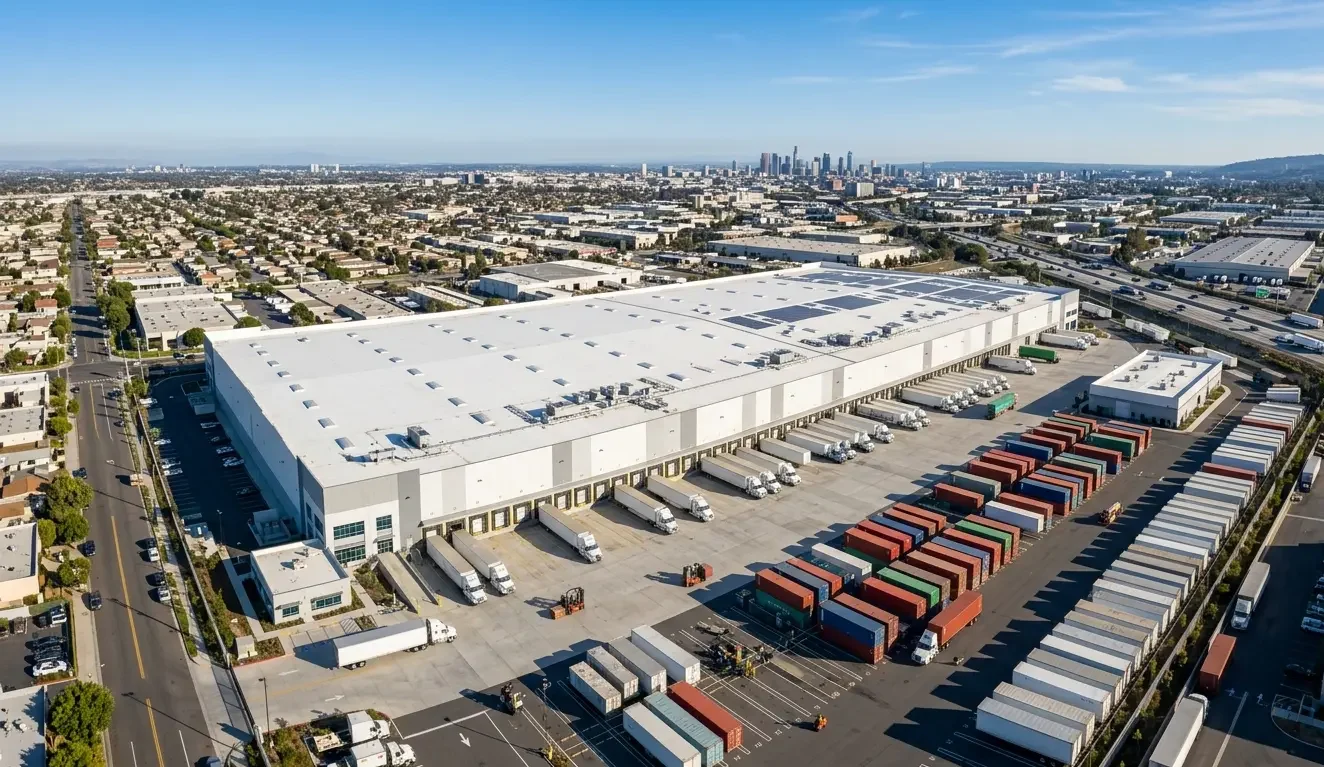
Switching to Fulfillmen
Many brands that move to Fulfillmen manufacture in China and want to stop paying to ship stock overseas before every order. We store inventory in China, Hong Kong and India, connect Shopify, WooCommerce and Amazon through a free API, and work without minimums or lock-in contracts, so a phased pilot is easy to run. Learn more about our warehouse services.
Frequently asked questions
How long does it take to switch 3PL providers?
Domestic switches typically take 6 to 10 weeks. Cross-border moves take longer because inventory must travel by freight and clear customs before it can be received and sold.
Can I run two 3PLs at the same time?
Yes, and it is the safest way to switch. Dual fulfillment lets you test the new provider with real orders while the old one keeps the rest of your orders moving.
What is the best time of year to switch?
A low-volume period at least two to three months before your peak season. For many brands that means late winter or late summer.
What data should I take from my old 3PL?
Inventory counts by SKU, order history, returns records and any damage reports. Reconcile counts before your stock leaves the old warehouse so any shortfall is settled with the old provider.
Is it worth moving fulfillment from the US to China?
It can be, if your products are made in China, you sell a wide catalogue or ship internationally. Many brands keep fast sellers in the US and fulfill the rest from China, then compare cost per order after a pilot.
Planning a move? Tell us where your stock is now and we will map the fastest route to go-live, with no lock-in contract.