Selling on Amazon gives you instant access to millions of potential customers worldwide. That’s huge. But here’s the thing you’ve got to figure out how those products actually reach customers after they buy.
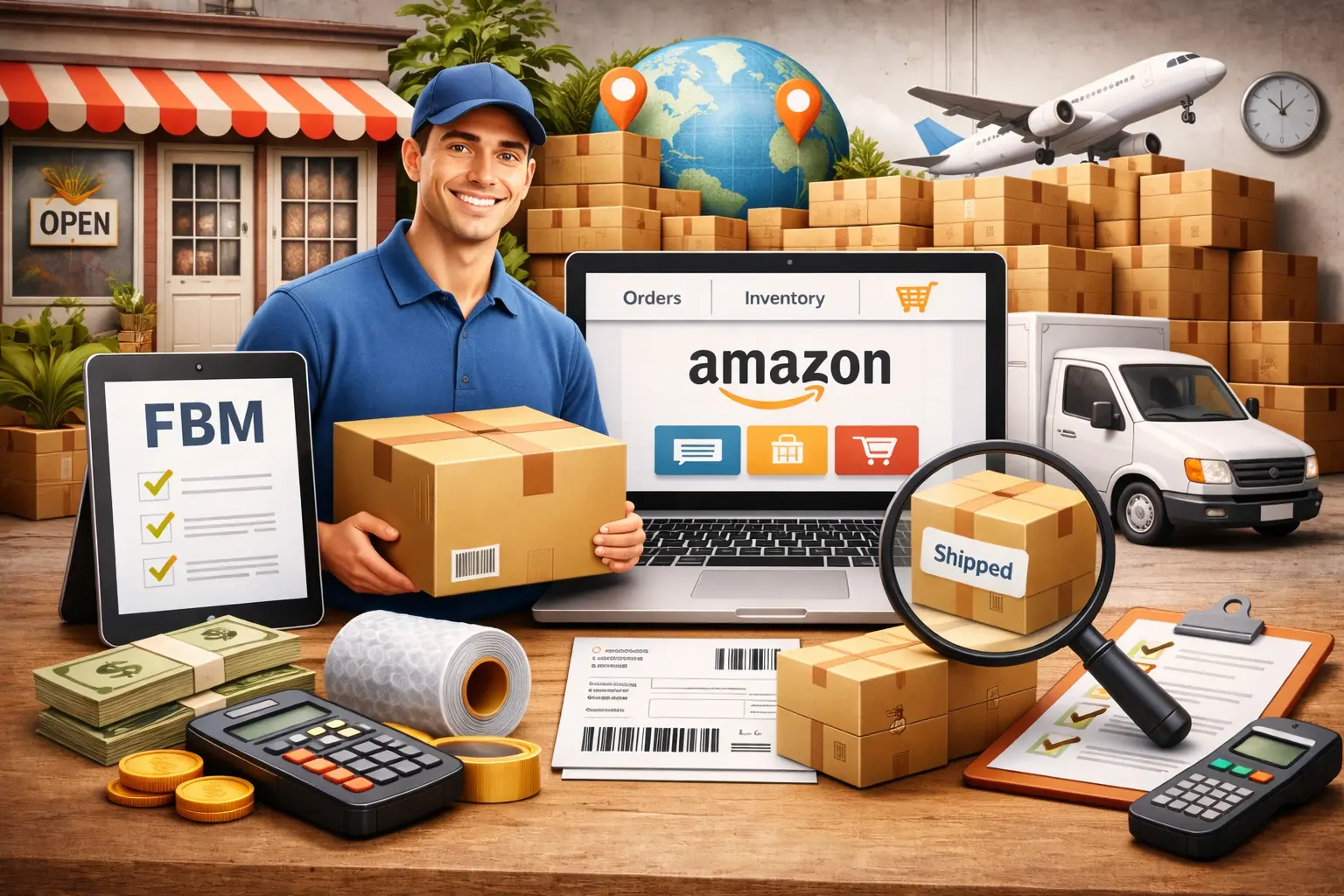
Amazon FBM (Fulfillment by Merchant) lets you handle order fulfillment yourself instead of sending inventory to Amazon warehouses. You control storage, packaging, shipping, and customer service. Some sellers love this approach. Others find it overwhelming.
Whether you’re just starting on Amazon or reconsidering your fulfillment strategy, understanding FBM helps you make smarter decisions about your business. Let’s break down exactly how it works.
What is Amazon Fulfillment by Merchant (FBM)?
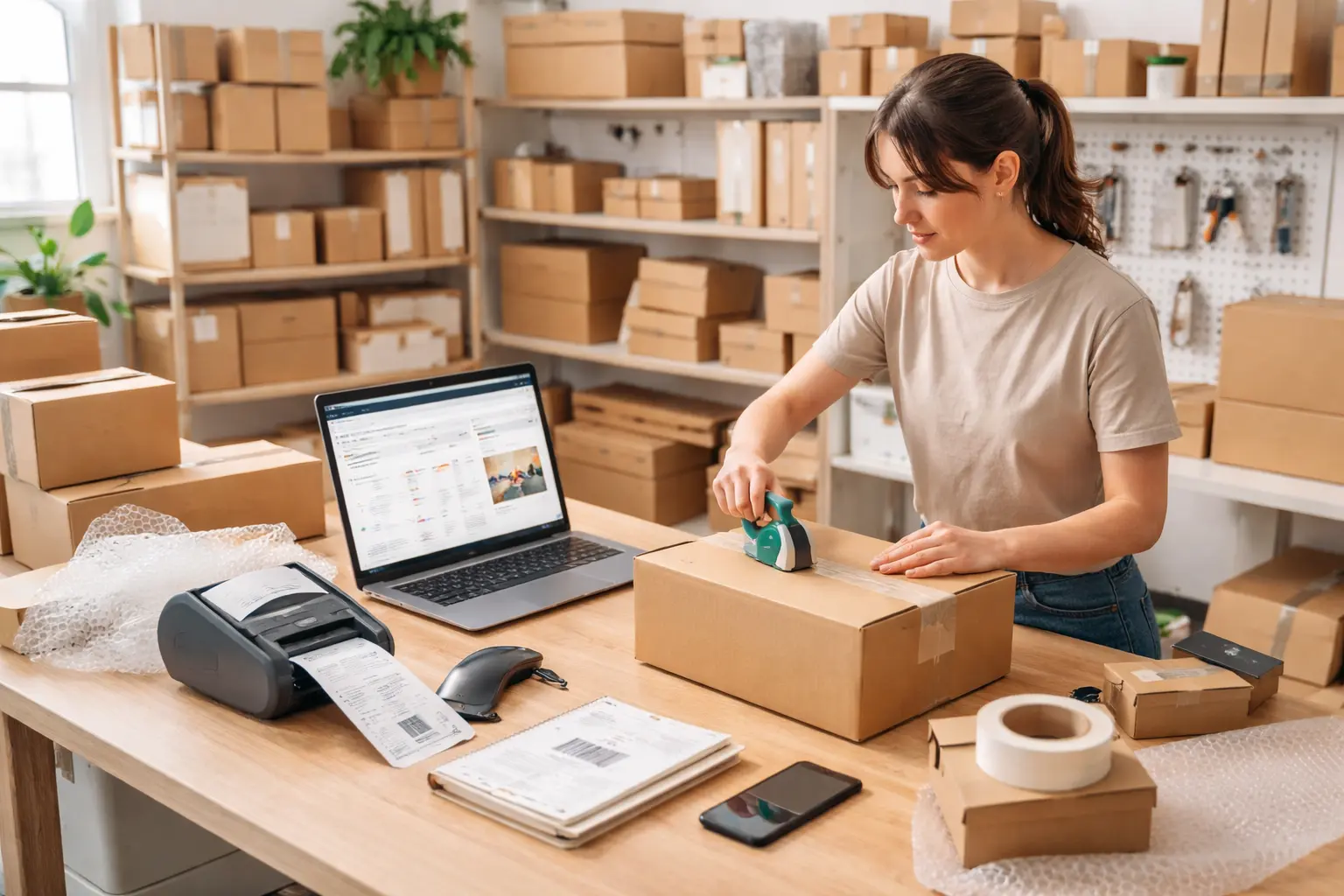
Amazon FBM is a fulfillment method where sellers list products on Amazon but handle all logistics themselves. You manage your own inventory storage. You pack and ship orders when they come in. You deal with returns and customer questions.
Think of it this way: Amazon provides the marketplace where customers find and buy your products. Everything else? That’s on you. You can handle fulfillment personally from your garage or warehouse, or you can hire a third-party fulfillment service to do the heavy lifting.
The key difference from other methods is control. You decide how products get packaged. You choose shipping carriers. You set handling times. This control comes with both advantages and responsibilities.
Amazon FBM vs Amazon FBA: Key Differences
How FBA Works
With Amazon FBA (Fulfillment by Amazon), you send products to Amazon warehouses. Amazon stores everything. When orders come in, Amazon picks, packs, and ships products to customers. They handle returns and customer service too.
Your products get the Prime badge. Customers love Prime shipping. Amazon handles logistics headaches. But you pay substantial fees for these conveniences.
How FBM Works
With Amazon FBM, you keep inventory wherever you want—your home, a warehouse, a fulfillment center. Orders come through Amazon’s system. You pack them yourself (or your 3PL does). You ship using carriers you choose.
No Prime badge usually. You handle customer questions. Returns come back to you. But you control costs and maintain direct oversight of fulfillment quality.
Side by Side Comparison
Inventory Storage: FBA stores at Amazon warehouses (fees apply). FBM stores wherever you choose (your costs).
Shipping Responsibility: FBA handled by Amazon. FBM handled by you or your 3PL.
Prime Eligibility: FBA gets Prime badge automatically. FBM can qualify through Seller Fulfilled Prime (strict requirements).
Cost Structure: FBA charges monthly storage, fulfillment fees, long term storage fees. FBM charges monthly subscription, per order fees, referral fees, your shipping costs.
Control Level: FBA gives Amazon complete control. FBM keeps control with you.
Best For: FBA works great for fast moving, standard sized products. FBM shines for oversized items, low-margin products, slow sellers, fragile goods.
According to Shopify’s Amazon guide, about 82% of sellers use FBA while 14% stick with FBM. Many successful sellers use both methods for different products.
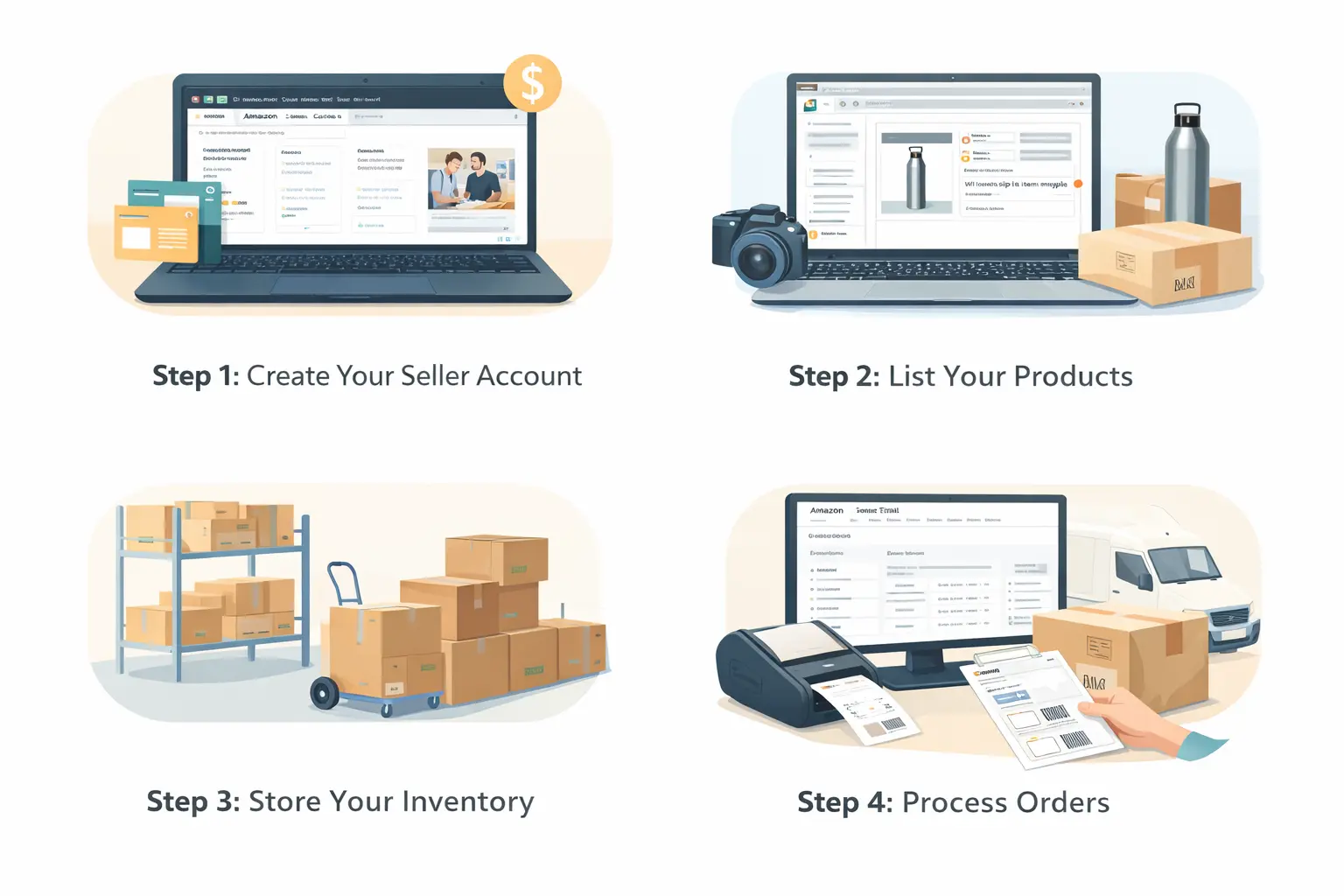
How Amazon FBM Actually Works
Step 1: Create Your Seller Account
Sign up for Amazon Seller Central. You’ll need a Professional selling account ($39.99/month) for full features. Individual accounts work too but limit some capabilities.
During setup, you’ll provide business information, tax details, and bank account for receiving payments. The whole process takes maybe 30 minutes if you have everything ready.
Step 2: List Your Products
Add products to Amazon’s catalog. If items already exist in their system, match your offers to existing listings. For new products, create complete listings with descriptions, images, bullet points, prices.
Here’s the critical part: When setting up listings, select “I will ship this item myself” under Fulfillment Channel. This designates products as Amazon FBM instead of FBA.
Step 3: Store Your Inventory
Decide where products live before orders arrive. Small sellers often start from home. As volume grows, you might rent warehouse space or partner with a fulfillment center to handle storage professionally.
Track inventory levels carefully. Amazon doesn’t manage this for FBM sellers. Running out of stock loses sales and hurts your seller metrics.
Step 4: Process Orders
When customers buy products, orders appear in your Seller Central dashboard. You’ve got specific handling time windows to ship items usually 1-2 business days depending on your settings.
Pack products securely. Print shipping labels (Amazon Buy Shipping offers discounted rates). Ship using your chosen carrier. Upload tracking information to Amazon’s system immediately.
Step 5: Handle Customer Service
You’re responsible for answering customer questions. Process return requests promptly. Issue refunds when appropriate. Amazon monitors your performance closely.
Include clear return instructions in packaging. Provide a valid return address. You cannot refuse legitimate return requests from customers.
Pros of Using Amazon FBM
Lower Fulfillment Costs
You avoid Amazon’s hefty FBA fees. No monthly storage charges. No long term storage penalties for slow moving inventory. Just your actual shipping costs plus Amazon’s basic seller fees.
For products with tight margins, this cost difference matters enormously. It can mean the difference between profit and loss on each sale.
Complete Control Over Fulfillment
You decide packaging quality. You choose eco friendly materials if that matters to your brand. You add personalized touches like thank you notes or special inserts.
If you work with a professional 3PL fulfillment provider, you still maintain more control than with FBA. You pick your partner. You set standards. You monitor performance directly.
Better for Certain Products
Oversized items: Amazon charges astronomical fees for large, heavy products in FBA. FBM lets you ship these cost effectively.
Fragile goods: When products need special handling, controlling the packing process yourself ensures proper protection.
Slow moving inventory: FBA charges long term storage fees that kill profitability on items that sit around. FBM eliminates this problem.
Low margin products: When profit margins are already thin, FBA fees can make products unprofitable. FBM preserves those slim margins.
Flexibility During Peak Seasons
Amazon sometimes restricts FBA shipments during busy periods like holidays. FBM sellers keep processing orders normally. You’re not dependent on Amazon’s capacity constraints.
Cons of Using Amazon FBM
No Automatic Prime Badge
Products fulfilled by merchants typically don’t display the Prime badge. This matters because Prime members often filter search results to show only Prime eligible items.
There’s Seller Fulfilled Prime (SFP) that gives FBM sellers Prime eligibility, but it requires meeting strict delivery standards. Amazon waitlists this program and kicks sellers out who don’t maintain performance metrics.
You Handle All Logistics
Packing orders takes time. Managing shipping carriers requires attention. Handling returns creates extra work. If you’re doing this yourself, it consumes hours you could spend on business growth.
That’s why many sellers partner with fulfillment companies. Let professionals handle logistics while you focus on sourcing products and marketing.
Buy Box Competition
Amazon’s Buy Box algorithm favors FBA products. The Buy Box is that “Add to Cart” button customers click it’s where 90%+ of sales happen. FBM products compete at a disadvantage against FBA offers for the same item.
You can still win the Buy Box with competitive pricing and excellent performance metrics. It’s just harder than with FBA.
Customer Service Requirements
Every return request. Every shipping question. Every delivery issue. All of it lands on you. Amazon won’t handle customer service for FBM orders.
This increases workload significantly if you sell high volumes. Budget time for responding to messages promptly or hire someone to manage communications.
When Should You Choose Amazon FBM?
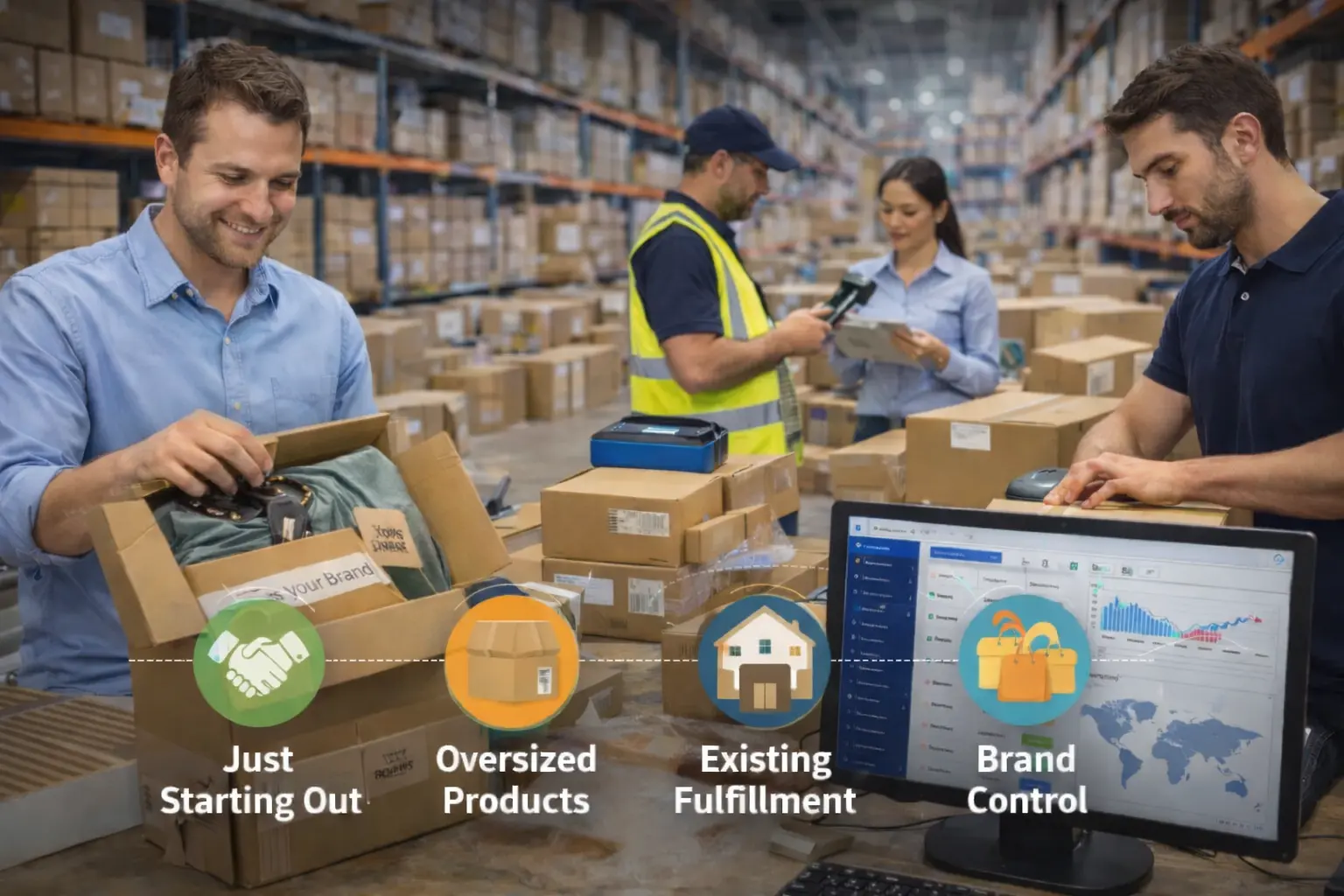
You're Just Starting Out
New sellers often begin with Amazon FBM because it requires less upfront investment. You don’t need to send bulk inventory to Amazon warehouses before making sales.
Test products with FBM first. Once you confirm items sell well, consider switching successful products to FBA for faster shipping and Prime eligibility.
You Sell Oversized Products
Furniture, sporting equipment, large appliances these items incur massive FBA fees. Fulfilling them yourself (or through a specialized 3PL) costs way less while maintaining profitability.
You Have Existing Fulfillment Infrastructure
Already running a warehouse for other sales channels? Use that same infrastructure for Amazon orders. Why pay Amazon storage fees when you’ve got space sitting unused?
You Want Brand Control
Custom packaging strengthens brand identity. Personalized inserts build customer loyalty. These touches aren’t possible with FBA’s standardized fulfillment process.
You're Selling Low Volume, High Value Items
Products that sell occasionally but command good prices work well with FBM. You avoid monthly storage fees piling up while items wait for buyers.
Getting Started with Amazon FBM Successfully
Choose Your Fulfillment Method
Decide between handling orders yourself or working with a fulfillment partner. DIY fulfillment works initially but becomes overwhelming as sales grow.
Professional fulfillment companies process orders faster, negotiate better shipping rates, and handle customer service. This frees your time for growing the business instead of packing boxes.
Set Accurate Handling Times
Be realistic about how quickly you ship orders. Amazon tracks your performance. Consistent late shipments damage your seller rating and hurt sales.
Most FBM sellers commit to 1-2 day handling times. If you can’t meet that consistently, set longer handling times. Better to underpromise and overdeliver than vice versa.
Use Amazon Buy Shipping
Amazon negotiates shipping rates with carriers that beat retail prices by 30%+ typically. Take advantage of these discounts through Amazon Buy Shipping.
Customers see tracking automatically. Amazon monitors delivery performance. Everything stays integrated in one system.
Monitor Performance Metrics
Amazon measures order defect rate, late shipment rate, and on-time delivery rate. Stay below threshold limits or risk account suspension.
Check your metrics weekly. Address issues immediately before they snowball into bigger problems affecting your account health.
Provide Excellent Customer Service
Answer messages within 24 hours. Process returns quickly. Solve problems proactively. Good service leads to positive reviews. Positive reviews drive more sales.
Remember, on Amazon, your seller performance directly impacts how prominently products appear in search results. Treat it seriously.
Your Path to Successful Amazon FBM
Amazon FBM offers sellers control over fulfillment while accessing Amazon’s massive customer base. You manage inventory on your terms. You maintain brand identity through custom packaging. You keep costs lower than FBA for many product types.
The tradeoff? You handle logistics yourself. Orders don’t ship automatically. Customer service falls on you. For many sellers, these responsibilities outweigh benefits. For others especially those selling oversized, fragile, or low-margin products FBM makes perfect sense.
Consider partnering with a professional fulfillment center if handling logistics yourself sounds overwhelming. You get FBM’s benefits without the operational headaches. Professional fulfillment combines cost control with reliable service that meets Amazon’s strict standards.
Ready to explore fulfillment solutions for your Amazon business? Get a free consultation to discuss how professional fulfillment services can streamline your Amazon FBM operations and grow your sales.
Frequently Asked Questions
What does Amazon FBM mean?
Amazon FBM stands for Fulfillment by Merchant. It’s a selling method where Amazon sellers handle their own order fulfillment storing inventory, packing orders, shipping products, and managing customer service instead of using Amazon’s FBA fulfillment network.
What's the difference between Amazon FBM and FBA?
FBM means sellers fulfill orders themselves or through third party logistics. FBA means Amazon fulfills orders from their warehouses. FBA products get Prime badges and Amazon handles customer service. FBM gives sellers more control but requires them to manage logistics and support.
Can FBM products have Prime shipping?
Yes, through Amazon’s Seller Fulfilled Prime (SFP) program. However, SFP requires meeting strict delivery standards including next day or two day shipping, high on time delivery rates, and excellent customer service metrics. Amazon currently waitlists this program with limited availability.
What are Amazon FBM fees?
Amazon FBM fees include monthly Seller Central subscription ($39.99 for Professional accounts), per-order fees (varies by category), and referral fees (typically 15% of sale price). You also pay your own shipping costs, storage costs, and packing materials, unlike FBA where Amazon charges for these services.
Should I use FBM or FBA?
Choose FBM for oversized products, low-margin items, slow moving inventory, fragile goods, or when you want brand control through custom packaging. Choose FBA for fast moving standard-sized products where Prime eligibility matters. Many successful sellers use both methods for different products.
Can I switch from FBM to FBA later?
Absolutely. You can change fulfillment methods anytime through your Seller Central account. Many sellers start with FBM to test products, then switch successful items to FBA for Prime eligibility and faster fulfillment. You can also use both methods simultaneously for different products.