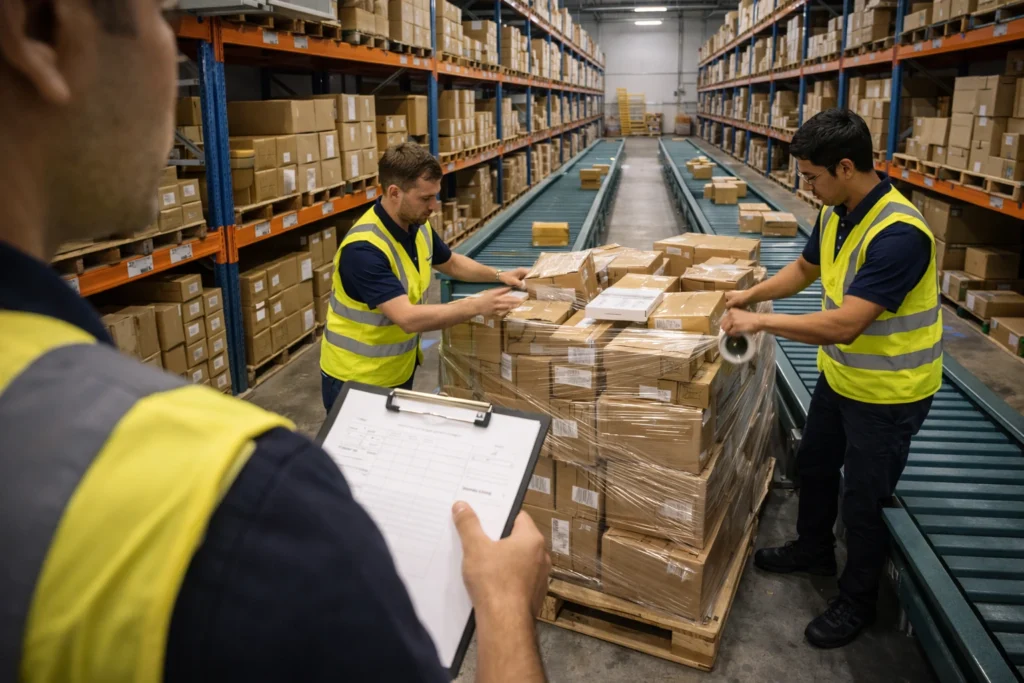
Shipping costs are eating eCommerce margins alive in 2026. The average cost to ship an eCommerce order is $8–$15 per parcel and 25–40% of that total never shows up on the carrier invoice. It’s buried in surcharges, fulfillment inefficiencies, dimensional weight penalties, and customs delays that compound quietly with every order shipped.
Here’s something most sellers don’t realise: reducing international shipping costs isn’t just a margin play. It’s a revenue play. A massive 48% of shoppers abandon their cart when shipping fees push the total higher than expected. That’s $4 trillion in lost eCommerce revenue annually directly tied to shipping cost. Every dollar you cut from your per order shipping cost either improves your margin or lets you offer more competitive rates that convert more customers.
These 9 strategies tackle the real drivers of high international shipping costs not just the carrier rate with a specific focus on reducing costs when shipping from China.

Stop Shipping Air When You Don't Have To
Sea Freight Saves Up to 50% on Comparable Shipments
The single biggest lever to reduce international shipping costs is switching from air freight to sea freight for non urgent inventory. Sea freight runs 5–16x cheaper per kg than air freight on China to US routes. On a 500 kg shipment, that difference can mean $2,000–$4,000 saved per order.
Air freight makes sense for urgent restocks, high margin products, and new product launches where speed protects revenue. But for stable, predictable inventory on proven products, sea freight is almost always the right call. According to Inbound Logistics, aligning freight mode to inventory velocity not habit is one of the highest-ROI decisions in supply chain management.
FCL vs LCL Know When to Switch
Once your shipping volume consistently hits 10–15 CBM per order, switching from LCL (Less than Container Load) to FCL (Full Container Load) typically saves 20–35% per unit. LCL adds consolidation and deconsolidation handling fees that disappear with FCL.
And when you do use FCL, choose the 40HQ container over the 20ft container almost every time. The 40HQ holds nearly double the volume of a 20ft but doesn’t cost double the freight. The cost per cubic meter is significantly lower meaning you’re paying less per unit shipped even before negotiating rates.
Time Your Shipments Around the Rate Cycle
China to US Freight Follows a Predictable Pattern
Here’s a cost-saving angle most shipping guides completely skip: ocean freight rates from China follow a seasonal pattern you can plan around. January pre-Chinese New Year sees rates spike 15–25% as demand surges and carriers overbook. Then rates crash during the CNY factory shutdown window (typically a 2–3 week dip). After CNY, rates stabilize at lower levels for Q2.
Smart importers use what logistics operators call a “dual-track” strategy — booking the majority of critical inventory before the January surge at lower January rates, while scheduling non-critical replenishment during the post-CNY rate dip when spot rates can run 15–20% below the January peak.
Book 3–4 Weeks in Advance for Ocean, 10–15 Days for Air
Booking in advance consistently secures better rates than spot bookings particularly for ocean freight. Last minute space bookings carry a premium of $300–$500 per container on popular China to US West Coast lanes. Build booking lead time into your inventory planning and it becomes a free cost reduction.
Fix Dimensional Weight at the Source
The DIM Weight Problem Nobody Talks About
Most sellers know dimensional weight is a problem. Few know the most powerful place to fix it: before goods leave the Chinese factory. Dimensional weight is calculated as length × width × height (cm) ÷ 6,000. If your volumetric weight exceeds actual weight, you pay on volume and bulky but lightweight products can see shipping bills double or triple versus actual weight.
The fix isn’t to find a cheaper carrier. It’s to reduce the dimensional weight of your products at source working with your supplier or China 3PL to repack goods into tighter cartons, eliminate unnecessary void space, and right size packaging before the shipment is measured and rated.
A 3PL near your Chinese manufacturers can repack and consolidate goods before they’re weighed by the freight forwarder. Getting packaging right before measurement is worth more than almost any carrier rate negotiation. A pillow in an oversized box can cost more to ship than a heavy product in a tight, right sized carton.
Consolidate Shipments from Multiple Suppliers
Why Separate Supplier Shipments Are Costing You
Here’s a scenario that plays out constantly for importers sourcing from multiple Chinese factories. Supplier A ships 2 CBM. Supplier B ships 3 CBM. Supplier C ships 2 CBM. All three ship separately. You pay three sets of documentation fees, three sets of customs handling, three minimum charges and three times the per unit shipping cost compared to a single consolidated shipment.
Consolidation combining goods from multiple suppliers into one shipment can save 30–70% compared to shipping separately. Suppliers send goods to a central China warehouse. The warehouse receives, checks, and consolidates everything into one container or LCL booking. One customs entry. One set of fees. One door to door delivery.
How to Set Up China Consolidation
The practical setup: choose a China 3PL or freight forwarder with a consolidation warehouse near your supplier cluster (Shenzhen, Guangzhou, or Shanghai are the most common hubs). Give all your suppliers the warehouse address. Instruct them to ship FCA (Free Carrier) to the warehouse your 3PL takes responsibility from pickup, handles export clearance, and books consolidated freight.
This approach works especially well for sellers sourcing from multiple 1688 or Alibaba factories. Instead of managing five separate shipments with five tracking numbers, one partner handles everything from the warehouse door to your US address.
Use a 3PL to Access Carrier Rates You Can't Get Alone
Volume = Leverage. And You Don't Have Enough of It Alone.
Here’s one of the most underused cheap international shipping strategies for growing eCommerce brands: letting a 3PL negotiate carrier rates on your behalf. 3PLs aggregate shipping volume across dozens or hundreds of clients. That combined volume unlocks carrier rate tiers that individual sellers even large ones simply can’t access independently.
The math works like this. A carrier might offer 15% off published rates to a shipper moving 100 shipments per month. A 3PL moving 10,000 shipments per month negotiates 35–45% off published rates, structural surcharge waivers, and priority space allocation. When you ship through a 3PL, you access those negotiated rates even if your own volume is modest.
In 2026, this volume leverage matters more than ever. UPS announced a 5.9% general rate increase (GRI) for 2026. DHL and FedEx followed similar patterns. Individual brands paying retail or semi-retail rates absorb those GRIs in full. 3PL clients with negotiated contracts often see much smaller net rate increases because surcharge structures are negotiated alongside base rates.

Pre Pay Duties (DDP) to Reduce Total Landed Cost
DDU Looks Cheaper But It Isn't
When you ship DDU (Delivered Duty Unpaid), your customer pays customs duties on delivery. Sounds like a cost saving for you until you factor in what actually happens. Independent customs brokers charge $50–$150 per shipment in brokerage fees on top of the actual duties. Your customers get surprise bills. Some refuse delivery. You pay return shipping. You get bad reviews.
DDP (Delivered Duty Paid) bundles duties into your pre-negotiated logistics arrangement at rates far lower than individual customers can access. The total shipping cost optimization is genuine not just a customer experience improvement. Your per-shipment duty cost goes down, your return rate goes down, and your customer lifetime value goes up.
According to the CSCMP supply chain management glossary, landed cost the total cost to get a product from origin to customer is the correct metric for shipping cost comparison, not just the freight rate. DDP lowers your real landed cost even when the quoted shipping price looks higher.
Audit Your Invoices for Surcharge Overcharges
Carriers Overcharge More Than You Think
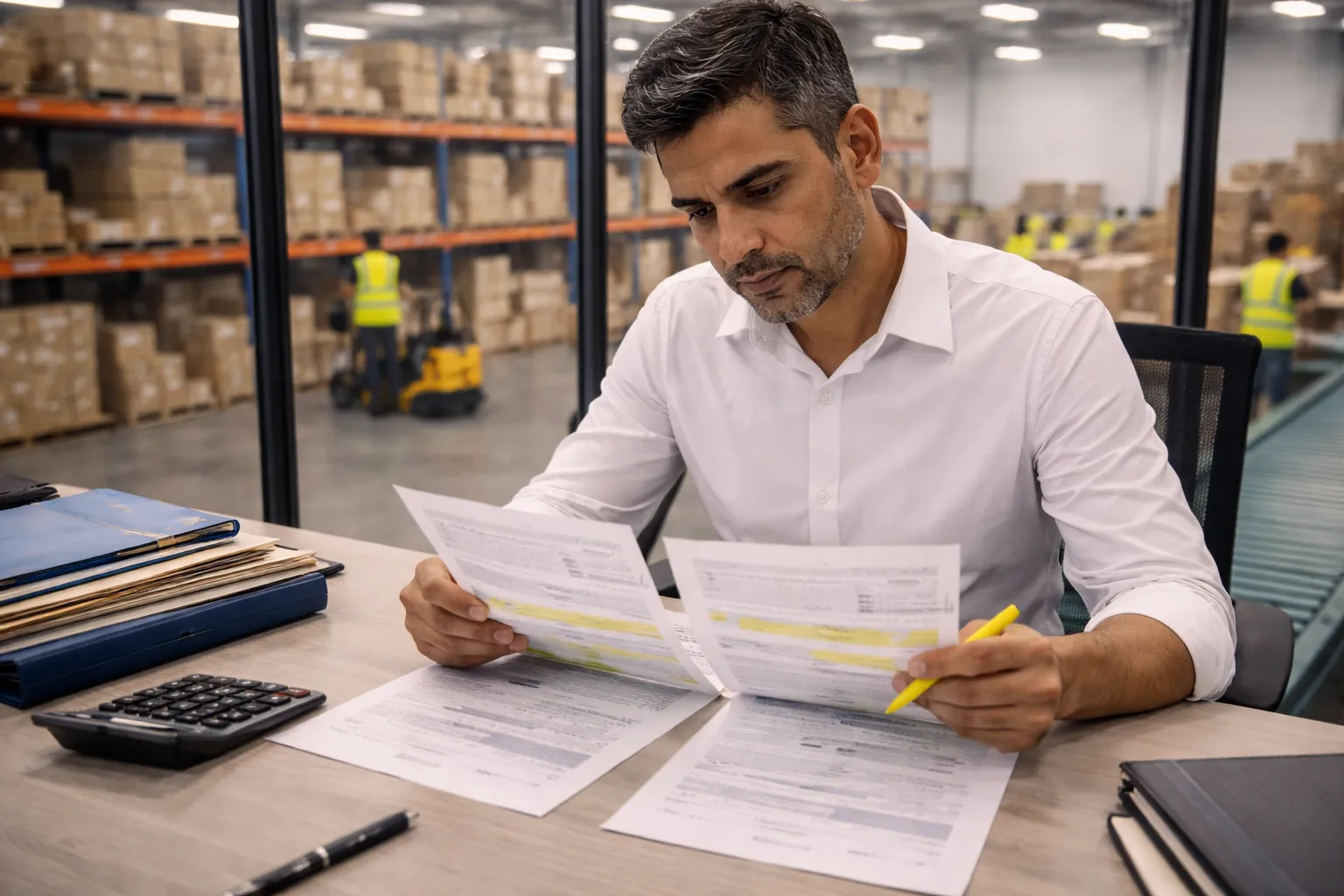
Shipping invoice auditing is one of the least glamorous shipping cost optimization strategies and one of the most reliably effective. Carriers routinely apply incorrect surcharges dimensional weight miscalculations, wrong delivery zone classification, remote area fees applied to non remote addresses, and residential surcharges on commercial addresses.
Pull your last 6–12 months of shipping invoices. Specifically check: dimensional weight calculations (are they using correct measurements?), delivery area surcharges (do they match your actual delivery addresses?), and peak/holiday surcharges (were they applied correctly to the right date windows?). Many brands recover 3–8% of their total annual shipping spend through systematic invoice auditing. That’s real money that requires zero carrier negotiation.
Use Free Storage to Plan Around Demand
Stop Making Urgent Shipping Decisions
One of the most expensive shipping habits in eCommerce is reactive shipping paying premium air freight rates because inventory ran out and you need goods urgently. Panic shipping is expensive shipping. Every urgent air freight booking to cover a stockout costs 5–16x more than the same shipment planned two months earlier via sea freight.
The fix is inventory depth enough safety stock that you’re never forced into expensive shipping decisions. Free storage at a China warehouse makes this economically viable. With 90 days of free storage, you can hold a larger inventory buffer at zero cost, plan shipments around favourable rate windows, and never pay premium freight rates for urgency you created yourself.
Reduce Shipping Zones by Positioning Inventory Closer to Customers
Every Zone Adds Cost
In the US, shipping cost increases with every zone a package crosses. Zone 1–2 delivery might cost $6. Zone 7–8 delivery costs $14+ on the same package. For brands shipping from a single fulfilment location, a large chunk of customers are always in high zones and you pay for every one of them.
Splitting inventory between a China warehouse for international orders and a US warehouse for domestic orders cuts average shipping zones dramatically. Your US customers get domestic delivery rates (Zone 2–4 average instead of Zone 6–8). Your international customers get China origin shipping without the US domestic leg. The result is lower per-order shipping cost and faster delivery simultaneously.
How Fulfillmen Cuts Your International Shipping Costs Across Every Strategy
Most sellers try one or two cost reduction tactics in isolation and get modest results. The sellers who genuinely reduce international shipping costs implement multiple strategies together and they do it through a logistics partner who handles the infrastructure behind each one.
Consolidation, DDP, and Rate Negotiation All Under One Roof
Fulfillmen’s consolidation services combine goods from multiple Chinese suppliers into a single outbound shipment eliminating duplicate documentation fees, separate customs entries, and redundant freight costs. Fulfillmen’s logistics network carries DDP shipping on all major China to US routes, so your customers receive goods with no surprise customs bills and you pay professionally negotiated duty rates rather than retail broker charges.
As a global 3PL with warehouses in China, Hong Kong, India, and the USA, Fulfillmen ships enough combined volume across all clients to access carrier rate tiers that individual brands can’t reach independently. That means lower per kg rates, negotiated surcharge structures, and priority space allocation all passed through to your shipments regardless of your individual order volume.
90 Days Free Storage Stop the Panic Freight Cycle
Fulfillmen’s pay as you send model with 90 days of free storage means you hold deeper inventory buffers at zero cost and plan every shipment around sea freight timelines and favourable rate windows. No more emergency air freight. No more $300 per container space premiums for late bookings. Just systematic, planned shipping at the lowest available rates. Check out Fulfillmen’s full fulfillment services and see how each strategy comes together in one integrated operation. Get a free quote today and find out exactly what your current per-shipment savings opportunity looks like.
FAQs: Shopify Shipping from China
What's the single most effective way to reduce international shipping costs from China?
Switching from air freight to sea freight for non urgent inventory. Sea freight is 5–16x cheaper per kg than air on China to US routes. If you’re regularly paying air freight rates for stable, predictable inventory that doesn’t need to arrive urgently, you’re leaving thousands of dollars on the table every month. Once you’ve made that switch, consolidating multiple supplier shipments into one is the next biggest lever saving 30–70% compared to separate shipments.
How does consolidating shipments actually reduce costs?
When you ship separate small orders from multiple Chinese suppliers, you pay multiple sets of documentation fees, customs handling charges, and minimum freight charges. Consolidation combines all those goods at a central China warehouse and ships them as one. One customs entry. One set of freight documentation. One set of handling fees. The per unit cost drops significantly because fixed costs are shared across a much larger total volume. Freight consolidation from China typically saves 30–70% versus shipping each supplier order separately.
How does a 3PL help reduce international shipping costs specifically?
3PLs aggregate shipping volume across all their clients often tens of thousands of shipments per month. That combined volume unlocks carrier rate tiers individual brands can never access alone. A solo brand might get 10–15% off published carrier rates. A 3PL gets 35–45% off, plus negotiated surcharge waivers, priority space allocation, and better dimensional weight terms. When you ship through a 3PL, you access those negotiated rates even if your own monthly volume is modest. The other big saving: 3PLs handle consolidation, customs documentation, and DDP duty management all of which individually reduce your total landed cost.
Does dimensional weight really make a big difference to my shipping costs?
Absolutely and it’s one of the most fixable cost drivers if you address it at the right point. Air freight charges on chargeable weight (actual vs dimensional, whichever is higher). If you’re shipping light but bulky products in oversized packaging, you could be paying 2–3x what actual weight would cost. The fix is to reduce dimensional weight at source working with your China warehouse or supplier to repack goods into right sized cartons before they’re measured and rated. Cutting package height by 3 inches can reduce your billed weight by 20%, saving that amount on every shipment going forward.
When is the best time of year to ship from China to cut costs?
The post Chinese New Year window (typically late February to March) consistently offers the lowest spot rates of the year on China to US ocean freight lanes. Factories have just reopened, ships are running with available space, and demand hasn’t yet recovered to peak levels. Rates during this window can run 15–20% below the January pre CNY peak. For sellers who can plan inventory purchases around this window, the savings are significant over an annual shipping budget. Avoid shipping in the 2–3 weeks before CNY (January) and the Q4 peak season (September–November) unless you’ve booked well in advance.
Is DDP shipping really cheaper than DDU overall?
Yes, for most B2C eCommerce sellers when you calculate total landed cost rather than just the shipping rate. Under DDU, your customers pay independent customs brokers $50–$150 per shipment in brokerage fees on top of actual duties. Some refuse delivery. Return costs fall on you. A professional DDP arrangement through a 3PL bundles duty handling at negotiated rates far below what individual customers pay retail brokers. Your per order duty cost goes down, returns go down, and customer satisfaction goes up. DDP might show a higher shipping line item on your invoice but your real landed cost, return rate, and support volume all improve.