
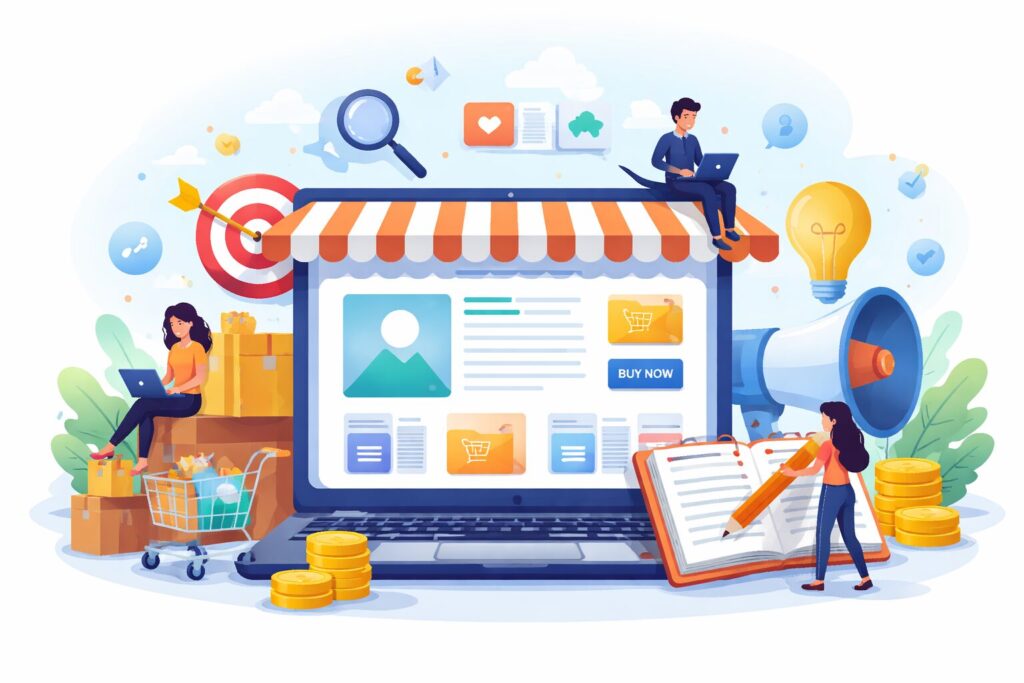
Visit any thriving online store and you’ll find one common element: an active blog. This isn’t coincidence it’s strategic necessity.
In 2026, 80% of businesses use blogs as their primary marketing tool, and brands that blog consistently see 126% more lead growth than those that don’t. Whether you sell fashion, electronics, or fulfillment services, an e-commerce blog transforms your website from a simple storefront into a revenue-generating content hub.
But if your main focus is selling products, why invest time in content creation? Because 43% of all e-commerce website traffic comes from organic search and blogs are your gateway to capturing that traffic.
This guide reveals four data-backed reasons why your online store needs a blog, plus actionable steps to launch yours successfully.
1. An E-Commerce Blog Turns Your Store Into a Trusted Resource
Why Value Matters More Than Content Volume
When you add an e-commerce blog to your website, you’re not just publishing articles you’re building a knowledge center that positions your brand as an industry authority.
Consider this: 70% of consumers prefer learning about companies through blog content rather than advertisements. This preference shift reflects a fundamental change in how buying decisions happen online.
What Value Looks Like in Practice
A well executed e-commerce blog allows you to:
Educate Before You Sell:
Answer customer questions before they ask. If you sell kitchen equipment, publish recipes and cooking techniques. If you operate in logistics, explain shipping strategies and warehouse optimization exactly what we do on Fulfillmen’s fulfillment blog.
Build Topic Authority:
Google’s algorithms prioritize websites that demonstrate expertise in specific subjects. Publishing consistent, high quality content signals that your brand understands its industry deeply.
Create Multiple Touchpoints:
First time visitors rarely convert immediately. An e-commerce blog creates multiple opportunities for engagement, allowing prospects to build familiarity with your brand over time.
Reduce Customer Support Costs:
Comprehensive how to guides and FAQ articles resolve common questions proactively, reducing support ticket volume by up to 30%.
How Trust Drives Conversions
According to DemandSage research, businesses that prioritize blogging are 13 times more likely to see positive ROI. This correlation exists because trust drives conversions and educational content builds trust faster than promotional messaging.
When Fulfillmen publishes guides about international fulfillment strategies, we’re not just attracting traffic we’re demonstrating the expertise that converts readers into clients.

2. E-Commerce Blogs Drive Long Term SEO Performance
The Organic Search Advantage
Search engine optimization remains the most cost effective customer acquisition channel in 2026. While paid advertising stops working the moment you stop paying, an e-commerce blog generates compounding returns over time.
How Blogs Strengthen Your SEO Strategy
Unlimited Keyword Targeting:
Product pages target transactional keywords. Blog posts capture informational searches that occur earlier in the buyer journey. This dual approach increases your total addressable search traffic by 400-600%.
Fresh Content Signals:
Google’s algorithms favor websites that publish regularly. An active e-commerce blog signals relevance and authority, improving your entire domain’s ranking potential.
Natural Link Attraction:
High quality blog content earns backlinks organically. According to StrataBeat data, websites with original research experience 42.2% backlink growth, and 96.9% gain more links overall.
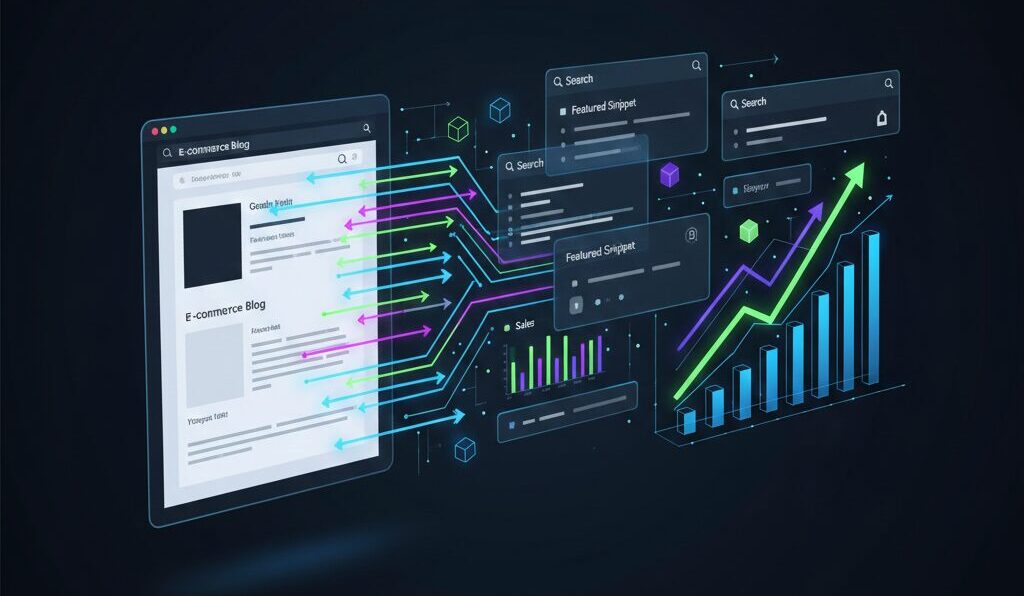
Featured Snippet Opportunities
Properly structured blog content can capture featured snippets the “position zero” results that appear above traditional rankings. These snippets drive click-through rates that are 50–100% higher than standard results.
The 2026 SEO Landscape
Recent data from SeoProfy reveals that SEO delivers 8x ROI compared to paid advertising’s 4x return. For e-commerce businesses, this means every dollar invested in content creation potentially returns $8 in revenue.
Additionally, companies implementing strategic SEO save up to 400% on advertising costs while maintaining the same traffic volume. This efficiency makes an e-commerce blog one of the highest-leverage investments available.
Voice Search & AI Search Optimization
As voice activated shopping grows, conversational blog content becomes increasingly valuable. Questions like “What’s the best fulfillment service for small businesses?” drive traffic to well optimized blog posts that directly answer these queries.
3. Build Long Term Customer Relationships Through Content
Beyond Transactions: Owning Your Audience
An e-commerce blog establishes a communication channel you fully control unlike social media platforms that can change algorithms or restrict reach at any moment.
Relationship Building Strategies
Demonstrate Real Expertise:
Share insights competitors won’t. Publish original research, case studies, and detailed process breakdowns. This transparency builds credibility that price alone cannot achieve.
Address Pain Points Proactively:
Monitor customer questions and create content that solves problems before they escalate. If customers frequently ask about shipping times, publish a comprehensive guide explaining logistics timelines.
Humanize Your Brand:
Share behind the scenes content, team spotlights, and company values. According to Hostinger research, consumers spend 37 seconds on average per blog post use this window to create emotional connections.
Enable Two Way Conversations:
Blog comments, content based surveys, and topic suggestions transform passive readers into active community participants. This engagement provides valuable market research while strengthening brand loyalty.
The Data Behind Engagement
B2B businesses with e-commerce blogs generate 67% more leads than those without. While this statistic focuses on B2B, B2C brands see similar benefits particularly in high consideration purchase categories like furniture, electronics, and specialized equipment.
Content marketing costs 62% less than traditional marketing while generating 3x more leads. This efficiency makes blogging accessible even for businesses with limited marketing budgets.
4. E-Commerce Blogs Deliver Long Term Compounding Returns
The Evergreen Content Advantage
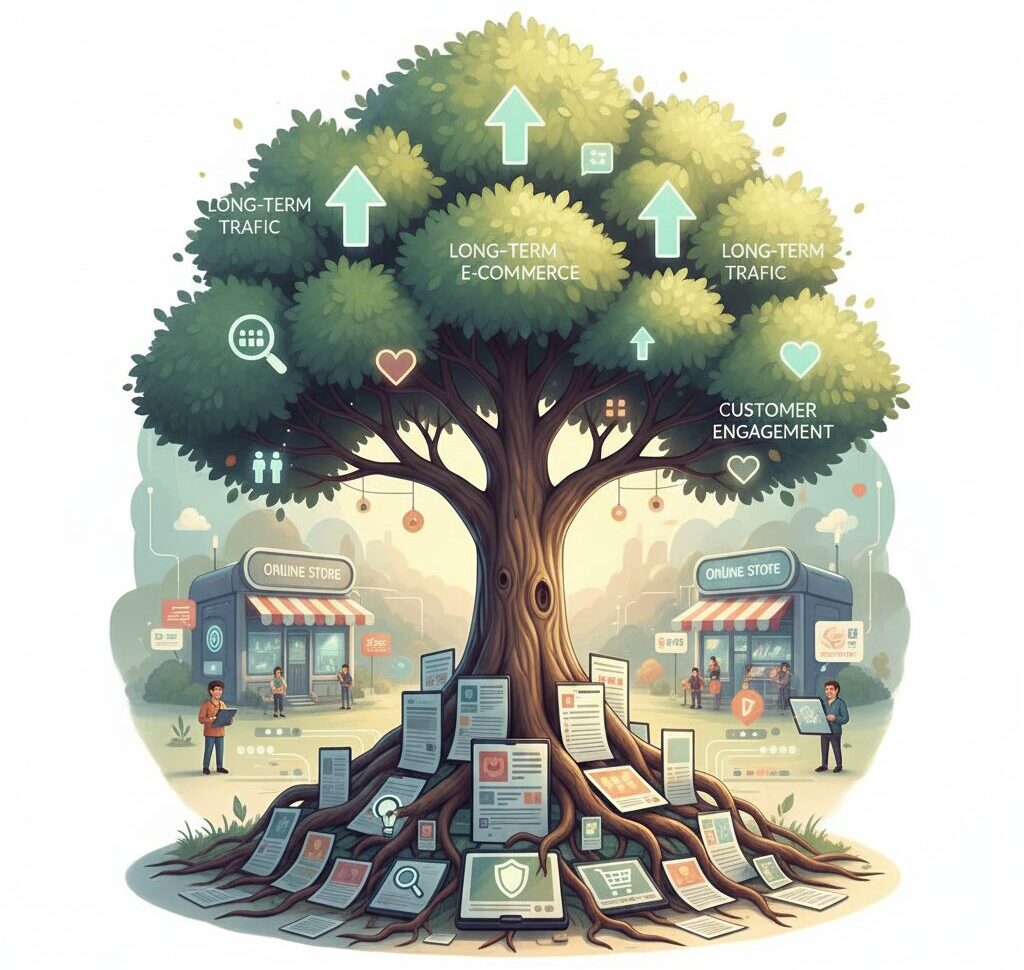
Unlike paid advertising that delivers immediate but temporary results, blog content becomes a permanent asset that generates returns indefinitely.
Understanding the Content Compound Effect
The Time Value of Content:
A blog post published today can attract visitors for years. According to Orbit Media, 71% of bloggers update old content, extending article lifespan and maintaining relevance as industries evolve.
Cumulative Traffic Growth:
Each new post adds to your total indexed pages. Websites with e-commerce blogs have 434% more indexed pages than those without dramatically increasing organic search visibility.
Investment Efficiency:
While it takes an average of 3 hours and 51 minutes to create a blog post in 2026 (up from 2 hours in previous years), the long term ROI justifies this investment. A single well optimized article can generate thousands of visits annually.
Creating Evergreen E-Commerce Content
Focus on topics that remain relevant regardless of publication date:
- Comprehensive Buying Guides: “How to Choose the Right [Product Category]”
- Best Practices: “10 Tips for Maximizing [Product] Performance”
- Educational Foundations: “Understanding [Industry Concept] Basics”
- Comparison Content: “Material A vs. Material B: Complete Comparison”
- Process Explanations: “How [Service/Product] Actually Works”
The 2026 Content Marketing Landscape
The content marketing industry is projected to reach $107 billion globally by 2026, reflecting massive business investment in content creation. This growth indicates proven value companies wouldn’t increase budgets if results didn’t justify costs.
Additionally, 7.5 million blog posts are published daily worldwide, yet only 3% of blogs exceed 2,000 words. This gap presents opportunity: comprehensive, well researched content stands out in a sea of shallow articles.
Getting Started: Your E-Commerce Blog Launch Plan
Phase 1: Strategic Foundation (Week 1-2)
Define Content Pillars:
Identify 3-5 core topics aligned with your products and customer interests. Use keyword research tools to validate search demand.
Audit Competitor Content:
Analyze top ranking blogs in your niche. Identify gaps in their coverage these represent your content opportunities.
Establish Publishing Cadence:
Start with one high quality post weekly. According to blogging statistics, 57% of daily bloggers see better results, but consistency matters more than frequency when starting out.
Phase 2: Content
Optimize Every Post:
- Target one primary keyword per article
- Use descriptive H2/H3 headings
- Include relevant images (one per 300 words)
- Add internal links to product/service pages
- Write meta descriptions for all posts
Follow the 1,500-Word Benchmark:
The average blog post length in 2026 is 1,333 words. Comprehensive guides should exceed 1,500 words to provide complete value.
Use AI Tools Strategically:
While 95% of bloggers use AI at least sometimes, use it for research and outlining not wholesale content generation. Google’s algorithms can detect low quality AI content and rank it accordingly.
Phase 3: Promotion & Performance Tracking
Multi-Channel Distribution:
According to external research from Search Engine Journal, successful content strategies include social promotion, email newsletters, and strategic backlinking.
Track Key Metrics:
Organic traffic growth
Time on page
Bounce rate
Conversion rate from blog visitors
Keyword rankings
Backlinks acquired
Iterate Based on Data:
Use Google Analytics and Search Console to identify top-performing content. Double down on topics that resonate; refine or retire underperformers.
Conclusion: Your Competitive Advantage Starts With Content Marketing
In 2026’s competitive e-commerce landscape, an active blog isn’t optional it’s essential infrastructure for sustainable growth.
The data proves the case: 80% of businesses use blogs as marketing tools, the content marketing industry is reaching $107 billion globally, and companies with blogs generate 126% more leads than those without.
Whether you’re launching your first online store or scaling an established brand, an e-commerce blog provides:
-
Unlimited SEO opportunities
-
Customer trust and authority
-
Long-term compounding return
-
Cost-effective customer acquisition
Start simple. Publish one valuable post this week. Monitor results. Refine your approach. Over time, your blog becomes one of your most valuable business assets generating traffic, leads, and revenue long after publication.
Ready to scale your e-commerce operations? Explore how Fulfillmen’s fulfillment services free up time for strategic initiatives like content marketing, allowing you to focus on growth while we handle logistics.
Frequently Asked Questions
How often should I publish on my e-commerce blog?
Start with one well researched post weekly. According to DemandSage blogging statistics, consistency matters more than frequency. Once you establish rhythm, you can increase to 2-3 posts weekly. Data shows that 24% of high-performing websites publish daily, but this requires significant resources.
What topics should my e-commerce blog cover?
Focus on three content categories: (1) Educational guides that help customers use products effectively, (2) Comparison content that aids purchase decisions, and (3) Industry insights that demonstrate expertise. Avoid purely promotional content 70% of consumers prefer educational content over advertisements.
How long should e-commerce blog posts be?
Aim for 1,500 words for comprehensive guides. Shorter posts (800-1,000 words) work for news updates or simple tutorials. Research shows 64% of bloggers publish content between 500-1,500 words, but longer posts (2,000+ words) earn more backlinks and rank better for competitive keywords
Can blogging actually increase e-commerce sales?
Yes. Businesses with e-commerce blogs generate 67% more leads than those without. While blogs drive indirect revenue through organic traffic, brand building, and customer education, the cumulative effect significantly impacts bottom line sales. Companies focusing on blogging are 13 times more likely to see positive ROI.
Should I hire a writer or create content in-house?
Start in house to establish voice and understand what resonates. According to content marketing data, 80% of marketers create content themselves initially. Once you identify successful topics and formats, consider outsourcing to scale production while maintaining quality standards.
How do I measure my e-commerce blog's success?
Track organic traffic growth, keyword rankings, time on page, conversion rate, and backlinks acquired. Additionally, monitor assisted conversions blog visitors who don’t convert immediately but return later to purchase. Use Google Analytics’ multi channel funnel reports to understand the blog’s role in your sales process.