
Here’s something that catches a lot of online sellers off guard every single year: Chinese New Year 2026 is coming up on February 17, 2026, and if you’re not ready for it, you’re going to have a bad time.
I’m not trying to scare you, but let’s be real. When Chinese New Year arrives, the entire supply chain pauses. Factories shut their doors, warehouses go quiet, and shipping slows to a crawl. Most e-commerce sellers source products from China. If you’re one of them, this holiday will hit your profits hard.
The tricky part? Most people know about the week long holiday. However, few realize that many operations actually stop for almost three weeks. Yeah, you read that right. Three weeks where your suppliers aren’t making anything, your fulfillment center isn’t shipping anything, and your inventory is just… sitting there.
So what do you actually need to know to get through Chinese New Year 2026 without losing your mind or your money? Let’s break it down in a way that actually makes sense.
The Real Chinese New Year 2026 Timeline
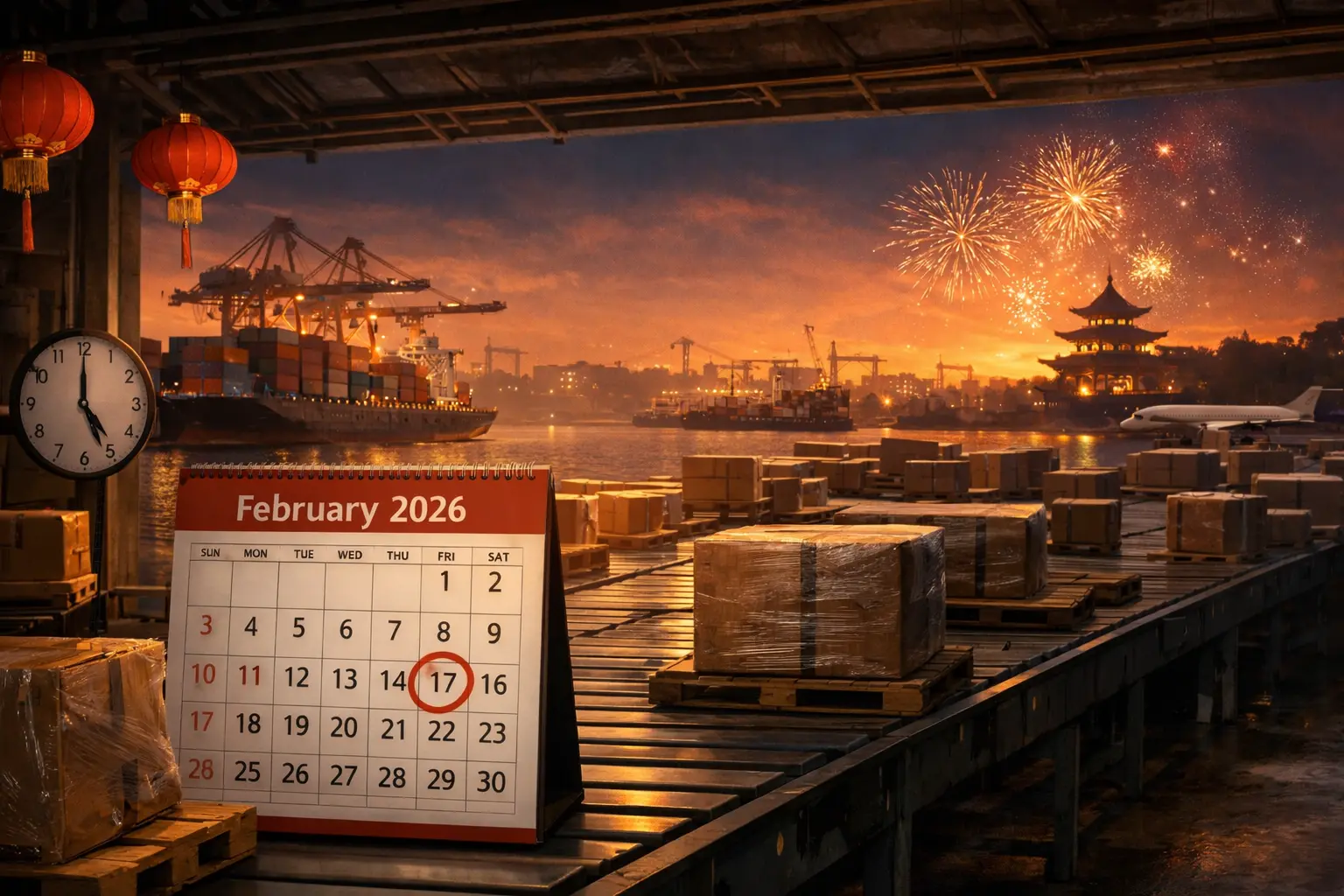
Okay, so Chinese New Year 2026 lands on Tuesday, February 17. That’s the big day. It kicks off the Year of the Horse, which sounds cool, but what you really care about is how long everything shuts down.
Here’s what the calendar says:
- New Year’s Eve: February 16
- New Year’s Day: February 17
- Official holiday: February 15-23 (that’s 9 days)
- Lantern Festival wraps things up: March 3
Looks manageable, right? Wrong.
Here’s what actually happens on the ground:
Starting around February 10, you’ll notice things getting slower. Workers start heading home early because everyone’s trying to beat the travel rush. By February 15, most places are running on skeleton crews like maybe one guy who drew the short straw.
Then from February 17-23, it’s lights out. Everything’s closed. Your supplier isn’t answering emails. The factory’s locked up. The warehouse staff? They’re all back in their hometowns eating dumplings with family.
But wait, there’s more! Just because the official holiday ends on February 23 doesn’t mean everyone rushes back to work. It takes until about March 5 for people to actually return and get back into the swing of things. According to Shopify’s guide on working with Chinese suppliers, this extended downtime catches new sellers by surprise every year.
So when you’re planning, don’t think “9 days.” Think “nearly a month where things are weird.”
How This Actually Affects Your Business
Let’s talk about what happens when half of China’s workforce goes on vacation at the same time.
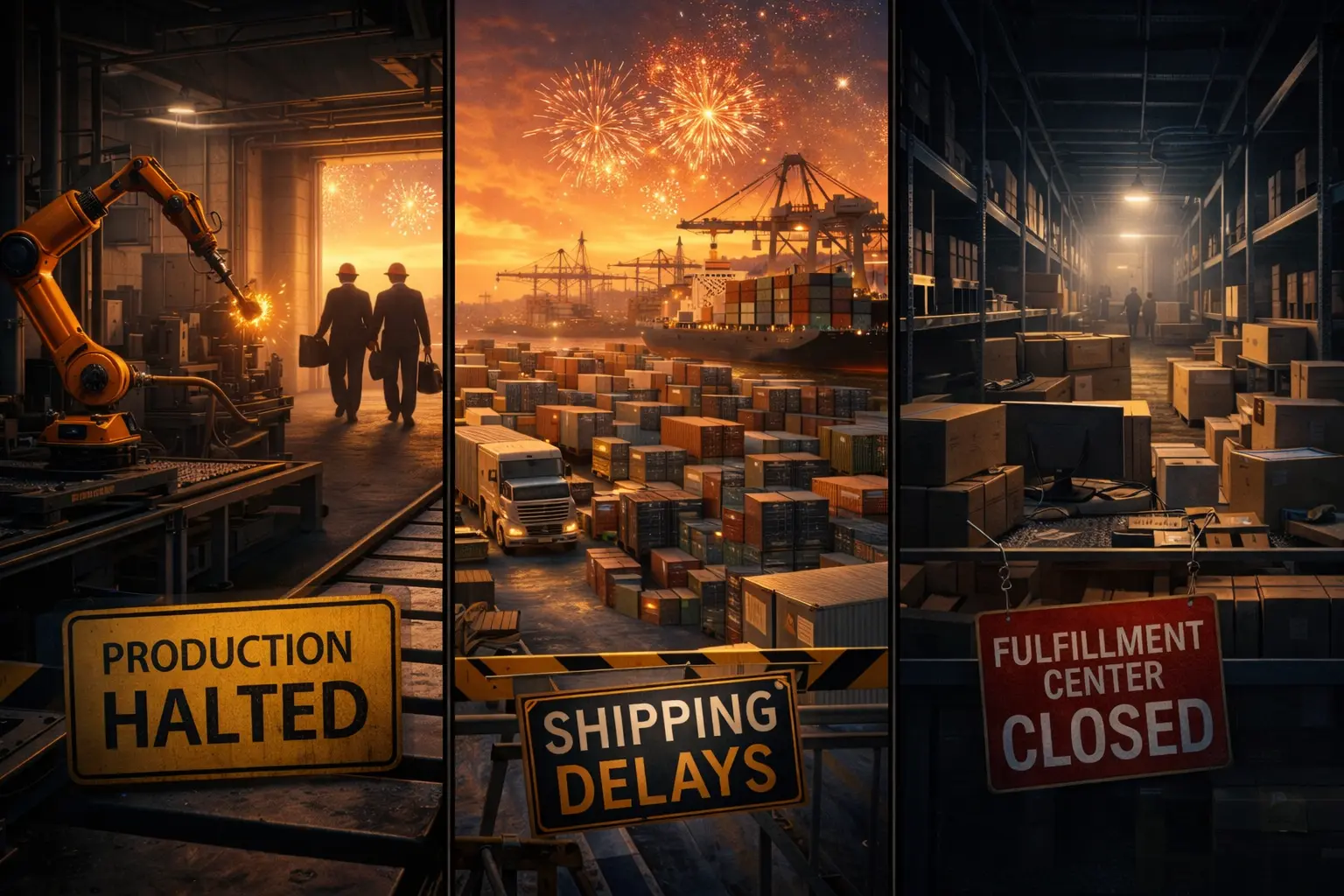
Your Products Stop Getting Made
This one’s obvious but worth spelling out. Factories don’t just slow down production during Chinese New Year 2026 they completely stop. The machines go silent. The workers leave. And here’s the kicker: they start winding down weeks before the actual holiday.
If you need custom products or you’re placing a big order, you better have that locked in by early January at the latest. Factories won’t even accept new projects once they’re in pre holiday mode. They’re too busy rushing to finish existing orders before everyone leaves.
And yeah, that rush creates problems. Quality control gets a bit sketchy when everyone’s trying to wrap things up fast. Just something to keep in mind.
Shipping Becomes a Total Nightmare
Because even if you finish your products right before the holiday, you will struggle to get them shipped. The ports Shanghai, Shenzhen, all the big ones turn into absolute chaos. Everyone’s trying to get their stuff out before the shutdown, which means massive backups.
Shipping costs? They jump by about 15-30% right around Chinese New Year. Supply and demand, you know? Fewer ships running, same amount of cargo to move, prices go up. It’s not personal, it’s just how it works.
Ocean freight companies and airlines both cut back their schedules during this time. So not only is it more expensive, there’s literally less space available. Fun times.
Your Fulfillment Center Goes Dark
This is probably the part that hurts most if you’re not prepared. Most Chinese fulfillment and warehouse services shut down completely for two to three weeks.
Think about what that means. No one’s picking your orders. No one’s packing them. No one’s shipping them. Your customers keep ordering from your website, but those orders just sit there unprocessed for weeks.
Customer service? Also gone. Questions about tracking, problems with orders, return requests all of that just sits there unanswered. And if you were planning to receive new inventory during this time? Sorry, those containers are sitting at the dock waiting for someone to actually receive them.
It’s not great for cash flow either. You’ve got money tied up in inventory that you can’t access, you can’t fulfill orders, but your customers are still expecting their stuff to show up.
How to Actually Prepare (Without Losing Your Mind)
Alright, enough doom and gloom. Let’s talk about what you can actually do to make Chinese New Year 2026 less painful.
Three Months Out: November 2025
November’s when you need to start thinking about this seriously. Pull up your sales data from last year’s first quarter. Look at what you sold from December through March. Calculate your average daily sales for each product.
Now add about 25-30% on top of that. Why? Because you need buffer room for stuff you didn’t plan for unexpected sales spikes, shipping delays, whatever.
This is also when you need to email every single one of your Chinese suppliers. Don’t assume they’re all closing on the same dates. Some factories shut down earlier, some stay open longer. Get their specific dates in writing.
Do the math: daily sales times 60-75 days of coverage. That’s how much inventory you need ordered. For your best sellers? Maybe even 90 days worth.
Two Months Out: December 2025
December is crunch time. Get your orders placed by December 15 at the absolute latest. I’m serious about this date. If you’re ordering after mid December, there’s a really good chance your stuff won’t get made before everyone leaves.
Some factories will do rush jobs if you pay extra, but that gets expensive fast. Better to just plan ahead.
Book your shipping now too. Don’t wait until January thinking you’ll save money or something. You won’t. You’ll just end up with limited options and higher prices. Lock in your container space and freight rates in December while you still can.
Also, make sure you’ve got somewhere to put all this extra inventory. If you’re using your own warehouse, do you have the space? If you’re using a 3PL, have you arranged for the extra room? Don’t wait until pallets are showing up to figure this out.
One Month Out: January 2026
January’s all about execution. Track everything. Every shipment, every container, every air freight package. If something’s running late, get on the phone immediately. Research from Supply Chain Dive shows that businesses who actively track shipments solve problems 40% faster.
Everything needs to be received by January 20. After that date, you’re gambling. Sure, there might still be someone around to receive your shipment, but do you really want to bet your inventory on “might”?
This is also when you need to start communicating with your customers. Put up a banner on your website explaining that orders might take longer during this period. Send an email to your list. Be upfront about it. People understand delays way better when you tell them ahead of time instead of after they’re already annoyed.
And here’s a smart move: if you know certain products are going to sell out, stop advertising them. Why waste ad spend driving traffic to stuff you can’t ship? Redirect that budget to products you’ve actually got in stock.
How Fulfillmen Actually Solves This Problem
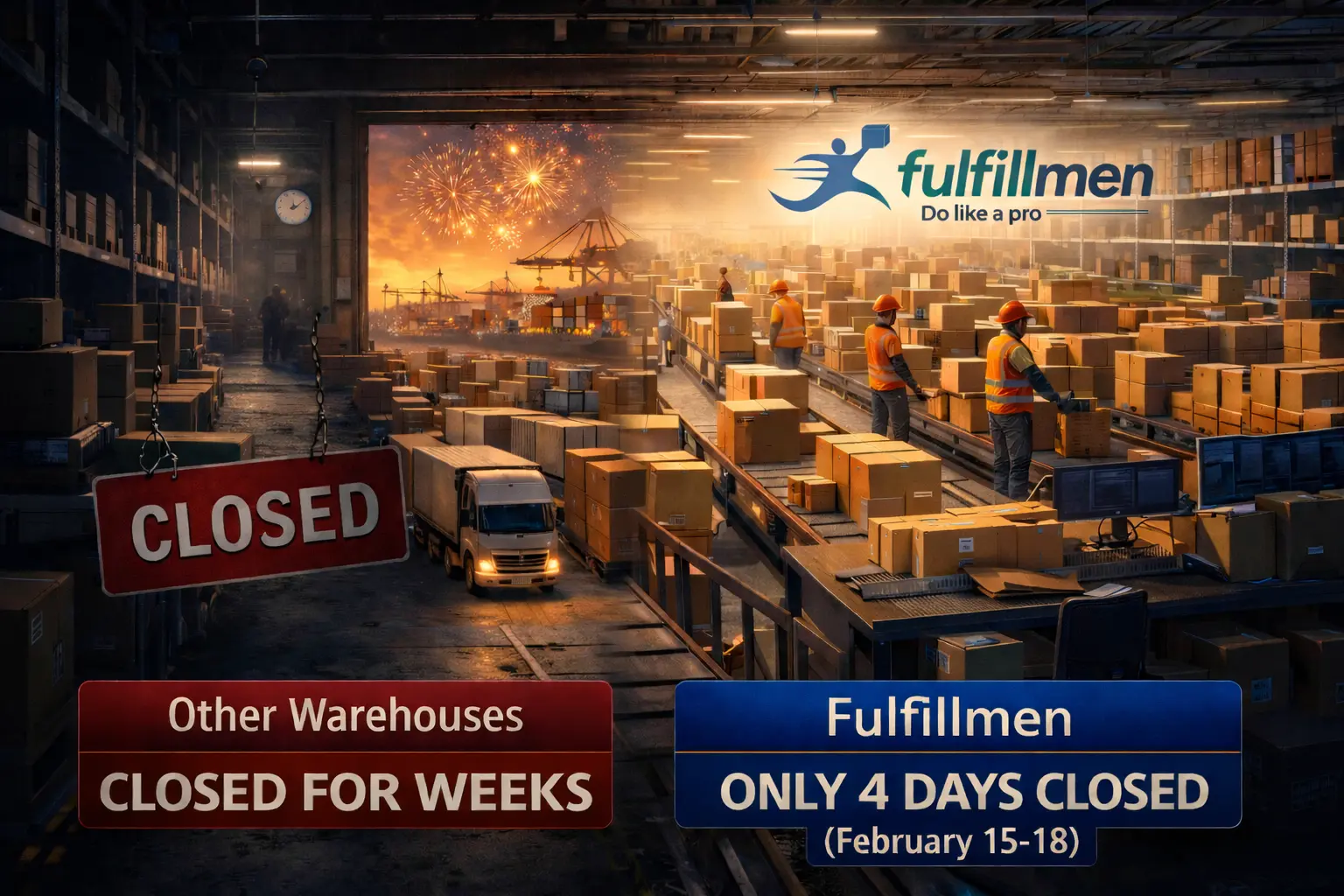
So here’s where things get interesting. While pretty much every fulfillment center in China is closed for two to three weeks, Fulfillmen does things differently.
Most warehouses? They’re completely dark from mid February through early March. No orders shipping, no customer service, nothing happening.
Fulfillmen? We’re only closed for 4 days (February 15-18, 2026).
Yeah, really.
How do we pull this off? It’s all about planning ahead and structuring our team properly. We respect the holiday and make sure our people get time with their families, but we schedule things so operations don’t completely stop. We’ve got multiple warehouse locations too, so if one spot has staffing issues, we’ve got backup.
What this means for you is pretty simple: while your competitors are explaining to angry customers why their orders haven’t shipped in three weeks, your orders are going out normally. While other sellers are losing sales because they’re out of stock, you’re capturing that market share.
Before the holiday, we keep receiving inventory right up until February 15. No blackout periods where your containers sit around waiting. That’s an extra 10-14 days compared to most warehouses.
During the holiday, those four days (February 15-18) are the only time we’re actually paused. And even then, you can still track orders and our systems stay up.
After the holiday, we’re back at it on February 19. Everyone else? They’re still trying to get fully staffed through the first week of March. That head start matters.
Working with Fulfillmen basically turns Chinese New Year 2026 from a major problem into a competitive edge.
What Happens After Everything Reopens
Even when the holiday ends, things don’t snap back to normal overnight. Here’s the reality:
First week back (February 24-28): Most places are running at maybe 50-60% capacity. People are still traveling back, getting settled, dealing with the post holiday fog. Expect delays.
Second week (March 1-7): Things improve to about 75-85%. Orders start moving again at a decent pace. Shipping gets closer to normal.
Third week (March 8-14): Finally back to about 95-100%. This is when you can actually breathe again.
Talk to Your Customers
Seriously, communication is huge during this period. Don’t make people guess what’s happening with their orders.
Be honest upfront. Put the information out there before people start complaining. Update your website, send emails, adjust your shipping time estimates.
Be specific. Don’t say “may be delayed.” Say exactly what to expect: “Orders placed February 15-March 5 will ship in 5-7 days instead of our usual 2-3 days.”
For your VIP customers or really big orders, consider throwing in a discount on their next purchase or free upgraded shipping. Small gesture, big impact on keeping them loyal.
Keep people updated without them having to ask. Send status emails at every step. It takes five minutes and saves you from dozens of “where’s my order?” messages.
Conclusion
Look, Chinese New Year 2026 is happening whether you’re ready or not. February 17 is coming. The question is whether you’re going to be one of the sellers scrambling to explain to customers why nothing’s shipping, or whether you’re going to be the one still making sales while everyone else is offline.
Start planning in November. Get orders placed by mid-December. Have everything received by mid January. Talk to your customers so they know what to expect.
And maybe most important: pick partners who understand this stuff and have actually planned for it. The difference between working with a fulfillment center that’s closed for three weeks versus one that’s only closed for four days? That’s the difference between losing sales and capturing them.
Don’t let Chinese New Year catch you off guard this year. Plan ahead, prepare properly, and you’ll be fine. Actually, you’ll be better than fine you’ll be making money while your competitors are making excuses.
Frequently Asked Questions
When exactly is Chinese New Year 2026?
Chinese New Year 2026 is on Tuesday, February 17, 2026. That’s when the Year of the Horse starts. The Lantern Festival caps everything off on March 3, but the main public holiday runs February 15-23.
How long do factories really close?
The government says 7-9 days, but in reality most factories are down for 2-3 weeks. People leave early, come back late. If you’re planning, assume about a month of wonky operations, not just the official holiday.
When's my last chance to order before Chinese New Year 2026?
Get your orders in by December 15, 2025. After that you’re cutting it really close. Some factories do rush orders for extra money, but don’t count on it
Do shipping prices actually go up?
Yep, expect 15-30% increases in the weeks around Chinese New Year. Book early (November/December) to avoid paying premium rates and to actually get space on ships.
Can I receive inventory during the holiday?
Most warehouses stop receiving completely during the closure. Your stuff sits at the port until they reopen. Fulfillmen only pauses for 4 days, so you’ve got more flexibility there.
How do I not run out of stock?
Calculate 60-75 days worth of inventory based on your average daily sales. For your top products, go for 90 days. Order by mid-December, make sure it arrives by mid-January. Watch your sales and pull back on ads if inventory’s getting low.