Running an online store involves handling orders from different sales channels, managing stock in multiple warehouses, choosing the best shipping rates, and keeping customers informed. When all this is done manually, errors are common. Orders can be delayed, and customer satisfaction drops.
3PL shipping software solves this by automating your entire fulfillment process. It connects your store to your warehouse to your carriers, handling everything from order processing to customer tracking updates. The right system cuts costs, eliminates errors, and gives you back hours every day.
What 3PL Shipping Software Actually Does
3PL shipping software is a central platform that manages your entire logistics operation. Instead of switching between carrier websites, spreadsheets, and email, everything lives in one system.
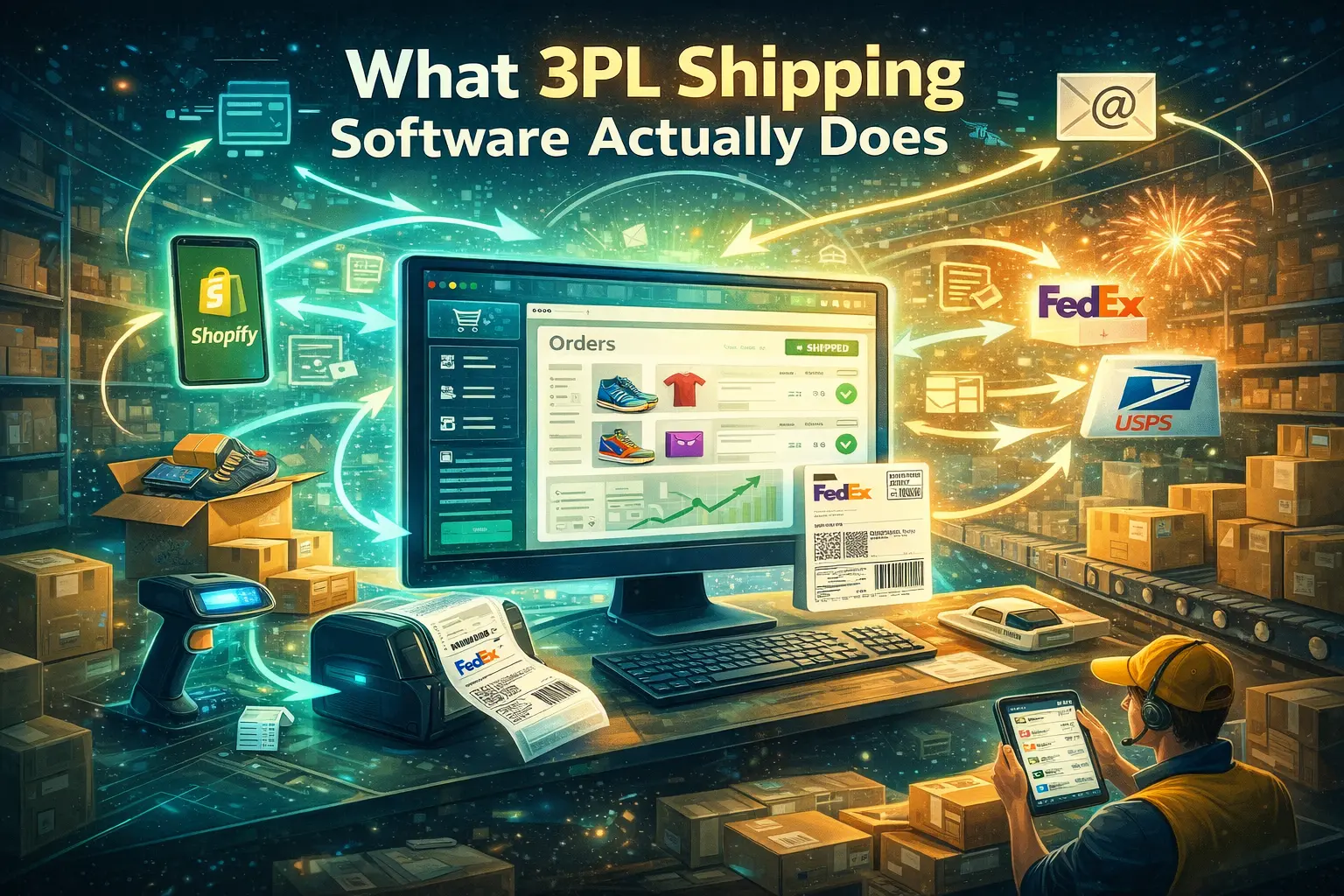
When an order comes in, the software automatically processes it, checks inventory, picks the best carrier, prints the label, and updates your customer. No manual data entry. No copying information between systems.
Third party logistics companies use this technology to handle shipments for multiple clients efficiently. Many businesses also use it to run their own warehouses better.
The difference from basic shipping tools? Integration. Your Shopify store talks to your inventory system, which talks to FedEx and USPS, which updates your customer. Everything flows automatically.
According to Shopify’s logistics research, businesses using integrated shipping software process orders 40-60% faster than manual methods. For a company handling 500 orders daily, that’s 200 extra orders processed with the same team.
Core Features That Solve Real Problems
Skip the marketing fluff. Here’s what 3PL shipping software actually does for your operations.
Automated Order Processing
Every new order triggers automatic workflows. The system checks inventory, assigns the order to the right warehouse, and sends pick instructions to your team. Nobody retyping order details. Nobody forwarding emails.
Manual entry creates bottlenecks. One person can only process so many orders before making mistakes. Software handles hundreds simultaneously.
For modern fulfillment operations, orders flow from your website straight to warehouse workers’ devices within minutes. Fulfillmen’s warehouse management system shows how cutting manual handoffs drops processing time from hours to minutes while maintaining 99%+ accuracy.
Real Time Inventory Tracking
Good 3PL shipping software knows where every product is right now. When something sells on Amazon, your Shopify inventory updates instantly. You stop overselling items you don’t have.
The system monitors stock levels continuously and alerts you before you run out. Some platforms automatically create purchase orders based on sales velocity and supplier lead times.
Multi location inventory gets complex fast without software. If you have products in different warehouses, the system shows exactly what’s where. Orders route to the closest location with stock, cutting shipping time and cost.
Multi Carrier Rate Comparison
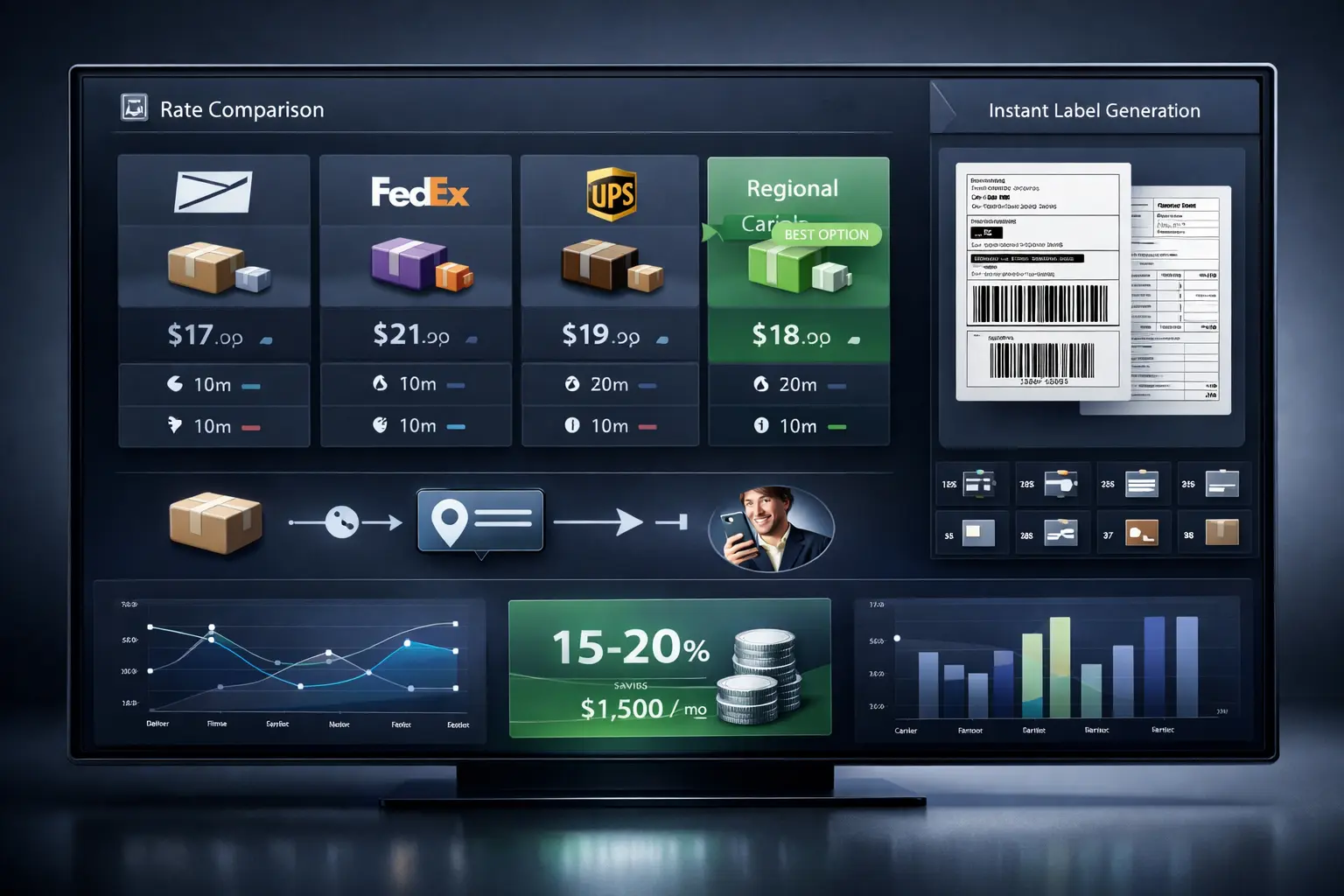
This feature often pays for the software by itself. Instead of using the same carrier for everything, the system compares rates across USPS, FedEx, UPS, and regional carriers for each order.
USPS might be cheapest for small California packages. FedEx could win for heavy New York shipments. The software figures this out in seconds.
Research from Supply Chain Dive shows multi carrier software typically cuts shipping costs 15-20%. For a business shipping 1,000 orders monthly at $8 average cost, that’s $1,200-1,600 saved every month.
Instant Label and Document Generation
Printing labels manually wastes time and causes mistakes. 3PL shipping software creates perfect labels with addresses, barcodes, and tracking numbers. For international orders, it handles customs forms automatically.
Set up templates once. After that, generating shipping documentation takes seconds. When you’re processing hundreds of daily orders, those seconds become hours saved.
Automatic Customer Updates
Nobody wants to manually email tracking numbers. The software sends them automatically when orders ship. As packages move through delivery networks, customers get updates without you doing anything.
This dramatically cuts “where’s my order” support tickets. Customers track packages themselves instead of contacting your team.
Performance Analytics
Shipping data reveals patterns you’d miss manually. The software tracks delivery times by carrier, shipping costs by product, peak order times, and fulfillment speed trends.
Use these insights to negotiate better carrier rates, fix packaging issues, and identify bottlenecks before they hurt customer satisfaction.
What Changes for Your Business
Features matter less than outcomes. Here’s what actually happens when you implement 3PL shipping software.
You Scale Without Hiring Proportionally
Manual shipping doesn’t scale well. Going from 100 to 1,000 orders means hiring significantly more people. With software, going from 1,000 to 10,000 orders needs minimal extra staff.Your per order costs drop as volume grows instead of staying flat. Modern fulfillment service providers combine software with warehouse space, giving you enterprise technology without building it yourself.
Mistakes Nearly Disappear
Even careful workers make typing errors at 1-5% rates. With thousands of orders, that’s dozens of problems daily.Automated systems transfer data perfectly. Wrong addresses, incorrect items, bad shipping methods all become rare instead of routine.
Speed Becomes Your Advantage
Fast shipping matters now. Amazon trained everyone to expect quick delivery.Automated systems process orders instantly instead of batching them once or twice daily. During holiday rushes, software handles volume spikes smoothly while manual processes collapse.
Choosing the Right Software
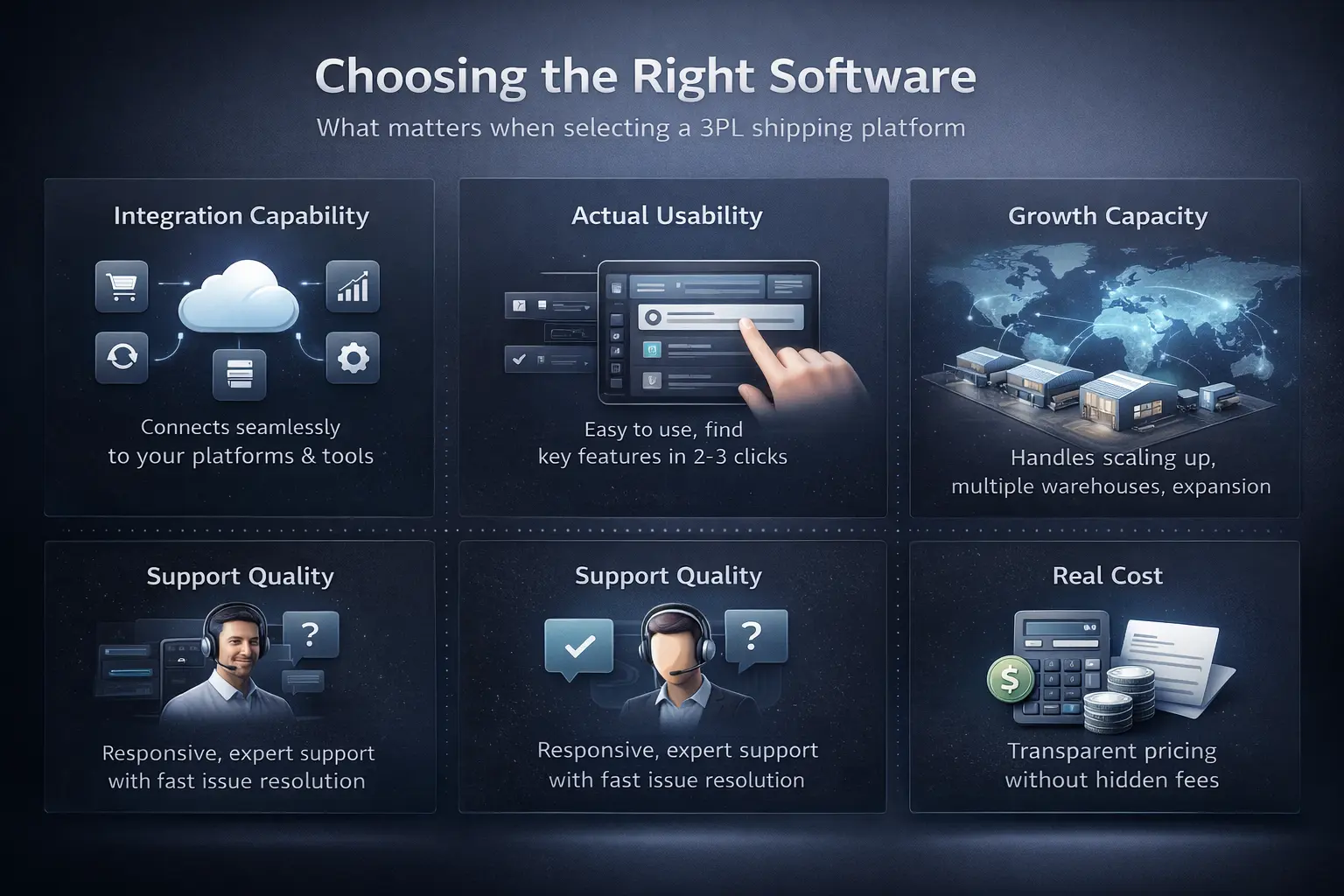
Not all 3PL shipping software works the same. Here’s what matters when selecting a platform.
Integration Capability
The software must connect to your store platform, accounting system, and other tools. Bad integrations mean manual workarounds that destroy the automation benefits.Check for native integrations with your specific platforms. These work faster and need less technical knowledge to set up.
Actual Usability
Powerful software that’s confusing sits unused. Get demo access and try your normal tasks. Can you find key features in 2-3 clicks? Can you figure it out without constantly reading help docs?If you struggle during a demo, your team will struggle daily.
Growth Capacity
Software working for 100 daily orders might crash at 1,000. Ask vendors about their largest customers. Can it handle multiple warehouses? What about international expansion?Switching later is expensive and disruptive. Pick something that works for 3-5 years as you grow.
Support Quality
Even great software has learning curves and occasional issues. Good support fixes problems fast. Bad support makes good software worthless.Ask about support hours, contact methods, and typical response times. Talk to current customers about their experience if possible.
Real Cost
Some charge per order. Others charge monthly. Many do both. Calculate your actual cost based on order volume.Watch for hidden fees setup charges, integration costs, training, extra users. The advertised price rarely shows the complete picture.
Implementation That Works
Getting 3PL shipping software running smoothly needs planning.Start with clean data. Bad product information or wrong inventory counts create immediate problems. Fix your data before going live.Test thoroughly. Process fake orders through the complete workflow. Catch setup issues before real customers are affected.Train everyone properly. Hands on sessions work better than documentation. Record training so new team members can watch later.If possible, start with one part of your business. Get that working smoothly before moving everything over.Watch your metrics closely the first few weeks. Quick fixes prevent small issues from becoming disasters.
Conclusion
Modern shipping needs modern tools. 3PL shipping software turns manual work into automated processes that save time, cut errors, and reduce costs.
Success comes from picking software that fits your situation your order volume, growth plans, current technology, and team capabilities. Take time comparing options, testing properly, and implementing carefully.
Whether you ship 100 orders monthly or 10,000, automation delivers returns quickly. Faster processing, fewer mistakes, better shipping rates, happier customers the benefits compound over time.
Your shipping operation either helps you grow or holds you back. Choose wisely.
Frequently Asked Questions
What is 3PL shipping software?
3PL shipping software is a platform that automates logistics operations including order processing, inventory tracking, carrier selection, and label generation. It connects your store, warehouse, and shipping carriers in one system to eliminate manual work and reduce errors.
How much does 3PL shipping software cost?
Basic solutions start around $50-200 monthly for small businesses. Mid-range systems cost $200-500 monthly. Enterprise platforms run $500-2,000+ monthly. Many also charge $0.10-0.50 per order. Calculate based on your actual order volume for accurate costs.
Can small businesses use this?
Yes. Even businesses shipping 50-100 orders monthly benefit from automation. The software saves time, prevents errors, and often gets better shipping rates. Many vendors offer pricing that works for small budgets.
How long does setup take?
Basic setups take 2-4 weeks. Complex situations with multiple integrations might need 6-12 weeks. Timeline depends on your current systems and required customization.
What's the difference from warehouse management systems?
Shipping software focuses on carrier selection, rates, labels, and tracking. Warehouse systems handle receiving, storage, picking, and packing. Many modern 3PL shipping software platforms include both capabilities.
Will it work with my store?
Most work with Shopify, WooCommerce, BigCommerce, Amazon, and eBay. Check the vendor’s integration list for your specific platform before committing.