
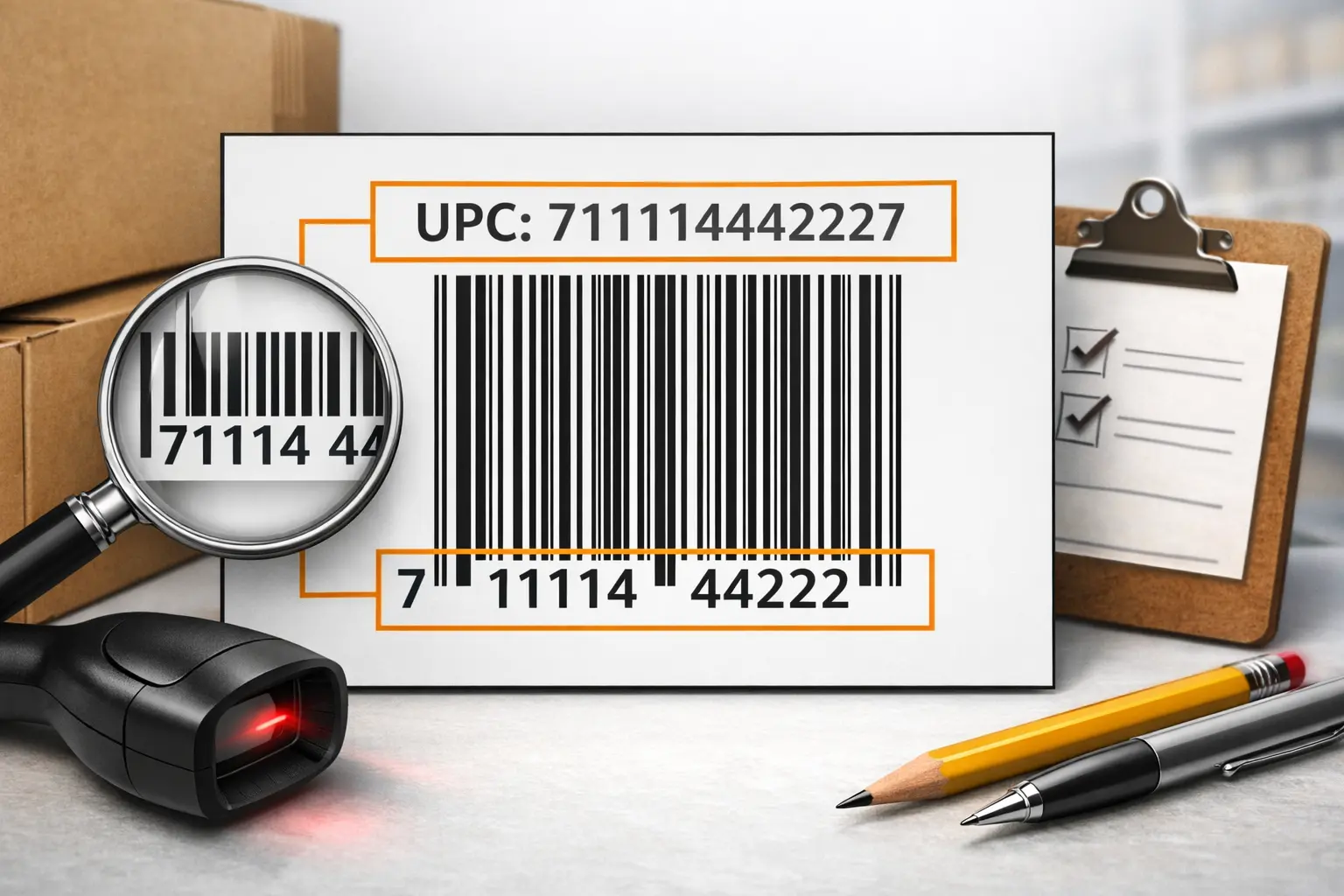
Starting to list products on Amazon when you discover a required field: product code. You check your items and find no barcode. Panic sets in. Can you still sell?
Yes. This guide shows you exactly where to find product codes, how to get them when products lack them, and when you qualify for exemptions that skip codes entirely.
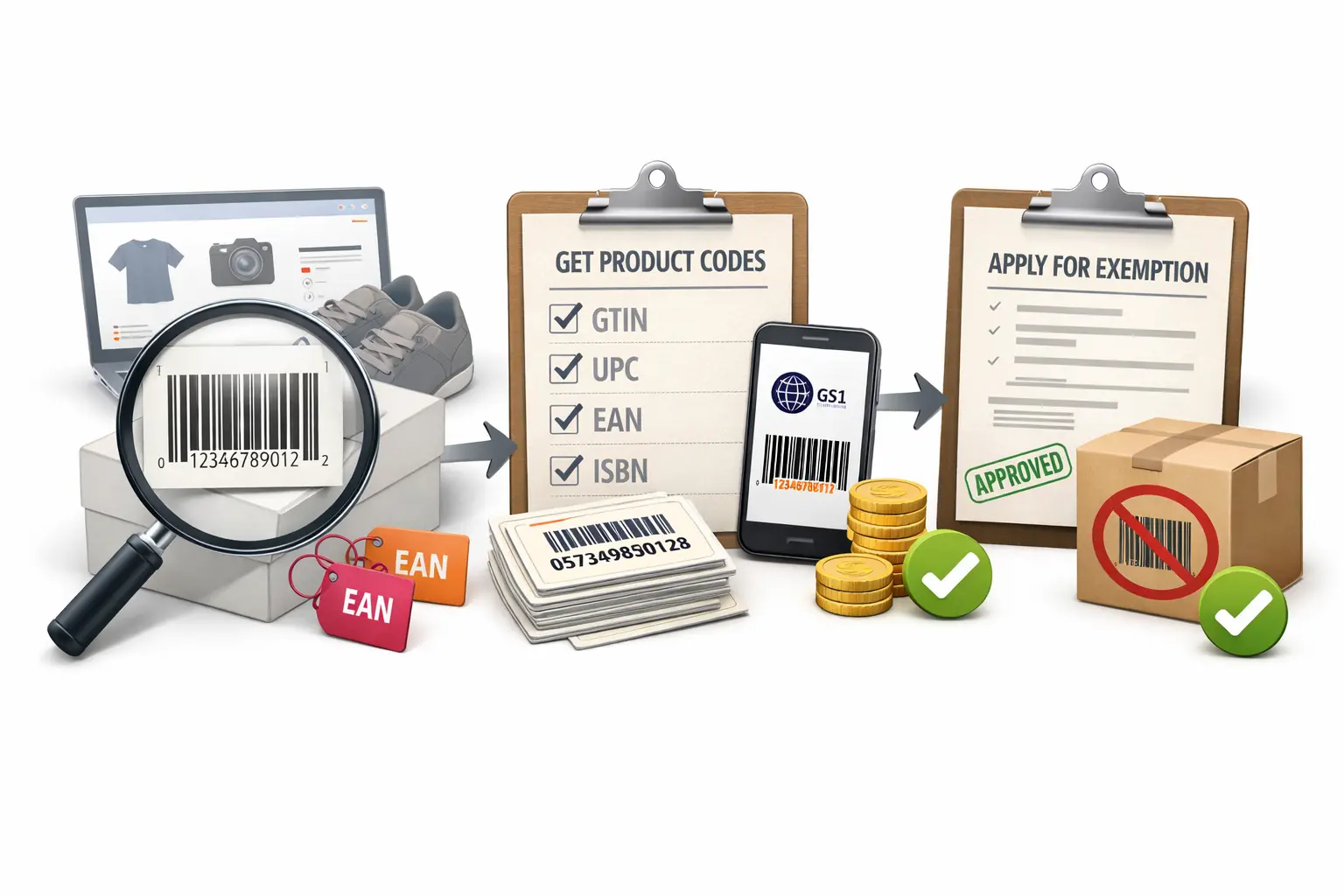
Understanding Product Codes
A product code identifies your specific item in the global marketplace. Think of it as a unique fingerprint for each product variant you sell.
These codes go by several names: GTIN (Global Trade Item Number), UPC (Universal Product Code), barcode, or item number. They all serve the same purpose uniquely identifying your product.
Each variation needs its own code. Selling t shirts in small, medium, and large? That requires three separate product codes. Same shirt in different colors? More codes. Amazon and other marketplaces use these codes to prevent duplicate listings and maintain catalog accuracy.
According to Shopify’s product listing guidelines, proper product codes reduce listing errors by 60% and speed up catalog approval significantly.
Why Product Codes Matter
Marketplace Requirements
Amazon requires product codes for most items. Without valid codes, your listings get rejected or suppressed. Other marketplaces like eBay, Walmart, and Google Shopping enforce similar requirements.
Inventory Accuracy
Product codes prevent selling mistakes. When codes match across systems, inventory syncs properly. Your fulfillment center ships the right item. Customers receive what they ordered.
Search Visibility
Proper product codes help customers find your items. Marketplaces use codes to connect similar products, show alternatives, and surface your listings in relevant searches.
Counterfeit Prevention
Authentic codes from GS1 prove your products are legitimate. This matters especially for branded items where counterfeits create problems. Modern fulfillment operations verify product codes during receiving to catch mismatches before items ship to customers.
Where to Find Product Codes
Check Product Packaging
Look at your product packaging carefully. The product code appears above or below the barcode as a series of numbers. Common locations include:
Back of packaging near nutritional information or ingredients. Bottom of boxes near manufacturing details. Inside product manuals or instruction booklets. On product tags attached to clothing or soft goods.
The code typically contains 12-14 digits. Write it down exactly as printed every digit matters.
Examine the Product Itself
Some products print codes directly on items rather than just packaging. Check:
Bottom or back of products. Inside battery compartments. Under removable labels or stickers. Molded into plastic products.
Review Supplier Documentation
Your supplier or manufacturer should provide product codes in their documentation. Check:
Purchase orders and invoices. Product specification sheets. Supplier catalogs or price lists. Original packaging from suppliers.
Contact your supplier directly if codes are missing from documentation. Reputable manufacturers always have this information.
Search Online Databases
If you have partial information, search the GS1 database at www.gs1.org. Enter product names or partial codes to find complete information.
Some products sold in multiple countries use different codes for different regions. Verify you have the correct code for your selling market.
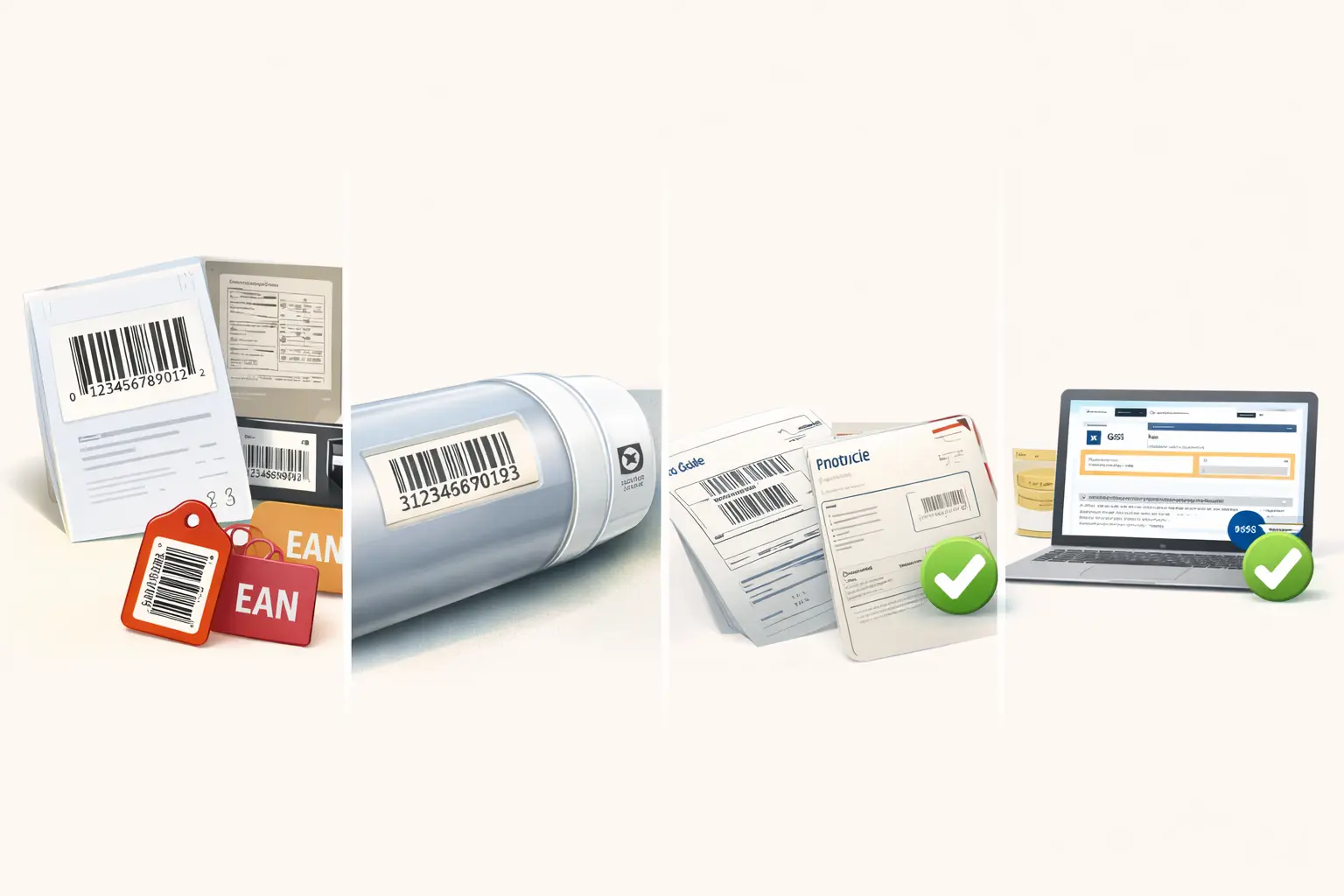
How to Get New Product Code
Contact Your Manufacturer
Manufacturers own the product codes for items they produce. Contact them first when codes are missing or unclear.
Provide specific product details: exact model numbers, color variations, size specifications. Manufacturers typically respond within 1-3 business days with proper codes.
This approach works free and fast for products from established manufacturers.
Buy Codes from GS1
If you manufacture products yourself or create private label items, buy codes directly from GS1. They are the only authorized source for authentic product codes globally.
Visit www.gs1.org and follow these steps:
First, create a GS1 company account. This establishes you as the brand owner in their system.
Second, purchase a company prefix. Prices vary by country but typically start around $250 annually for small businesses. This prefix becomes part of all your product codes.
Third, generate individual product codes using your prefix. GS1 provides tools for creating as many codes as you need.
Fourth, register each code with specific product details in the GS1 database. This makes your products searchable and verifiable.
Amazon validates codes against the GS1 database. Purchasing from third-party code sellers often leads to rejected listings because those codes lack proper GS1 registration. Research from Supply Chain Dive shows that 40% of listing rejections stem from invalid product codes purchased from unauthorized resellers.
Understanding Costs
GS1 membership and codes involve ongoing costs. Initial company prefix: $250-750 depending on your country and business size. Annual renewal fees: $50-150 to maintain your prefix. Individual product codes: Already included in your prefix purchase.
This investment pays off through legitimate codes that work across all marketplaces without problems.
When You Qualify for Code Exemptions
Some products qualify for exemptions that eliminate product code requirements. Understanding these exemptions saves money and speeds up listing.
Exemption Eligibility
Products qualify for exemptions when they lack manufacturer-assigned codes. Common examples include:
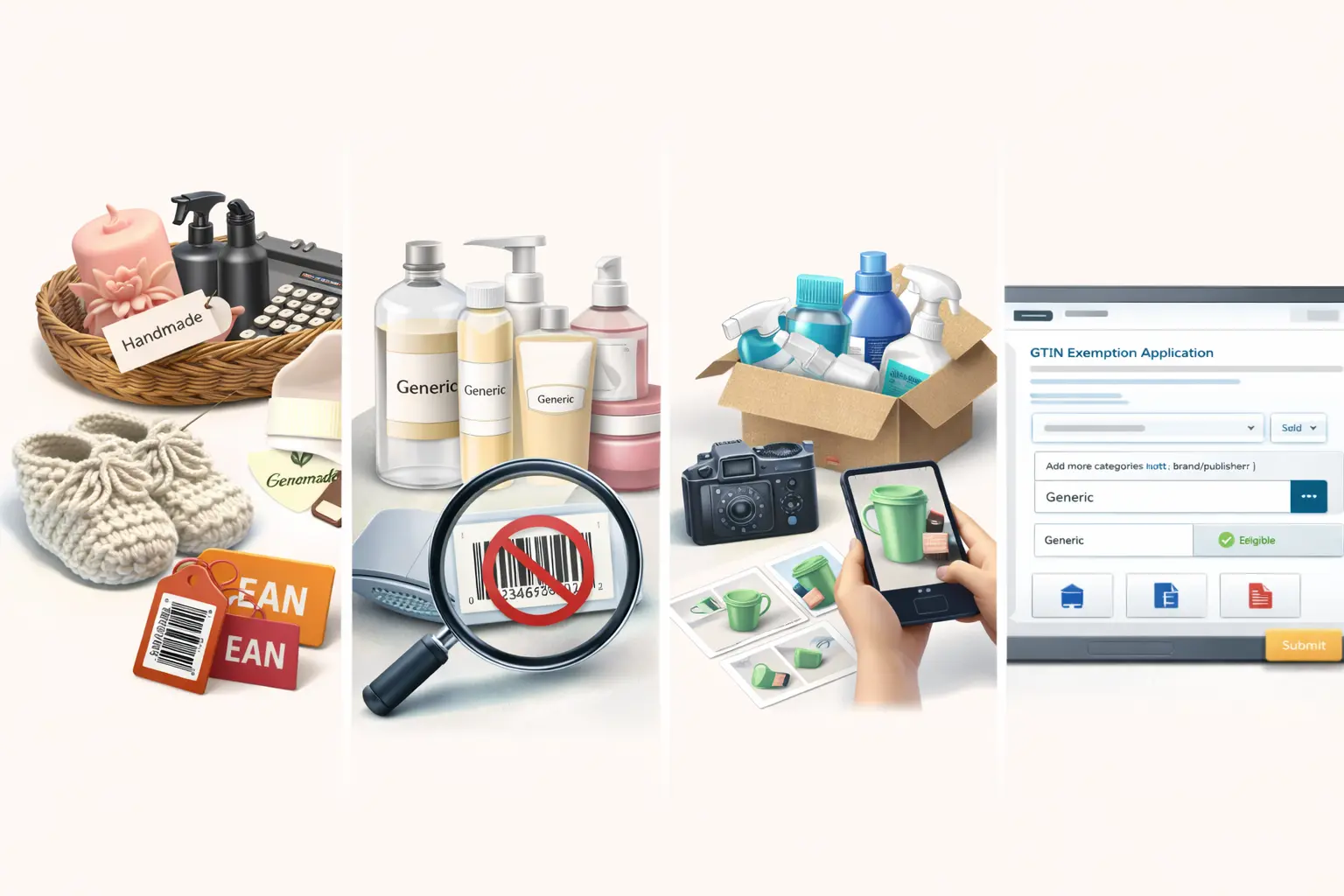
Handmade items you create yourself. Private label products without established barcodes. Vintage items from before universal barcode adoption. Generic unbranded products. Items sold in sets or bundles you assemble. Products from small manufacturers who never obtained GTINs.
Branded products with existing barcodes never qualify for exemptions. Those require valid codes no matter what.
Required Documentation
Exemption applications need specific proof. Gather these materials before starting:
Product name exactly as it appears on your item. High quality photos (2-9 images) showing product and packaging from all angles. Brand name matching exactly what appears on the product. Permanent branding visible on products or packaging.
Photos must show actual products, not stock images. Hold items in your hand or place on tables for clear views. Images must prove no GS1 approved barcodes exist on products or packaging.
Application Process
Amazon sellers apply through Seller Central. Follow these steps carefully:
Navigate to inventory settings and find “Apply for GTIN Exemption.” Select your product category from the dropdown menu. If products span multiple categories, add each one using “Add more categories.”
Enter your brand name in the Brand/Publisher field. Type “Generic” for truly unbranded products. Add additional brands if products come from multiple sources.
Click “Check for eligibility” to verify qualification. Wait for system response. Qualified products proceed to documentation upload. Rejected products need valid codes before listing.
Upload supporting photos in JPEG, TIFF, or PDF format. Submit your request and wait for approval. Amazon typically responds within 1-3 business days.
Approved exemptions apply to your entire brand within specified categories. You list multiple products without repeated applications.
Modern fulfillment providers increasingly help sellers navigate product code requirements during onboarding, verifying codes or assisting with exemption applications to prevent listing delays.
Common Mistakes to Avoid
Buying Codes from Resellers
Third party websites sell product codes cheaply. These almost always cause problems. Amazon validates codes against official GS1 records. Reseller codes typically show as invalid or assigned to other companies.
Spend more upfront buying from GS1. Save time and frustration later.
Using Codes from Other Products
Never use codes from similar products or competitors. Each product needs its own unique code. Reusing codes violates marketplace policies and creates catalog chaos.
Applying for Exemptions When Codes Exist
Branded products with manufacturer barcodes require those actual codes. Exemption applications get rejected. This delays listing by days or weeks.
Incomplete Exemption Applications
Missing photos or unclear branding causes rejection. Take time gathering proper documentation before applying. Complete applications approve faster.
Getting Started Right
Product code requirements seem complicated initially but follow logical patterns. Branded manufactured products need codes from manufacturers or GS1. Handmade and generic products often qualify for exemptions.
Start by checking existing products for printed codes. Contact manufacturers when codes are missing. For products you create, budget for GS1 membership and codes from the beginning.
Exemptions work well for qualifying products but require proper documentation. Take clear photos showing all angles. Prove no barcodes exist before applying.
Most sellers get listings approved within days by following these guidelines. Proper preparation prevents frustrating delays and rejected listings that cost sales.
Frequently Asked Questions
What is a product code?
A product code is a unique number identifying specific products in global commerce. Also called GTIN, UPC, or barcode, each product variation needs its own code. A blue shirt in medium size has a different code than the same shirt in large or a different color.
Where do I find my product code?
Check your product packaging above or below the barcode for a 12-14 digit number. Look on the product itself, in supplier documentation, or contact your manufacturer. If you created the product, you need to purchase codes from GS1.
How much does a product code cost?
Buying codes directly from GS1 costs approximately $250-750 initially for a company prefix, plus $50-150 annually for renewal. Your prefix generates unlimited individual product codes. Avoid cheaper third-party sellers whose codes often get rejected by marketplaces.
Can I sell without a product code?
Yes, if you qualify for GTIN exemption. Handmade items, private label products without barcodes, vintage items, and generic products may qualify. Apply through Amazon Seller Central with photos proving no manufacturer barcodes exist on products or packaging.
How long does exemption approval take?
Amazon typically approves or rejects GTIN exemption applications within 1-3 business days. Complete applications with clear photos approve faster. Incomplete applications face delays or rejection requiring resubmission.
What if my exemption gets rejected?
Rejections mean your product needs a valid GS1 code. Contact your manufacturer for existing codes or purchase new codes from GS1 if you created the product. Reapplying without addressing rejection reasons leads to repeated denials.